A journal for storytelling, arguments, and discovery through tangential conversations.
Tuesday, April 28, 2026
|
Yannis Guibinga
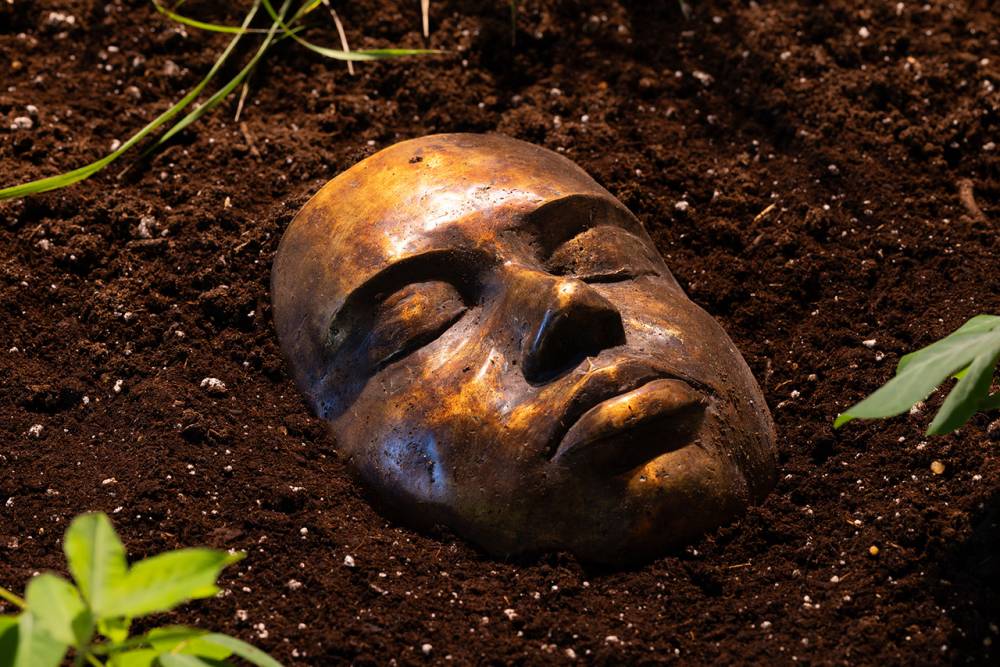
Michaëlle Sergile is, at her core, an artist who thinks through materials. Her artistic practice moves between textile weaving, video archival research, wood constructions, and sound as a way of insisting that no single medium is able to hold the complexity of the things she aims to explore: history, migration and the many ways in which memories are shaped and constructed.
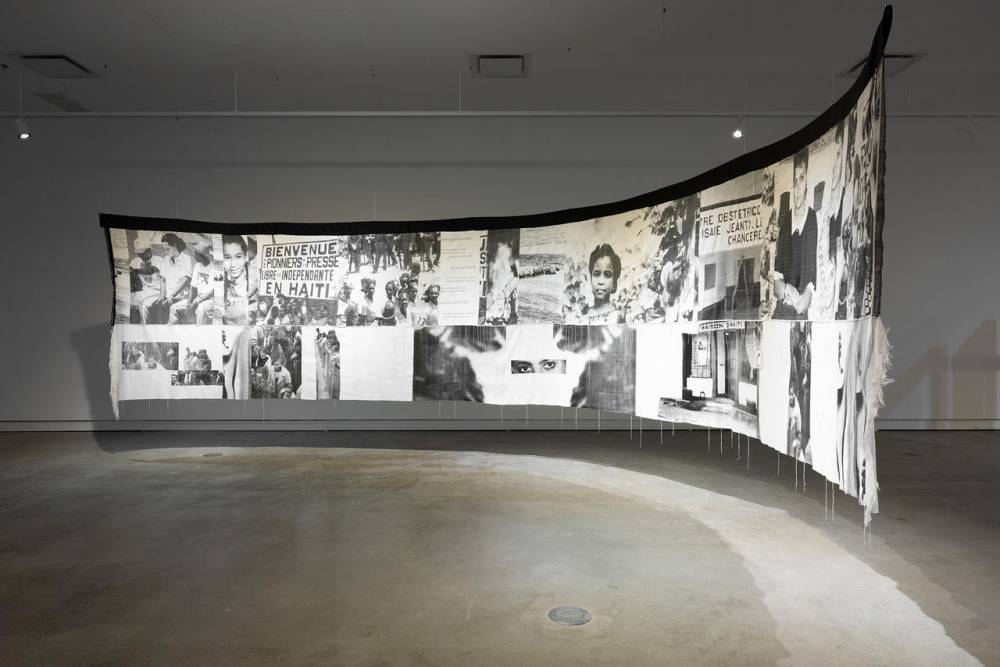
Sergile approaches her work with a particular interest in historical storytelling: how stories are formed, transmitted, and sometimes erased. Initially having studied psychology and sociology before turning to visual arts, she uses that foundation as a thread through her practice. Drawing from institutional archives from Canada and Haiti as well as personal VHS footage from her family, she constructs layered environments where intimate memory and official documented history coexist as parallel truths.
Monday, December 1, 2025
|
Yannis Guibinga
I have always known Mallory Lowe Mpoka to be an artist who refuses to be limited by one medium. Her work presents her ideas through a unique artistic perspective and visual language, seamlessly merging image-making processes, textile, and ecological material. The result is something entirely new and incredibly interesting.
Presented during the MOMENTA Biennale de l’image 2025 in Montréal, The Matriarch: Unraveled Threads marks the first solo exhibition of the Cameroonian-Belgian multidisciplinary artist. Working across diverse mediums, Mpoka’s practice explores the material and emotional landscape that continue to shape diasporic identities across and beyond the African continent. At the center of the exhibition stands a monumental textile installation composed of over 300 screen printed panels of recycled linen and cotton, dyed with the red soil from Cameroon. That piece—which shares its name with the exhibition—is a perfect representation of Mpoka’s artistic practice and her ability to push several artistic mediums forward simultaneously, while anchoring it in archives, heritage and family history. Although her practice previously focused on the technicality of photography, she has since expanded beyond the bidimensionality of the traditional photographic frame to tend to processes of repair and collective healing. Through weaving, ceramics, dyeing and sculptural augmentation, Mpoka engages the body, the soil and the self as living archives.