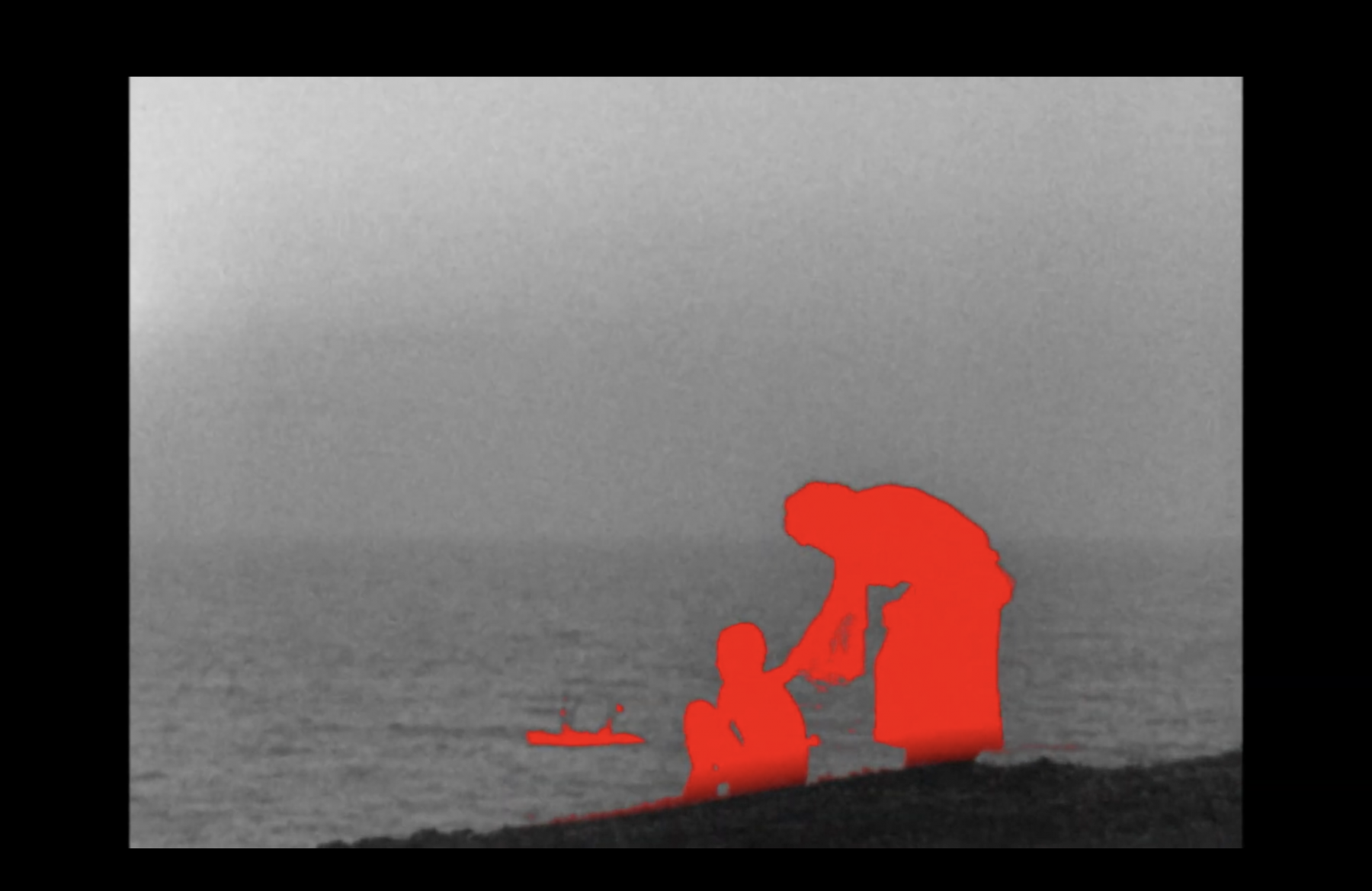
In the wake of what has been termed the "livestreamed genocide" in Gaza, images of Palestinian suffering have saturated our screens with an unprecedented persistence and immediacy. Yet these images demand something different from us. This conversation with scholar and writer Milka Njoroge brings us into the heart of her urgent question: “What demands do images of suffering place on our viewing practices?” As Assistant Professor at Simon Fraser University whose dissertation explored the colonial logics undergirding humanitarian imagery, Njoroge brings a critical lens to understanding how Palestinians' own documentation of genocide represents both continuity with and rupture from historical modes of visual witnessing.
The interview traces a path from Njoroge’s own research on nineteenth and twentieth century “humanitarian” images‚ and their role in establishing hierarchies of humanity, their mobilization of Christian missionary work, scientific racism, and up to the present moment, tackling the consumption and circulation of images of suffering in the digital sphere. Njoroge’s research and scholarly work sets up a fundamental challenge to what images can do. When Palestinians film their own survival, their clearing of rubble, their steadfast rebuilding amid systematic demolition, makes visible not only Israel’s genocidal warfare but Palestinian refusal to disappear.
The conversation moves between theoretical precision and political urgency, between questions of digital circulation and questions of global solidarity. As an interlocutor Njoroge guides us through the reading of images as a condition to heed the call for action from Palestinians, and to connect this moment to expansive histories of resistance in Palestine, from the symbolic weight of the key of return to contemporary practices of life-making under the constant threat of annihilation.
What makes this exchange particularly valuable is its refusal of easy answers. Rather than offering a definitive framework for how to view images of suffering, the conversation models a practice of sitting with discomfort, of resisting both “compassion fatigue” and the liberal impulse to collapse difference. It asks us to understand Palestinian image-making not as a plea for inclusion in "the human family" but as an invitation to participate in the abolition of colonial modernity itself.
We are able to see, and what I'm also trying to argue is that if Palestinians themselves are documenting this suffering, then it is a call for us to also engage differently with these images. We cannot use the old imperial way of looking at these images. We now have to ask: how are the terms different?
The legacy of Palestinian resistance against colonialism from day one has been to record, to document the brutalities of occupation, colonialism, genocides, the violences that have continued. I think back on a documentary I saw that was specifically on the occupation in the West Bank, directed by the prolific Muhammad Bakri called Jenin Jenin, it came out in 2002, it was a remarkable moment for me. The film is about the horrors committed by Israel that had just occurred in Jenin, a city in the West Bank. We saw the destruction and the bulldozing of the area, and the atrocities that ensued. I remember at the time, I was living in Montreal, and after the screening the people around me didn't want to watch stuff like that. They said things like this is too much, I don't want to see this. People didn't want to encounter the image. There was a refusal to see or hear the witnesses, to confront the reality of the situation on the ground through what was being depicted on screen. That moment marked something for me, it was a mix of pain, sadness, and frustration.
I'm curious to know your thoughts around this for thinking through and with images because of your scholarship and writing, and all the discussions we've had together regarding the genocide in Gaza and in the West Bank.1
We really need to contend with this term of the “livestreamed genocide.” Why is it being called that? Why livestreamed? How is watching what is occurring different this time? But first, can you introduce your current research and the new text you wrote called “What demands do images of suffering place on our viewing practices?”
My dissertation was primarily preoccupied with humanitarian images, that is, images of war, atrocity, genocide, and other conflicts that are intended to stir an emotional response that moves audiences to action. Humanitarian images have historically been produced and circulated as objects for sympathetic identification with the sufferer and as mechanisms for establishing distance between the fortunate and unfortunate. Christian sensibilities thus constructed codes that distinguished whose lives were grievable and whose were not. My dissertation was primarily preoccupied with images of female circumcision from Finnish photojournalist Meeri Koutaniemi among the Maasai people in Narok, Kenya, to consider Finland’s self-presentation and its messy entanglements with colonialism. In my theoretical analysis, I read a lot on humanitarian images because I wanted to situate Koutaniemi’s photojournalistic practices within a broader context of humanitarian visuality. For example, when famine struck the subcontinent of India in the late 19th century, white Christian missionaries in India embraced iconographies of suffering as sufficient visual depictions for alerting their U.S-based congregants to the horrors of the famine and as a simultaneous motivation for almsgiving. So the images played a very important tool for mobilizing a kind of Christian sensibility. This is not to say that Koutaniemi’s images of female circumcision are the same as those of starving Indians, but to highlight the kind of logic that underpins both contexts. In this sense, the circulatory practices of humanitarian images reinforce a kind of narrative that determines boundaries of belonging. And as Sylvia Wynter describes, Judeo-Christianity needed to establish this separation because that was the only way there could be a relation. So that's where I began.
So, how I came to think about images of Palestinians, and especially in the wake of October ‘23 and the genocide, was because my dissertation looked at analog humanitarian photography. I was very intent on not thinking about the digital circulation of images because this kind of digital humanitarian visuality we are experiencing requires a more expansive analysis that I wanted to explore after my dissertation defense. So when images started coming out of Palestine in 2023 and were instantaneously and simultaneously shared on various social media platforms, there was a sense of “compassion fatigue” as well. This feeling of helplessness, while the demands of our other lives must continue, and where the images kept coming, and their production was rapid, instantaneous, and simultaneous, demanded, I think, a different kind of analysis. And I want to emphasize that these are images many of us have witnessed. Images I need not describe here because readers know what we are both talking about. I wanted to think about what the internet enables and what the accelerated advance of digital technologies makes possible. I found myself torn between competing interpretations: do they enable a kind of unthinking resharing, an almost automatic redistribution? I was particularly nervous about the phrase "livestream genocide." As someone who watches many YouTube videos, I knew the word "livestream" primarily through influencer YouTubers, where streaming has become its own category of visual consumption. The questions I was asking myself were: does calling it a livestream genocide undermine the genocide part of it? Does this framing merge body and technology in a way that makes Palestinian subjectivity disappear?
Those are great questions. Wow. To invoke this question of does the term “livestreamed genocide” detract us from the genocide?
I also wanted to add that what emerged from my asking this question, of what the word “livestream” enables or deters, led me to a published paper in Antipode called “On Grassroots Witnessing: Gaza and the Terrain of an Epistemic Intifada”.
Who wrote it?
Patrick Anthony and Gada Dimashk.
You referenced them?
Yes, I referenced them. And this is an article that really made me rethink my wanting to be repulsed by the term livestreamed genocide, because for them, the argument is that livestreamed genocide is also about Palestinians themselves documenting the genocide. This is their way of telling the world. I think what they argue in the article is that digital technologies also provided an avenue for Palestinians themselves to document, and to do so through “grassroots witnessing.” We are able to see, and what I'm also trying to argue is that if Palestinians themselves are documenting this suffering, then it is a call for us to also engage differently with these images. We cannot use the old imperial way of looking at these images. We now have to ask: how are the terms different?
Yes. This is part of the call from Palestinians in Palestine that they're documenting and making evidence of what they are experiencing and what they are witnessing. While they are running from one bombed out building to another to save their relatives from under the rubble, they're also filming. If they are doing that work to expose this reality to the world, then what is our responsibility in receiving it?
What is our responsibility, and how do we sharpen our ethics now? How do we sharpen our viewing practices so that they are not just informed by a liberal form of compassion fatigue? Or what Wendy Hesford calls “a professed egalitarianism,” which is trying to collapse Palestinians into a liberal humanism, rather than paying attention to Palestinian subjectivity. And as you say, as they are escaping the bombs, saving their loved ones, and pursuing many life-affirming and life-making strategies, they're also filming it and consistently uploading images and videos! There isn't a break. It's not like it's one video or image once every few months. It's multiple every day. And I think for me, I think the call is to reorient our senses, almost like even when we think about the eye, the eye as an organ that is not passive, but as an active organ, that whenever lights hit the eye, something is happening to be able to perceive that image. What does that mean for us to participate in this viewing, but also to make demands or several demands, in order to end the genocide, for the end of colonial modernity?
We also must carry the call and like you said, start to activate these demands.
Yeah. And I was also thinking right now as you're talking, there's another Antipode article that I came across by Kahlid Dader and Mikko Joronen titled “Fitful Infrastructures: Dwelling with Infrastructural Elimination in Gaza”. I appreciated this article for the way it describes how even when Israel is producing the edge of collapse, Palestinians are still working with and against this collapse of infrastructures. And we know this because Palestinians themselves are filming these videos where they go back to their bombed homes and clean the rubble. And living with this edge of collapse and urbicide, facilitated by Israel’s settler-colonial project, makes living a relentless and fragile endeavour.
I watched this documentary on Al Jazeera about the political ramifications of the Balfour Declaration, a sustained zionist effort where Palestinians were forcibly expelled from their homeland. One of the subjects of the documentary was the keys that Palestinians kept to their homes, and the symbolic and literal meanings behind them: to go back, to clear the rubble, to reestablish life again.
Yes, the Palestinian Return.
The Palestinian Return. Yes.
[...] we should think of humanitarian images as invitations to participate in the abolition of colonial modernity. Rather than resisting these images, we must sit with them and engage in a different epistemology of the image.
Yes, and I do want to put emphasis on that: the constant way in which Palestinians have rebuilt and rebuilt and rebuilt and rebuilt despite all these attempts at annihilation. We know this isn't the first time that Gaza is bombed. We know this isn't the first time that Gaza is destroyed. The shock is in how extreme and accelerated the complete destruction and razing of Gaza’s life sustaining infrastructures (I think the Israeli army wiped out 94% of Gaza’s infrastructure). We are watching this colonial project unfold in real-time as they attempt to completely extinguish life by completely demolishing infrastructures that sustain it. But Palestinians continue to rebuild and return, despite it all. This is the legacy of Palestinian resistance.
Yes, absolutely. The first time, I started to understand what return means, not just as a literal return, but also the symbolism of the key to the home, and holding onto this key, for decades - is this idea that return emphasizes the temporality of colonialism. There are limits to the settler colonial project – its attempt at permanence. This is undermined by the Palestinian return.
In order for the settler colonial project to establish a kind of permanence, it has to keep producing this image, to keep producing the story of violence, because it feels that it's constantly under threat. And that is something I've come to understand from thinking with Françoise Debrix’s work in his book The Global Powers of Horror: Security, Politics, and the Body in Pieces. He argues that permanent security is maintained by katechontic power which he describes as the instituting of military restraint as a way of fending off the threat to its theologically-ordained sovereignty. And so, I was trying to apply this theoretical formulation to understand how Israel’s settler colonial project is sustained by this nervous condition where Palestinians represent an entity that needs to be kept at bay through highly technologized and brutalizing efforts.
This also means that, across the globe, we understand that we have to constantly be in solidarity with Palestinians, not just for Palestinians, but also for ourselves.
Exactly. That's what makes for a more expansive solidarity. Palestine is showing us to what extent the larger colonial project is still very much at play. I cannot bear to hear the word “decolonize”. Feels violent to use such terms when others are suffering and dying because of another genocide caused by a massive colonial invasion that other colonial powers are invested in.
And this allows us to also think about how the logic of settler colonialism is particular for Israel, but also we can map it on other colonial projects. We can map it in South Africa, Kenya, Namibia, Australia, Canada, and the US because its logic is to establish a sense of permanence. And when it cannot do that, it has to eliminate the threat. And eliminating the threat also means all the ways that Israel has been able to get so many Western countries to support its “anti-terror project,” where Hamas is solely designated as a terrorist group. So this way of thinking about Palestinian presence as a constant threat to Israel's own ontological narration undermines the way Israel understands itself as an everlasting project.
Yes. This is brilliant.
By the presence of Palestinians and by the presence of all subaltern groups, Israel is constantly reminded that it is not an everlasting project.
Absolutely. That presence fractures the timescape of the colonial process.
Which brings me to the kind of last prompt I had. I feel like you touched on it a bit, but yeah. Can you speak to how documentation, image making, image distribution, dissemination, recording through images has been key to Palestinian resistance and to the discourse of how evidence is collected through what Palestinians have filmed or photographed themselves. How does that help us situate the genocide in the context of today's colonialism and settler expropriation of land? What do these images do to break from, as you say, colonial visuality?
By way of answering that question, I also wanted to return to a film we watched during your Open Secret screening series at the Agnes Etherington Art Centre: A Fidai Film by Kamal Aljafari.
There was no dialogue in the film. It's just sonically a film that really captures, and deliberately so, the viewer's attention by demonstrating how archival footage can act as a counter-visual film that refuses erasure and colonial amnesia.
It came out in 2024. These images and reels of documentation belonged to the Palestine Research Centre in Beirut that the Israeli army raided in 1982.
The film left me not only reflective but also searching. I remember asking where the filmmaker was. I wanted to hear what they thought. I had questions, and the filmmaker was not there to answer them. In that absence, I found myself experiencing a nervousness familiar to graduate student researchers: the impulse to collect, collect, collect, to hear enough so that I could calm my own discomfort. Yet the film was remarkable precisely because it combined and transformed an archive of footage, editing it and compiling it without dialogue, without the filmmaker present to answer questions. This raised a crucial question for me: what is my responsibility as a viewer here? Beyond that, how do we think about the dissemination and distribution of the images we are seeing now? After October 2023, I wanted all of them to mean one thing—I wanted to see them all as colonial modernity at once. It took me one year to recognize that the technology Palestinians are using is the same technology through which I was viewing these images on Instagram. I found myself deeply conflicted because my previous research had taught me that the trouble with images of suffering lies in how they're produced and the speed with which they're reproduced. But what was I to do when the reproduction continued for one year, when it did not stop in October 2023? I had to confront my own affective nervousness about these images. Riffing off Jacques Rancière's concept, I had to sit with “the intolerable image,” asking myself: the image is still here, new images keep coming, so what now?
Actually, they got worse and worse because the violence got worse and worse. Each day was worse than the other.
What does it mean to hear that today is worse than yesterday? This question leads to considerations of image confirmation and evidence. Perhaps one way to think about evidence is to turn it on its head and return to the concept of “grassroots witnessing”—evidence that does not pursue a deterministic frame. Our responsibility as viewers is not to see these images merely to confirm our superiority as people who live in the West or elsewhere, who are not undergoing or being subjected to colonial annihilatory violence. What these images must do—what I refer to as breaking with colonial visuality—is refuse to confirm what anthropological scientists once did: establishing that non-Christians and non-Europeans were inferior to Europeans. We must reject that premise of the humanitarian image. Instead, we should think of humanitarian images as invitations to participate in the abolition of colonial modernity. Rather than resisting these images, we must sit with them and engage in a different epistemology of the image. This is why I insist that our viewing practices must break away from colonial visuality. They cannot perform the scientific measurement that race scientists once applied to such images.
And you're saying that this is what you feel like might be the difference this time?
Yes. Absolutely. And also, that because of the acceleration of technology, well, not that we ever do away with technology altogether, but can we reorder the world? Can we create a whole new world that is not informed by colonial modernity? Yes. Because it is not only for a liberated Palestine, but it is also a liberation of all colonized peoples. It's a relational solidarity as you and I have been talking about.
Yes. Liberation for a new world to come. We’re in the “long middle of revolution” as the poet Fargo Tbakhi would say.
Yes. And I think that is what the images are supposed to do, to situate us in the long middle of the revolution by inciting us to action and in solidarity with colonized peoples everywhere.