
Photo Téa Mutonji by Yoni Mutonji
Best friends Tania and Margot do everything together: they binge Grey’s Anatomy on a loop, they host meatloaf dinners every week, they sleep in the same bed, they even share an OBGYN and a therapist. When Margot is quiet, Tania finds herself “missing the sound of her voice.” What do you do with all that love?
Their excruciating friendship is at the center of author Téa Mutonji’s debut novel, My Person, out on August 11 through Putnam Books. When we meet them, their relationship has reached its breaking point, as Tania decides to disrupt the cycles they’ve carried with them from adolescence as they near thirty. (My Person, somewhere between a friendship and a divorce novel, can also be understood as a quintessential Saturn return story.) “Things rust. They deteriorate. This theory could apply to relationships too,” Tania says. Their breakup unfolds over months, impacting every facet of their lives, as they break apart and come back together like magnets.
My Person is Mutonji’s first novel but comes on the heels of her celebrated story collection Shut Up You’re Pretty, published in 2019. The following year, the rising literary star received both the Trillium Book Award and the Edmund White Award for Debut Fiction for the collection. She was also the winner of the 2023 Writers’ Trust McClelland & Stewart Journey Prize, and a finalist for Canada Reads in 2024, among other awards. She also received the Jill Davis Fellowship to complete her MFA in fiction at New York University.
My Person and Shut Up You’re Pretty share a string of themes and a fierce feminist bent. Mutonji does not shy from exploring difficult family dynamics, class, Congolese diasporan identity, reproductive health, and sex. “It’s important to have permission to be a fully desiring person,” the author tells me. She’s also a pop culture aficionado, with references to Shondaland’s Grey’s Anatomy peppered throughout My Person. “I'm a TV kid at my core,” says Mutonji. It shows, in the best way—My Person is intensely readable and relatable.
Its protagonist, Tania, is a writer beloved in the Ontario literary scene, now struggling to write her second book. She and Margo’s demise is punctuated by texts and emails from Tania’s estranged mother, connecting her back to her Congolese heritage and home life, as well as mini-poems and notes-to-self jotted down on her smartphone. These moments of insight come from Mutonji’s own love of poetry. “It's the way my brain thinks; it's the way I love in real life,” she says. “Poets…I think we're a special breed of people, so I like to slip it in.”
The author and I sat down in late June to talk poetry, pop culture, craft, Toronto, and writing about race and feminism in a contemporary world.
I like the specificities, the uniqueness of being both French Canadian, from the diaspora and a woman. These are things that I find very interesting, so I started exploring them in my writing. The more I do that, the more I feel I'm speaking completely beyond my own experiences. It feels so universal. I don't foresee ever shying away from that.
The book centers around this phrase, which is iterated very early in the novel by Tania: “I want to unknow you.” The two main characters, Tania and Margot, really have their grips in each other, and so the dissolution of their relationship throws everything in their lives into turmoil. To that point, My Person straddles the line between two genres that are incredibly popular right now, which are the female friendship novel and the divorce novel. There's a lot of overlap between those two subjects, and I would love to hear what drew you to write a novel that centers an incredibly important, codependent, and entangled relationship between two women.
My interest in pop culture, film, and television, as well as themes from my personal life. Throughout high school and most of my twenties, I wasn't super into dating, but I really cared about my friends, and I've always had incredible female friendships. Sometimes I felt alone in how much I valued them, and maybe had a habit of putting my friends on a pedestal. I would watch Grey’s Anatomy with my friends, but no one seemed to want to talk about things that I was noticing between Meredith and Christina. I always wanted to talk about the racial inequalities between them. Granted, as a teenager, I read quite a bit, and I'm from Congo, which is a pretty politically charged country, so maybe I was thinking about big themes from an early age. When I started writing My Person, these were the two things that were really happening for me. I wanted to talk about themes that impact a friendship, and I loved so much how people can come together, but no one wanted to have these conversations with me, so I wrote it in a book.
That brings me to another question that I have. Your protagonist, Tania, is a Black Congolese woman living in Canada. In another interview [with the Champagne Room], you explained that writing about women who are of the African diaspora, who are French and English bilingual, and who are Canadian, is important for you, and that you didn't realize how important these identities were for you to write through until you started asking yourself why they were showing up across your projects. It sounds like there's a great deal of personal impact that comes through for you when writing through and with those identities, but also a stickiness that comes up. Another theme of the book is when people project your characters' livelihoods onto yours. I'd love to hear a little bit about that balance.
I was such a loner stoner as a kid, and throughout my twenties, I preferred being alone quite a bit, even though I had big groups of friends and I was very social, and I appear very social. I tend to want to disappear a little, and I was thinking about why that is. I think growing up, I just had no one to relate to. I was thinking about things entirely on my own and experiencing things that a lot of people who I was interacting with just couldn't understand. We weren't really talking about race, sexuality, and womanhood ten or twenty years ago, the way we are now. I needed to revisit this feeling of “I'm having an experience that feels unique only because there's not enough representation of it.” It's not just my own identities that I'm thinking about; I’m thinking about people like me. I like the specificities, the uniqueness of being both French Canadian, from the diaspora and a woman. These are things that I find very interesting, so I started exploring them in my writing. The more I do that, the more I feel I'm speaking completely beyond my own experiences. It feels so universal. I don't foresee ever shying away from that.
I don't use writing as a form of therapy. I really believe that therapy should be had in therapy, but it does bring me a lot of comfort to have all these characters that look like me and that have completely different experiences than me. It feels like I'm helping remind people that there are so many stories alive, even if we all look the same.
You're also writing a lot about contemporary women's issues, such as mothering, friendship, and reproductive health. Was that something that you were seeking out intentionally, or did it kind of come naturally?
It was a deliberate choice because I was really interested in pop culture for millennial women, and I'm a TV kid at my core. I'm from Galloway. I grew up watching TV, and I was thinking of One Tree Hill, Gossip Girl, and all these shows that had two women as the duo. I noticed a theme of the sexually charged woman versus the more conservative, trad-wifey kind of woman. I was like, there are more than two kinds of women. So, I made my characters embody a surface level of both of these ideas: the promiscuous artistic type versus the trad-wifey rich person, but I said, let’s kind of give both of these people actual complexity and actual nuance. Also, maybe they change spots sometimes.
So, that's why it was important for motherhood to be an underlying theme and for fertility and conversation about reproduction to all come into play, because they are so prominent in these conversations about sexuality and conservatism. I knew that they had to appear to fall into one category, and then I wanted to break that down throughout the book.
Another really important thing that complements the gravity of platonic friendship in the story is that you're writing about romance, flirtation, and sexuality. Sexuality and romance are huge parts of both of these women's lives. I would love to hear, from your perspective as an author, about writing intimacy on the page and the importance of depicting these parts of life in literary spheres rather than shying away from them.
A lot of my writing comes from things that were so curious to me throughout different pockets of my life. Being that I'm from a tribal country and a very religious background, with a very strict upbringing, sex wasn't allowed. A lot of women who are from my country are shamed and are disregarded for desiring anything that is sexual or even romantic because that's not appropriate where I'm from. Throughout my entire life, I've always been against that narrative. In my twenties, I was surprised by how many different backgrounds, countries, and ethnicities follow that same logic, that a woman is supposed to not be sexually promiscuous. I like to combat these rules by writing a woman who actually likes sex, even if sometimes it's messy or sometimes confusing, or maybe it's dirty, maybe it's kinky, because I think that it’s important to have permission to be a fully desiring person. I love putting that on the page.
I actually had to tone it down because there was initially quite a bit of sex in the book. At first, [Tania] went on a bit of an actual sexcapade that was much further than what's actually there. I had to wheel that back so that the book can still feel like it’s about two women and not about men, or whoever. But I love it. It excites me and makes me happy. My wish for everyone is that if you want to get laid, you should absolutely get laid.
[Both laugh]
Yeah! We've talked quite a bit about pop culture, and you've brought in some really interesting references that feel really accessible and relevant to me as a young woman who is also in her early thirties. I'm also curious about some of the literary references you might have been looking to while crafting the story.
I made a very intentional choice not to revisit these books while I was working on My Person so that I could feel a real distance between what I remembered from reading them in my early twenties. But I loved Sula. I read Sula maybe a year before I started working on My Person, and later on, Raven Leilani, who was my advisor at NYU, added that to my reading list. I had to make a choice between rereading it or just skimming, and I really didn't want to be overtly influenced by the themes in Sula, even though that is a precious text to me. I love My Brilliant Friend as well. This one was actually a bit of a wild card because I read it in high school and watched the TV series as well. What I loved so much about that was this sense that the person you're calling a friend belongs to you. Then, I was probably in my mid-twenties when I read Swing Time by Zadie Smith. Both women in that book are Black, but because of Tracy's lighter skin, there is a sense that they may not be having the same experience. It was the first time in literature that I ever had something to refer to in understanding the holes in my own friendships. Most of my friends are white; I grew up in a pretty white town, and I'm very good at keeping friends despite the fact that I wrote a friendship breakup book. I’ve had the majority of my friends for almost two decades now, and they don't look like me, and sometimes I've struggled with that.
Does reading figure into your practice on a regular basis? Would you want to share what you're reading right now?
Like everybody else, I'm reading Yesteryear [by Caro Claire Burke] right now. I just started. But I recently read Heart the Lover [by Lily King] and Pool House [by Mary H.K. Choi]. Both books were recommended by my agent, Duvall Osteen, because my next book kind of has similar themes, and my God, I'm such a crybaby because I cried for both books. But Heart The Lover was really difficult for me. In the end, I was a mess. That hasn't happened in a while.
I typically try not to read when I'm in deep crafting mode. I usually read between projects, but I've been listening to Yesteryear on the treadmill, which has been fun. I read Heart the Lover on vacation. I couldn't stop. I read it one weekend—couldn't put it away.
To dig a little more into your personal livelihood that might've influenced the book, Toronto really feels like its own sort of character.
I love it.
It’s almost an “if-you-know-you-know” thing. There were plenty of references that I'm sure went over my head, but it's very special that you included that for that specific audience. Regional writing is really important, and I'd love to know how the city figures into your work from your perspective.
I hope that I never shy away from that. I wrote the book while I was a student at NYU's Paris campus. I didn't feel homesick at all. I loved it. I wrote almost the entire thing from beginning to end, sitting at different French cafes, and I guess I was a little homesick, because I kept writing about Toronto, and it wasn't intentional. When I started the book, I actually thought it was going to be set in New York.
Oh, wow.
My first draft was based in New York. At some point, my editor, Sarah Jackson on the Canadian side, mentioned, “Oh my God, I love how Toronto is a character in the book.” And I was like, “Is it?” Once I realized I had done that, I went back and tried to make it more intentional. I got so invested in these women. The second I changed their identities to being French Canadian, they had to become Pickering, and then they had to become Liberty Village. Most people who come from the suburbs grow up in certain pockets of downtown Toronto, and I know that because I'm one of those people. And I loved it when I started playing with the reality of Toronto.
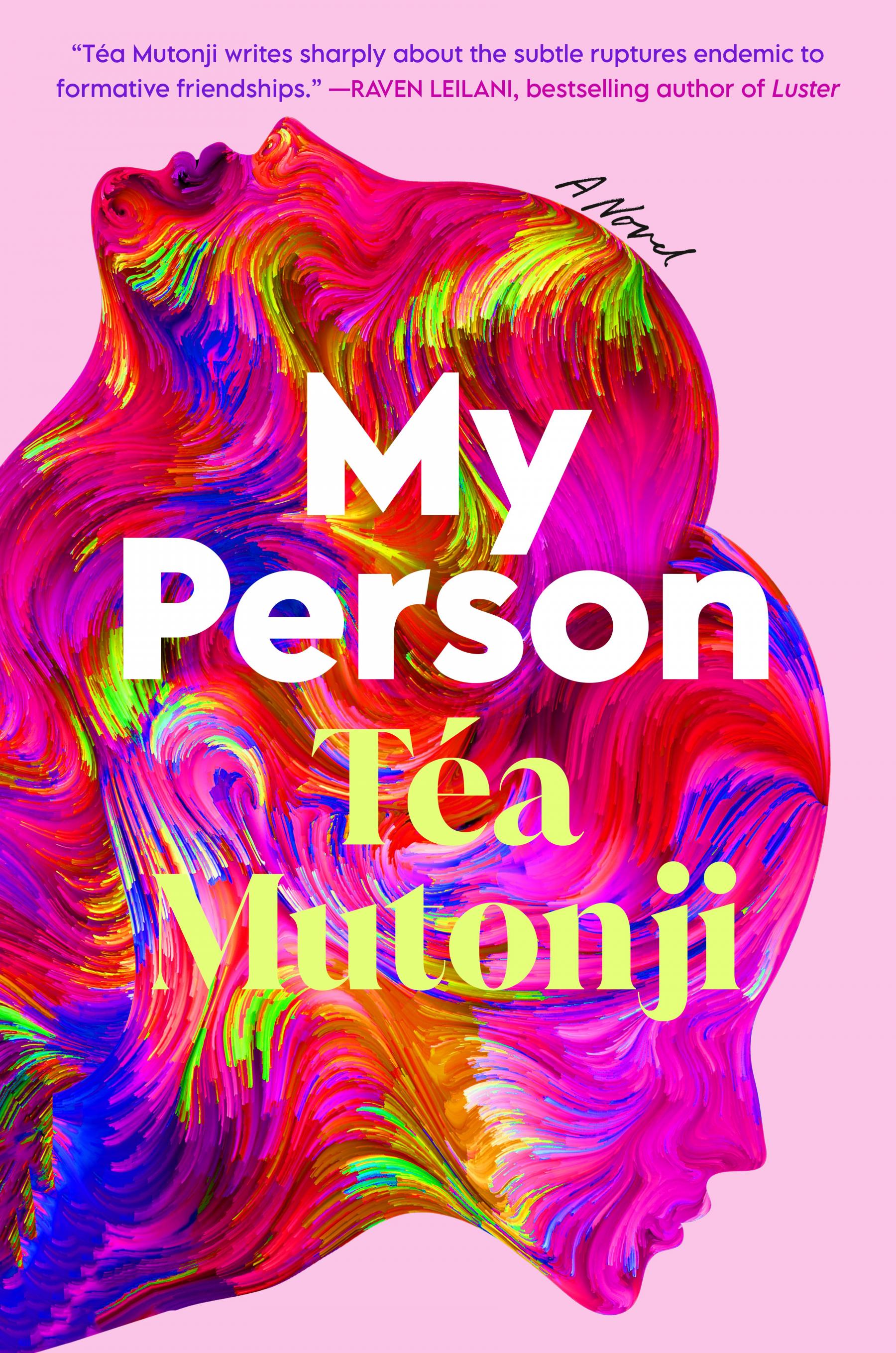
Cover of My Person (Putnam Books, 2026) by Téa Mutonji
To zoom out a bit to talk more about craft—you also started as a poet and have continued writing as a poet. How does your poetry figure into your prose writing?
I'm such a new school poet, and I get very personal. I own it, and I'm proud of that fact, but because of it, I struggle to publish poetry because I am a pretty private person. I do like to feel like there's something that's just for me. I became a writer professionally at a young age, and it was my favorite thing to do before that. This is a part of me that I missed when it was just my hobby. Now I am on a schedule; I'm at my desk nine to five, I take my weekends off, I have my agent, my publicist, all these things. Now I write poetry just for me as my little hobby again, which is really fun. Will I publish a poetry book someday? Never say never. But after Shut Up You’re Pretty, I really started to miss when I was a private writer, and everything was just mine. I've always been a very private person in that way, and my writing does kind of lean a little personal, even if it's fiction, so that is why I now write fiction books. I still try to own up to the fact that I'm a poet first. It's the way my brain thinks; it's the way I love in real life. It's really who I am. Poets…I think we're a special breed of people, so I like to slip it in.
The book became so much about language and about how we're no longer hearing each other that I made Tania a writer at the last minute. She wasn't a writer in the first few drafts, but I couldn't take the poetry out of the book, so I almost had to justify why this protagonist thinks of herself as a Black woman through a poem. Why is it that when she's writing text messages or she's writing these personal notes on her phone? Why is there a bit of a rhythm there? I think that poetry is going to be hard for me [to let go of] as a novelist because I tend to lean pretty poetic, but I can't keep writing writers, so I'm going to figure it out at some point. But it's not intentional. It comes out naturally, and I just don't fight it.
Prior to My Person coming out, you had your debut story collection, Shut Up, You’re Pretty. What is the relationship between story writing and novel writing that you've come to find as you've progressed in your career?
I never know if I'm writing a novel just yet or if it's a short story. I'll admit that oftentimes, I have an idea for a novel and I start writing it, but it becomes so concise that it is just a short story. It's really a playtime for me. I sit down at my desk and say, “Okay, this is something that I'm exploring.” If I fall flat very quickly, I typically change genres, but if I have more, more, more, then I know it's a novel, and I'm off to the races with that. With my second novel, which I've been working on for a while now, I really sat down every day for many, many weeks, asking, "What are we writing today?" And the second I had a hook that I couldn't stop, I knew I had a novel forming, so I really let the story tell me what it wants to be, and I really respect that.
I'm curious: in the lead-up to the book's official release, how are you feeling, and what has the anticipation been like?
Initially, I wasn't thinking about it at all because the book was supposed to come out last September, but we pushed it back once we got a U.S. publisher. All of the anxiety, all the major excitement, I actually experienced last year when I was in a countdown. Sometimes I forget that I have a book coming out because, now that it's been a year since my initial pub date, I've been writing my second novel, and I'm a very demanding writer. It's a perfect distraction, because I cannot think about My Person when I'm so deep in the writing of the next book, because I'm in a two-book deal.
That was true up until maybe last week. Now I'm like, “Oh, this is scary.” I don't feel nervous in a negative way. You know when you're about to graduate high school, and the world feels big and unknown, and you're going to miss all of your friends that you've spent the past four years getting to know? I feel that feeling. It's very intense and very unexpected, and I don’t know why I feel like I'm mourning something. Probably because I worked on this book for so long. But I feel a little bit of anxiety that this thing that was just mine is now everybody’s.
Do you feel like the characters, once the novel has been sent out for typesetting and everything, still live with you? Do you find yourself wanting to write with them again?
Surprisingly, no. There are definitely things I wish I did a bit more of, but I feel very, very content and very okay letting them go. I love Tania. I love her so much, and I didn't feel that way about my first protagonist [from Shut Up You’re Pretty]. I think about my first protagonist all the time. I want to hold her hand. I constantly wonder what she's up to. But Tania? I'm like, You go, girl. You've been set free. The world is yours. I trust you. I feel very complete with this novel.