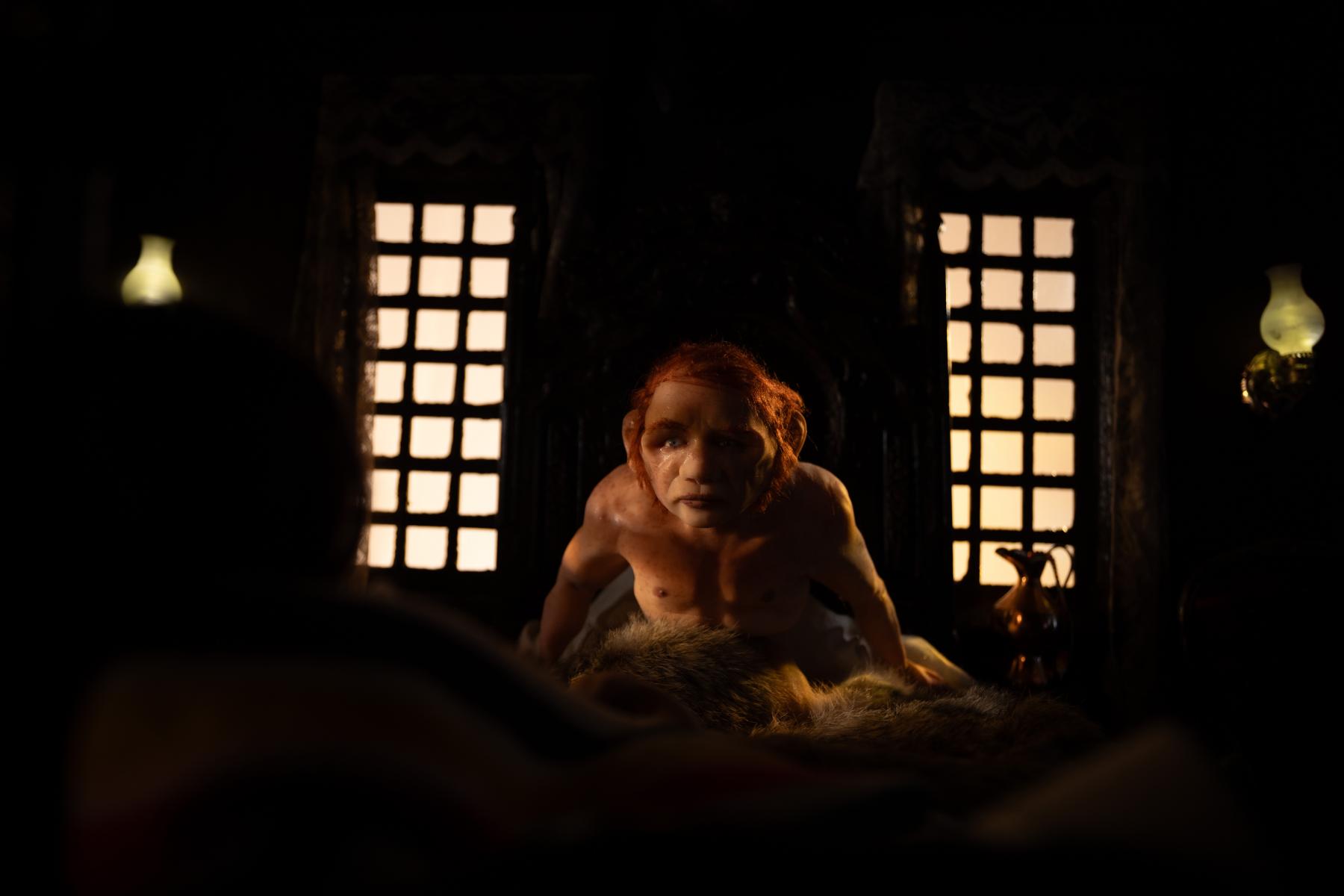
Lighting test for Bastard (forthcoming). Courtesy of the artist.
Métis artist and filmmaker Terril Calder takes an unconventional approach to animation, informed by her multidisciplinary background in performance art, sculpture, and drawing. Often working on her own, she assumes the role of writer, builder, director, producer, and animator. The result of her process is a body of work that interrogates the authority of settler-colonial histories, asking what counts as truth. Her stop-motion films build immersive worlds that call upon these histories and read them against the grain—ultimately exposing the constructed nature of, and biases embedded within, colonial institutions and systems of power.
I’ve gotten to know Calder over the past few years, and have come to deeply appreciate her ability to laugh, or make a joke, in the face of an objectively shitty situation. This, I think, is also evident in her work, where she always approaches her subject matter with levity. Meneath: The Hidden Island of Ethics (2021) for example, contrasts the Seven Deadly Sins against the Seven Sacred Teachings as they shape the identity of her protagonist: a Métis baby named Baby Girl. Baby Girl believes she is destined to go to Hell, her inner turmoil at once humorous and heartbreaking. She puts on a bearskin hood and destroys a cherub-shaped piñata (which looks a lot like her) with a hammer. She paints “WHORE” onto the chest of a cut-out figure of a nude woman. Her baby-ness makes us feel tenderness towards her in her moments of wrath or rage—even when they manifest as things a baby could (obviously) not do. As a whole, Calder’s body of work rejects binaristic thinking, and is nuanced in its refusal to draw hard lines between seriousness and play, fact and fiction, good and evil.
We sat down to chat about her practice and her forthcoming film, Bastard, in the transition between what she calls “seasons” of her process. She was moving from working with a group of studio assistants who helped build her set, to animating the project, which she will do alone. In the conversation that follows, we talk about the inspiration behind Bastard, which tells the story of George Simpson (c. 1792–1860) the colonial governor of Hudson’s Bay Company, and his two wives Lady Frances Simpson and Margaret Peggy Taylor. We spoke about her sleuthing through White history in order to repurpose it, the importance of laughter and play, and how the desire to never stop learning fuels artistic practice.
You take the challenge of the task at hand and see how you can find joy in it—I think that’s what [my family] taught me. Truthfully. It doesn't matter what you're doing.
How do you strike a balance between play, humour, and the heavier subject matter in your work—is there a specific approach you take to try to find that balance or is that just…
Well, I mean, it's part of my culture: if you don't find the humour in something, you'll go under from it. We always find the humour in everything. It’s part of the daily process. It was so amazing to open up the studio to a lot of Indigenous creatives to have them come and help me with this project, because there's an exchange of energy. I'm teaching, but they're also teaching me so much. We're building something, but we're sure having fun at it. When I get to animating, though, that is different. It takes a lot of concentration, and because I am the characters—it's a different season in the process.
Yeah, every time I come over here, it's so hard not to want to just play! I look at the set and the characters, and I want to play dolls. I want to touch everything. It makes sense that you were all having so much fun together.
We always play dolls. We take the last hour of the day, and we play with the dolls.
I love that. I can’t remember how much, or what I’ve even told you about my work, but I have chronic pain and chronic illness, and a lot of my work is thinking through that. So this is one of the reasons I ask. I feel like my work is often read as purely serious, or heavy, or sad because of the subject matter—it literally being about pain—but a lot of the time, my work starts with a joke. I'm laughing about it, or in spite of it, and people don't necessarily pick up on that, which I find frustrating. Is that something that happens with your work—people missing the humour in it?
It can. It does. Well, you know what's funny? The first film I ever made was called CANNED MEAT. It was about an aging beauty queen that lives in a Silverline trailer, which I think is already funny.
There's a lot of Indigenous humour in it, but it's pretty dark. I do dark, and I think it's funny. But not everybody knows how to react to it—except for Indigenous people. I was at a screening of CANNED MEAT with Lee Maracle, who’s an amazing writer, and she was killing herself laughing, and people were giving her an eye, like: it's very serious art, don't be laughing. That humour is always there, it's always a little bit of both. I think my work is funny. I don't often think everybody thinks it is.
Yeah, I guess this thing where not everyone knows what to do with it, or finds it funny—I don't know, maybe that makes it more interesting—I think that can be generative in its own way.
I also find if you get somebody laughing, then you can tell them some secrets too, right? It's a great way in.
Yeah, it makes it so much more accessible. Which is why I get frustrated when my jokes don’t land. My friend, Ella Coyes, always says “if you can make someone laugh, it's easier to make them cry.”
Oh, I love that. It’s true. Well, yeah, if you just rush up into somebody and don't identify with them, then they're not going to connect with the work. In my own life, I like to enjoy myself, and talk about stuff that matters to me. So I think my work is also reflective of that—I hope, I don't know.
I think it is.
It's okay if it isn’t. [laughs]
You’ve already told me what this film is about, but that's another thing that would be good to talk about, you know, for the readers. What prompted this specific project? Where did the idea for it come from?
I think probably around 10 years ago, I was doing a lot of research on another film called The Lodge, and I kept coming across quotes from George Simpson. It made me curious, because every time I found a quote, it'd be contradictory to the previous quote. Like: this is the same human, why did he make these radically different statements? Especially when it came to Indigenous relations. There was a quote that I read where basically, he was encouraging the men of the Hudson’s Bay Company to take Indigenous wives, because of what they would bring not only to trading relations, but also in terms of provisions and medical knowledge. I mean, they served multiple purposes beyond being concubines, which ultimately, they were. But they were also medics, chefs, they knew traditional ways of living through Rupert's Land—what’s now Winnipeg—where a lot of colonists couldn't live through the season of winter. Then later, he started making statements like—and none of this is verbatim—”we cannot be friends with Indigenous people, we have to treat them with an iron rod, they have to know their place amongst us.” He was an ally who became a master, and that was curious to me. I kept researching and digging into how that came about or why that was—and it was because it changed from being about trade relations to colonization.
I'm actually from Fort Frances, Ontario. It was called Lac la Pluie—Rainy Lake—before it was renamed as Fort Frances. So I've always known that George's young bride—this is all I knew—was Lady Frances Simpson. She visited the fort, people were enamoured with her, and they renamed it after her. What I didn't know was that this visit was a political move, she was just purely propaganda. She was used as an incentive for “half-breed” men to breed themselves White. The idea was that they would breed themselves out if they took non-Indigenous, White wives. So she was like: “if you are a fine gentleman you deserve a beautiful White lady as a token of status.”
My producer also told me that she came across a letter between George and his good friend McTavish. There’s a lot of correspondence back and forth between the two of them—and it’s in his own writings like this that he’s being honest. Apparently he and McTavish both decided that they should marry White women and had a bit of competition about it: who would do it first, stuff like that. I also think there was political pressure, the trade relations were changing.
But going back—before all this, I knew that Frances existed, and as I was digging further into the story, I found out about Margaret Peggy Taylor, who was one of his “country wives”: medic, concubine, all of those things. It was written that she was as close as he had ever had to an Indigenous wife. They used to call her the Empress and he was called the Little Emperor of Rupert's Land. In his writings, he also called her “my commodity.” So I keep calling her Commodity or Margaret. Everybody has many names.
Another character is called Merry Indian, which was a name in Hudson’s Bay Company records for somebody who was like a Jane Doe, who was Indigenous. But I spell her name with an ‘E’ because I think it's funny. [laughs]
[laughs] I love it.
Nobody else knows. I don't even think anybody even calls her Merry in the film. But I know who she is, and I know the rat is named Tom. All very important. But when I was writing the story, I needed to have a Merry, who is everything Commodity can't be in this story. If it was just one woman and a man, Indigenous, and non-indigenous—I didn't want to put her in the place of victimhood. It's a very careful narrative to try to explain in 10 minutes. Merry Indian is based off of one of George's previous concubines, who he grew tired of—she didn't suit him anymore. But actually, she then became the wife of McTavish. So McTavish is kind of the only one I don’t have in the lodge, but I didn’t want to have another—and anyway, 10 minutes! So, Merry is basically who Commodity will grow to become. She can say everything Commodity can’t because she knows better.
I’ve partnered with the NFB to tell this story. My impetus for making this film—and making a lot of my films—is to start a dialogue, to get talking. And you know, as you travel through the world—I think, because you're a visual artist as well—you kind of pocket things. I usually go at the things that sort of bug me, because I think they’re something we should talk about, something we should bring up artistically. My work never draws conclusions. I think it just tries to ask the right questions. I've changed some of this story, because I'm more of an auteur artist. It's trying to fit the history in, on a need to know basis, quickly moving through the facts, without being too didactic. I'm not making a heritage minute [laughs] But, I thought it would be really interesting to make a short film—not only about what was between them—but the bigger, political implications, of what it meant for Indigenous and non-Indigenous relations at that time. There's still heirlooms of that history that exist in my community, and of the propaganda, which I think is kind of crazy. It still happens, person to person, these questions like: Who do you identify with? Are you team this or are you team that? But a lot of it comes back to this man and his role, and the power that he had in turning everybody against each other.
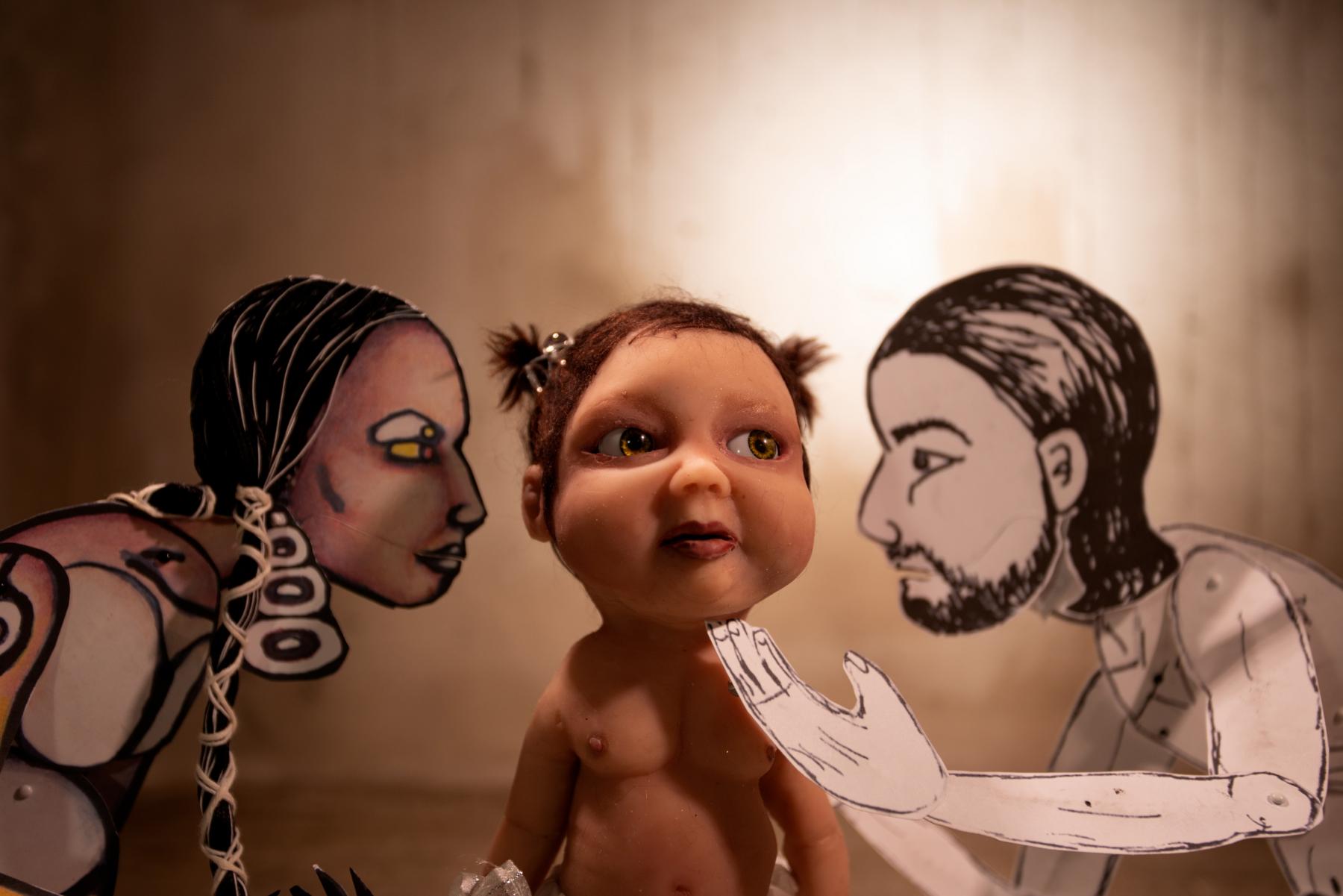
Still from Meneath: The Hidden Island of Ethics (2021).
.jpg)
Still from Meneath: The Hidden Island of Ethics (2021).
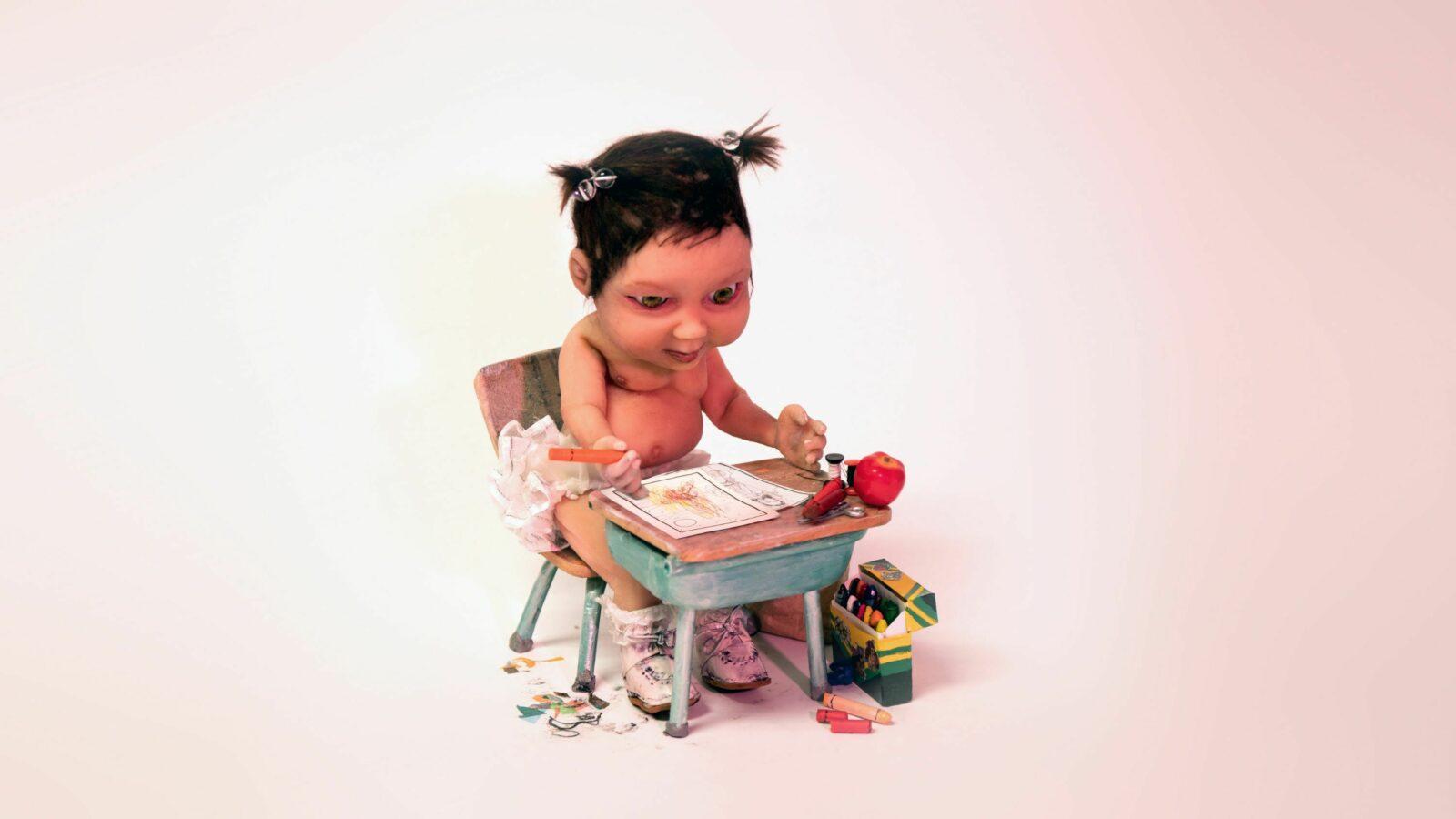
Still from Meneath: The Hidden Island of Ethics (2021).
It’s so interesting to hear you talk about how George’s narrative shifted, and this being really significant in and reflective of larger political shifts. Him initially being an ally—and this acknowledgment of the value of Indigenous women, and then that same acknowledgement of value becoming the basis for exploitation and violence…
100%, and that's the heart of the story. It could just be a straight story about victimhood. You know, this White man colonizer came in and abused this native woman. It was way more complicated than that. There was actually a true love between them, and a true respect. To me, his heart was always here. He had a deep-seated respect for Indigenous—not just culture, but politics. He wrote about that many times.
I should also tell you the reason it's called Bastard, which I think is really interesting, is that he was allegedly born of a bishop and his sister. He was raised by the sister, and was sent away because he was “tainted.” After that, he was always trying to make something of himself. Part of me thinks that was also what appealed to him about a new culture and a new way of being—one where the men actually respected him.
There’s so much to dig into. So many interesting bits and pieces to the story. Is this the most research heavy film you’ve made? I imagine you could just keep going forever, it must be hard to stop yourself from doing more digging.
Yes, absolutely. For sure. Once you start reading the history, it's hard to pull yourself away from it. And this is like being an Indigenous sleuth through White history, and trying to find how that could serve a different purpose. It's funny, because now my producer, Jelena Popovic, and actually, Adeline Bird too, who has been working with me in the studio experienced that too. We were really sleuthing. He also kept a burn book, which is—
Wait, what? [laughs]
He wrote a character book, which I actually just lent to my producer, because it's fascinating. He would write about everybody's character after he met them, and he always wrote a line about whether the Indigenous people liked them or not, which I think is fascinating. It shows you that it mattered to him. You know what I mean? Funny. Curious.
It was a lot of research, but it didn't help because the more and more we got into the research…
The more you want to tell.
Yes. Between me, my co-writer Barry Belinsky, and my producer, all of us were going: “Oh, if we take this, we got to take that. And what is about this? And oh, then we have to leave that.” I needed to just strip it down to: okay, what is it that we want to say here? Barry was really helpful at getting to the root of the narrative threads and what we needed to maintain. It was actually a beast to put together, and to decide what stays, what goes, and where do we sort of twist the truth? The actual truth is stranger than the things that we twisted. Like in one of the writings that we read, they speculated that George fathered 200 children.
Jesus. That’s too many. [laughs]
[laughs] It's 200 too many. I know. But yeah, I don't want to just demonize George, though. That’s the trick.
That's too simple.
It's too easy. I don't think that in this life, there are bad guys and good guys.
I was just going to say.
There are broken guys. My constant question—from when I first started making visual art, to performance, and now to this—is what motivates somebody to want to control another person? Where does that come from? I’m fascinated by it because it's complicated. And George suffered his own consequences for the choices that he made. He was the one that suffered the most.
I was told early on that nobody wants to watch a film about our history. And I do think that it can be a bit of a snoozefest for people. So part of my approach to this film was also wanting to do this in a way that people wanted to engage with it. I wanted to make it a horror film.
Okay, the house—tell me about the house.
Well, I've taken certain liberties. [laughs]
[laughs] Well, yeah, of course. You have to.
I have to. A lot of the film is going to be questioning what’s actually true. But the house is a portion of the film inspired by Lower Fort Gary—the actual structure that's still there, still exists. It was called The Big House, and it was actually built for Lady Frances. Margaret Peggy Taylor, in truth, was never actually in this house, even though she is in the film. But yeah, It was really fun to make it. I pushed it a little bit more Victorian. It was probably more Georgian at the time, but I wanted to go for a Gothic horror kind of feel. It suited me and my artistic purposes. It’s not a heritage minute. And the point is that Margaret is captive, which is a huge part of why the house is the only set.
Some of the props are actually replicas I made of real artefacts from the Manitoba Museum. There’s this one section in the museum of George Simpson's belongings. So there’s George Simpson's chair, with a phoenix on it—he had this fascination with the rising phoenix, the idea of rebirth and coming to a new land. There’s a candelabra with three women around the base. Then there’s this Ram’s head snuff box, with a rabbit's foot that you clean your moustache with, and it apparently had wheels. They would bring it to the dinner table, and they'd wheel it from person to person, and they would do snuff, and then clean their mustache with the rabbit’s foot. I think it's crazy weird. Like, I don't even have to reach for the horror.
Yeah, no. Don’t have to twist the truth at all there.
Kind of crazy. The other thing, which was also curious, was the octopus bag. In Indigenous culture it’s a huge honour to be gifted this. And you could say that he didn't really care about it, but it was part of his possessions. It still was in one piece. There had to be some level of care for it, in some way. Especially for Indigenous creators, we’re always trying to find the truth in between the lines of what we know instead of taking everything at face value.
.jpg)
Lighting test for Bastard (forthcoming). Courtesy of the artist.
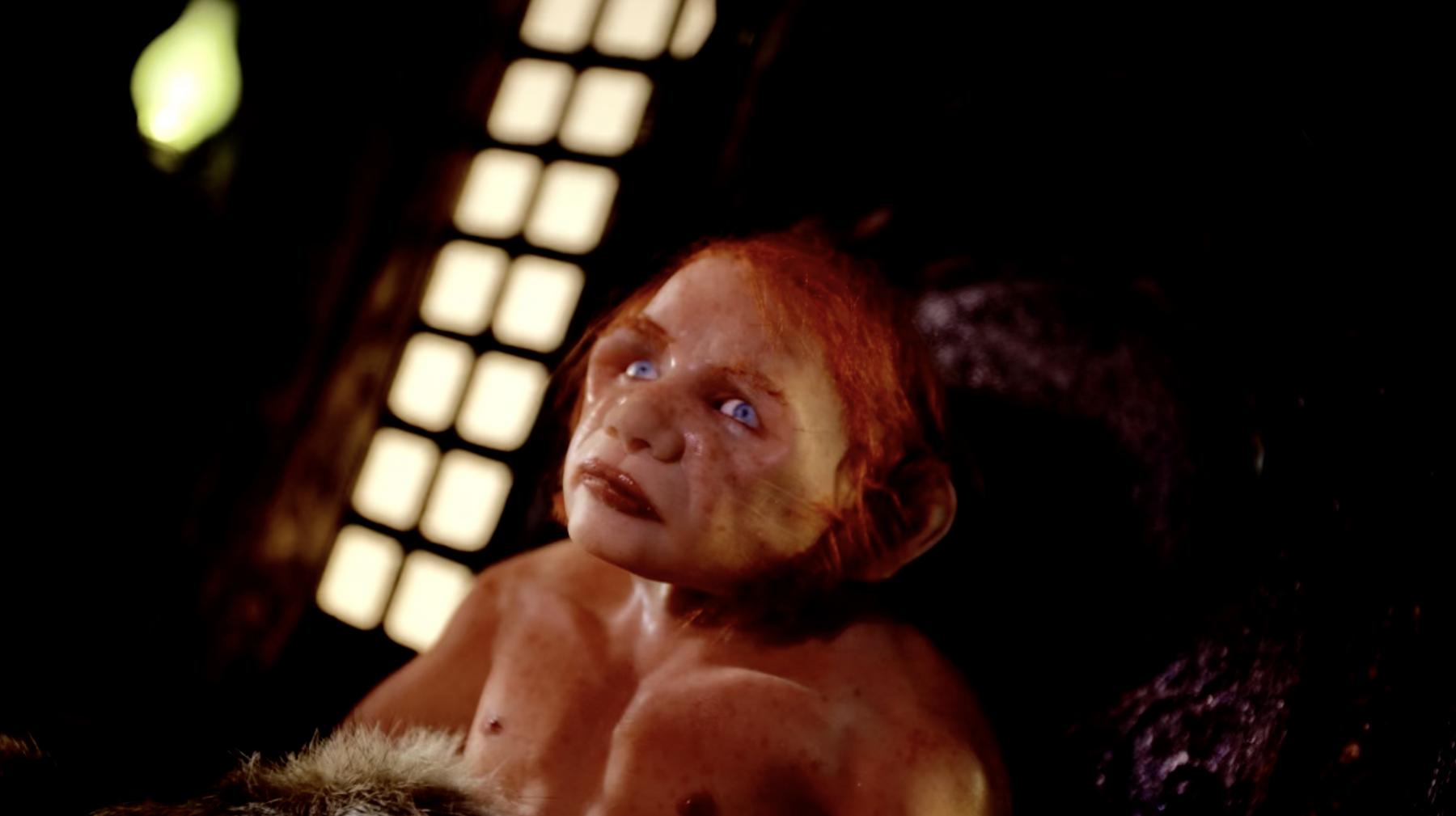
Lighting test for Bastard (forthcoming). Courtesy of the artist.
So what made you feel like now was the right time to pursue this particular film? Clearly you’ve had it pocketed for a while now.
For a long time, yeah. And because now I have the money to do it right. I don’t go about making a film the same way every time. My budgets are all over the place. The kind of approach I take to them is all over the place. I really believe in the power of a quick and dirty film. I think it's amazing for artistic expression to just get in there and make the thing, and not even think about what you're doing. This film is bigger in the way that there's an animatic and a whole script. I also wanted to open my studio to other people coming in and sharing that experience with me. So it’s a more expensive approach to production. I want this film to have a different kind of reach globally, and it helps to go down the right avenues. The funders are really great because they do know what they're doing, and can help get that reach. I know there's going to be eyes on it, whether the film is a success or not and that's important to me for this particular film.
There are a lot of people involved in this film. The NFB has a full team of technical people, cutting edge technology—all these new things we’re going to use, and it seems funny. I'm working in this closet, and I have access to all this amazing stuff, and people, and resources. And because it’s what my process has been like outside of this film, I’m like “Nah, I'm good. I got this” [laughs]
[laughs] “Rather just do it myself!”
But that's part of this process. The win in it, for me, is trying to learn to be different, too. I think there's nothing worse than being a successful artist and having a successful film, and everybody just thinking you're successful. I think there's a lot of growth in the danger of it, and in learning and evolving, and in not feeling that pressure to make a successful film over and over again, but making a film that fills you. I'd rather stand behind a film that fails, but that I thought was amazing.
You mentioned you’re co-writing the script for this film. Is that usually the case? Or, what's your process typically like for writing? Has working collaboratively been a change for you?
Usually, I don't. But I'm trying to grow as I get older. I usually write them alone. I felt like, especially sleuthing through so much information, it was really hard to boil it down to what our 10 minutes of all of this history would be. It could have been like a 3 hour film. So I'm working with Barry Belinsky, who's also Indigenous, Métis, and is familiar with the subject matter, and he comes from a clowning and theatre background. This isn't just a story where it’s me talking about one isolated thing. This is a big story and it needs a lot of people, because I think it's our story.
I've never, ever, co-written anything. It's a challenge for me. I'm learning. I'm not really a director, I’m somebody that just gets my hands in the medium and makes something. So even in the studio, when somebody else has to be my hands, I feel like things are lost in translation. This is new to me, and there’s a learning curve, but it’s definitely beneficial. I don't know, you probably understand this—if there's a special prop, I really have to make it. I get like, “Oh, I wanted to do that.” It's terrible, I'm always going to be an auteur artist. I have to figure out how to work with people.
[laughs] It is hard, yeah, I don't know.
Well, not for everyone—animators, even in school, will start out working with each other. But, like I said, it's a different mentality being a visual artist.
I can relate to wanting to do it all alone, but animation—stop-motion in particular—seems like so much work to do alone! I don’t know that I could do it.
Well, it is, if you don't love it. It's true. Everyone's like: how do you do that? When I talk to people in animation school, I'm like: you gotta trick yourself. And I think that's why I like the challenge of making all this stuff. It's like: okay, what do I get excited about today? If you've got all of this work to do, then you can come in and pick something that motivates you on any given day. When you have so many tasks to do, you can always gravitate to the thing that gets you out of bed and gets you happy and excited. I usually do all of it, because then I can do anything I want to get things done. It actually is pretty effective. I'm pretty fast compared to a lot of other people because I'm not talking about my wants, I’m just getting it done. I mean, it makes sense to another visual artist, but animators think I'm crazy. Also, I usually, unlike a lot of other animators, build the characters and sets and props while I'm writing this script. Usually, those are in completely different compartments—there’s an order they go in.
.jpg)
Still from A Bear Named Jesus (2023).
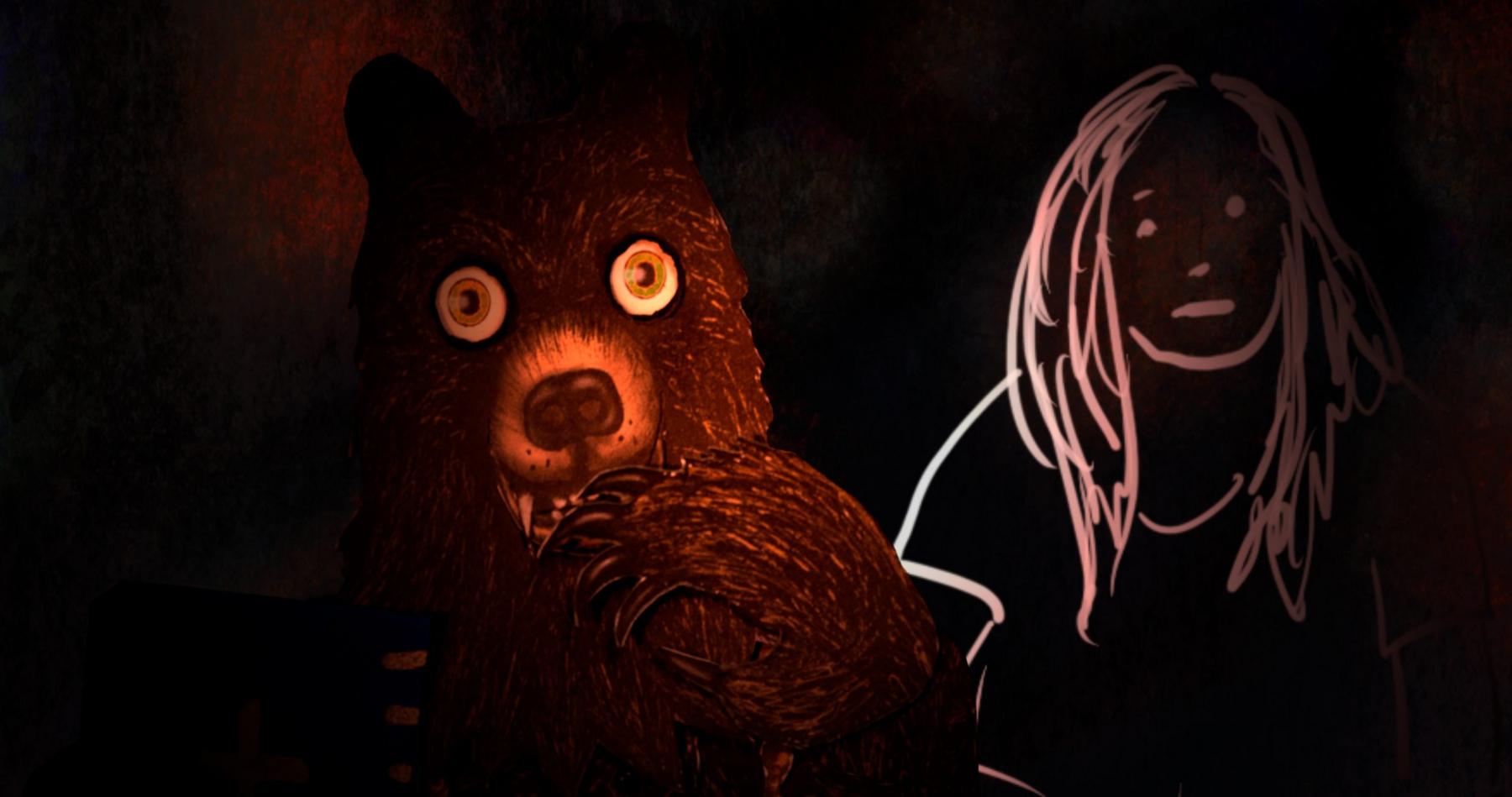
Still from A Bear Named Jesus (2023).
Can you tell me about your transition from performance art into animation and how you ended up doing what you're doing now?
Well, it was funny. There was an evolution. I was a drawing major, and then I went into painting, and then I went into installation. I love learning and moving forward, and that's why I liked performance art—it could be anything. I like the puzzle of the art: where it exists in the world, is it time-based, how long, you know. I started using video and I was always just kind of learning. Then I thought I would try to get a job in the industry or something artistic, and so I learned 3D animation. I didn't get a job. But I got a job teaching. And when I was teaching, it was too expensive to teach the kids 3D animation, but I could teach them stop motion. So I learned at the same time I was teaching it. I realized that stop motion animation is similar to performance art in that you can do anything you want—it doesn't have to be linear. A lot of Indigenous people gravitate to animation as a form of storytelling because you can do anything you want with it. It doesn't actually have to have a narrative arc, it can just be gallery-based—it’s just moving image.
Yeah, I also feel like—and maybe you don’t feel the same way—but there is this thing with performance art, or just more traditionally gallery-based art in general, where sometimes it feels like people are less open to it because they have assumptions about it being over-intellectualized, or elitist or something. The history, the language around it, and the context of the institution it exists within can make people feel like they can't fully access or understand it. And I mean I love that kind of work, but I do think people can feel…
See, I love it…It’s just a puzzle you're putting together. But yeah, there was a point where my family didn't understand anything. They didn't get it. I didn't want to shut them out, and I used to try to explain, you know, this is how you take this in—but then I just started to make cartoons.
Do they get it now?
No, they still don't even get it. My mom always says, “I'm happy you like it.” [laughs]
[laughs]
Although, they liked A Bear Named Jesus. That was written by Archer Pechawis. And because it's funny, my mum said, “well, that's a good one.” I've made 17 films, but she likes A Bear Named Jesus. That one took 4 months to make. Meneath took 4 years. So there's a bit of a difference. A Bear Named Jesus did so great, though. People liked it, but I also just had so much fun making it. I'll definitely need a palette cleanser after Bastard.
But anyway, I'm still that performance artist. I have crazy ideas that I want to implement and see if they actually work. I always need that. That's what my carrot is for animating. Like, the scene in Meneath with her in the jolly jumper, I just thought about that, and I'm like: I have to make a jolly jumper, it's going to be so wicked. You know, it’s that high that an artist gets. And the craft of animation with a full team doesn't have that, you don't have that same spontaneity. You have to navigate it slowly, communicate. But I mean, I live for that spontaneity, and sometimes it works out. Craig Commanda, one of our studio assistants, was always saying that our studio mantra is “well, let's see if this works.” [laughs] Like: I don't know. Let’s see if this works.
That's kind of the best way to go about it, I think.
Everyone gets to come in and play. Who doesn't want to play? I have to say that that's not just in the work that I do. My whole family is like that. My family worked for the mill and, you know, I think it's in how you navigate life. It's not necessarily that you get to push paint around, or whatever. My brother worked for the mill and he just had a blast doing it. He makes decks and stuff, and my dad, you know…You take the challenge of the task at hand and see how you can find joy in it—I think that’s what they taught me. Truthfully. It doesn't matter what you're doing.
Something else we've talked about—and laughed about—is how people tend to describe your style as “raw.” And I wonder what your take on that is.
You know, with gesture painting, there's something in the essence of it that's magical or can be, right? Animation usually isn't a space where people do that. I like the immediate. When I first started, I was asking myself how I could show people that spirit of making in the actual things that I'm making. I didn’t want it to be so hygienic.
Yeah, you can see your hand in all of it. You’re building a world and that is immersive, but you can also see the evidence of its construction…
Yeah people are immersed, but also aware of it, you know? There's that feeling to it. To me, those spaces—I mean, there are animators like Suzie Templeton, Švankmajer, they're artists that I just really love. I don't know if you've ever seen Švankmajer's Meat Love, two steaks dancing—it’s ridiculously, disgustingly wonderful. Suzie Templeton, Stanley, or Dog, both amazing, creepy, tactile. I love it when it feels like it's going to go to hell. It’s like you're building trust with the audience. They’re like: she either knows what she's doing very well, or she doesn't know what she's doing at all. It's like punk rock, right?
[laughs] Yeah walking that line of what part, or how much of this is intentional? Which, personally, I love.
[laughs] Exactly, yeah. And it only took me 17 years for people to go: oh, this is stylistic.
It's not a mistake! [laughs] But I do think the tactility of your work feels really special and important, especially in the current moment. So much of what we see in our day-to-day lives has this digital, glossy, pristine, or smooth feel to it. I think working in a way that is contradictory to that is important. We need work that’s bumpy, that feels like it could all go to hell…
We're all natural beings and there's some part of us that sort of craves the tactile, you know? I think that is really missing now. I always think there's a spirit in the work. I guess that's even why the “raw style” comes in—I need to feel it. Like a good painting or whatever—it somehow moves you. When your spirit gets into it, you're not bullshitting anybody. You're giving them truths. Whatever your truth is. And truth be told, even if it fails, you enjoy the process and, you know…
…Don't worry about smoothing out all the bumps.
Yeah. Maybe I'm speaking to the converted, but to me, making stuff is always about your own personal journey reflected into the art, right? But in film, a lot of the time, it's like you're making a product, and that would be a lot of work and I don't work—I just come and have fun. Or I learn—even the hard stuff is still fun. I think it's great when people are creative not only in what they're making, but also in how they're going to do it. I had the privilege of sitting amongst a bunch of Indigenous youths talking about decolonizing film production—because it's very hierarchical, there’s not a lot of joy. I think a lot of those systems can change to serve creativity.
I want to come back to the thing you said about the jolly jumper—is this where it starts for you? Like, when you’re making a film do you have images of specific scenes that you want to include that guide the process?
Sometimes. Do you get that too?
I'll have an idea for a process, a way that I want to go about making something. But the image is not…I almost never start with the image.
I get a bit of both, simultaneously. Usually when I’m brainstorming an idea, I’ll have my journal with pictures and words, and I’ll be like: I love this, or this word has to really happen, or what can that look like?
Okay, to wrap it up: do you have a favourite season of the process?
I think I like the beginnings of all of them, and then I'm kind of itchy to move on. But the weird part is, because it's such a big turnaround. I’m always worried that by the time I have to animate, I won’t remember how to. I'm usually rusty after a while.
Everything is different now, it's funny to be here alone, without all the laughter and the wine o'clock. But I feel lucky that I get challenged through everything.
I'm so excited to see how it turns out. And curious, but I don't want to ask you too much—I want all the spoilers.
I'll tell you all of it. All of it. He actually pulls his chest open at one point and pulls out his heart.
Alien style, or?
Lovingly, it's in a tender moment. It filmed well in the test. Yeah, so it's…It’s going to be fun to make. [laughs]