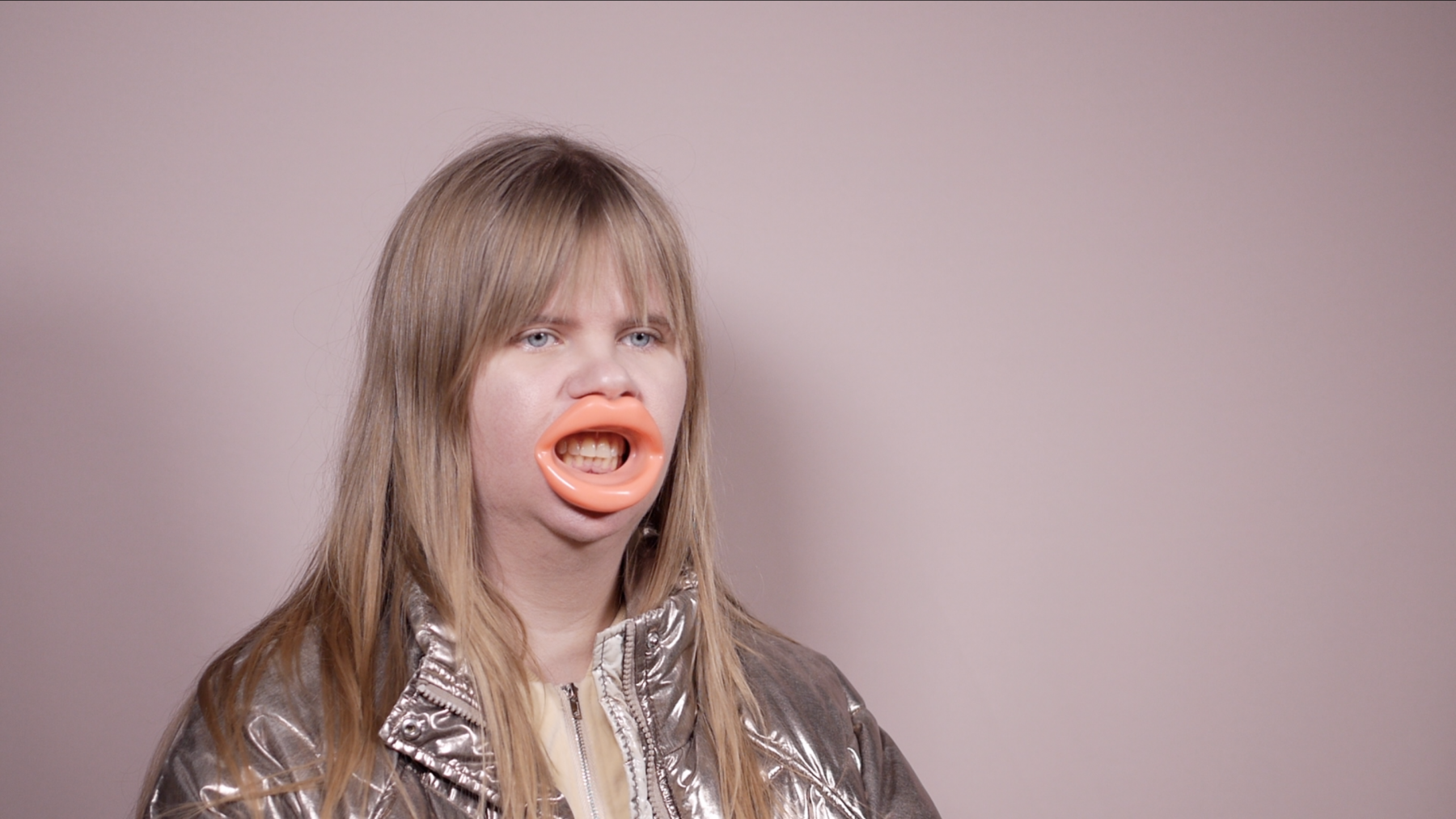
Bridget Moser, My Crops Are Dying but My Body Persists, 2020. HD video, colour, sound, 21:57. Courtesy of the artist.
The art history of Toronto is specifically and heavily indebted to performance artists. Accepted definitions of what constitutes “performance art” vary depending on who you are asking, and the landscape of spaces that make room for it has changed drastically. But where there is institutional neglect there have always been those who make their own opportunities. Describing her practice as a mix of “prop comedy, experimental theatre, performance art, absurd literature, existential anxiety, and intuitive dance,” Bridget Moser has been making audiences laugh with her performances and video works since 2012. Her characters and vignettes lampoon real people, or more accurately personas, that we are all more or less familiar with from the celebrity manufacturing machines of reality TV and social media. She has performed at the Art Gallery of Ontario (AGO), 7A*11D International Performing Arts Festival, the 35th Rhubarb Festival, and many others. She was also shortlisted for the Sobey Art Award in 2017.
Over the past fourteen years, Moser’s performance practice has made use of her talents in observation, adapting her characters, set designs, and monologues to changing cultural currents and the people responsible for them. Originally conceived for a residency at the Banff Centre, Moser describes her performance Baby Don’t Understand (2012) as “the performance that launched a thousand ships.” These early works show Moser’s experimentation with the structure of stand-up comedy, including using a microphone and incorporating furniture and props. Today her works feel more like scrolling through a feed, being faced with belligerent personalities that don’t quite seem real. Through a process of collecting objects, dialling into internet culture (and subcultures), and watching television, Moser has developed a unique framework for her performances—an approach which has unfolded noticeably over the course of several works since 2020: Hell is Empty; All the Devils Are Here (2025), Dreams of Dusk (2025), A Malevolently Bad Map (2024), When I Am Through with You There Won’t Be Anything Left (2022), and My Crops Are Dying but My Body Persists (2020).
Moser takes our new cultural archetypes and points us towards what I would call neoliberal brain rot about self-optimization and the capitalist posthuman subject, extracting and presenting us with the absurdity of these mindsets.
According to Andrew James Paterson, Toronto’s performance scene today has some purists who maintain strict boundaries for what counts as performance art, what is theatre, and what doesn’t belong; he says there are some who do not consider Moser a performance artist, but rather an avant-garde stand-up comedian. The implication being, perhaps, that no serious performance artist can be funny. While Paterson recalls that he’d seen her perform previously, the two first met at an AGO party in 2014. They would meet up a few times a year at Hair of the Dog in Toronto, where they would gossip and talk about Samuel Beckett. The two performers have an affection for each other’s work, with Paterson standing up for Moser being seen as a performance artist. “She’s more verbal than some performance purists, they don’t like language. She’s funny, and she’s a good writer. That’s the first thing that really hit me other than the fact that I find her very watchable.” He recalls her early performance works showing off her dance background, fluid movements while negotiating a love-hate relationship with furniture. To Paterson, Moser’s work is very rooted in body art, and specifically body sculpture, over time transforming into works that investigate the body in relation to technology.
Where did this penchant for prop performance come from? Moser’s sister, art historian Gabby Moser, suggests that this might have been a natural course from when the two took dance classes and playacted at home with toys and other things. She recalls that Moser would incorporate props into her solo dance routines, often made for her by their uncle, a set-maker who worked on the TV series Battlestar Galactica. Their fourth-grade teacher made students perform monologues, as practice for the schoolwide speech competitions; Moser says she still uses his teachings on how to memorize and deliver a speech off-paper. In her BFA at Concordia Moser studied painting, which turned into more fibre- and material-based work that became performative by the end of her degree. Her final project in 2007 was a Swiss hunting lodge environment made entirely from fibres and screenprinted fabrics, including axes and logs, referencing her paternal Swiss heritage. Inside a tent was a video of Moser wearing a fake mustache, doing a deadpan but wordless impersonation of her father—making coffee, doing the crossword, chopping wood, cooking Mickey Mouse-shaped pancakes over a campfire.
The key to her sister’s comedic performance turn, Gabby says, may actually originate outside this personal history of dancing, acting, improv, and being naturally funny; rather, it was solidified by attending Ieva Misevičiūtė and Michael Portnoy’s “Experimental Comedy Training Camp” residency at The Banff Centre in 2012. Moser was among 20 artists who participated, along with familiar names in the Toronto performance scene like Neil LaPierre, Fake Injury Party (Derrick Guerin, Scott Leeming, Paul Tjepkema), and Life of a Craphead (Amy Lam and Jon McCurley). Residency participants were asked to perform at “club nights” with only an hour’s preparation directly beforehand. Otherwise, the group underwent intensive workshops that trained performance through voice, stage presence, and even anatomy. Misevičiūtė and Portnoy’s collaborative practice in “experimental comedy,” involving “the sublime, the blatantly inscrutable, the abstract, the primal, the operatic, the choreographic, the theoretical… etc., into the frame of stand-up,” highlights a combination of the bodily with the study of theory into a cohesive and robust practice.

Bridget Moser, When I Am Through with You There Won’t Be Anything Left, 2022. Courtesy the artist and Texas State Galleries. Photo: Madelynn Mesa.
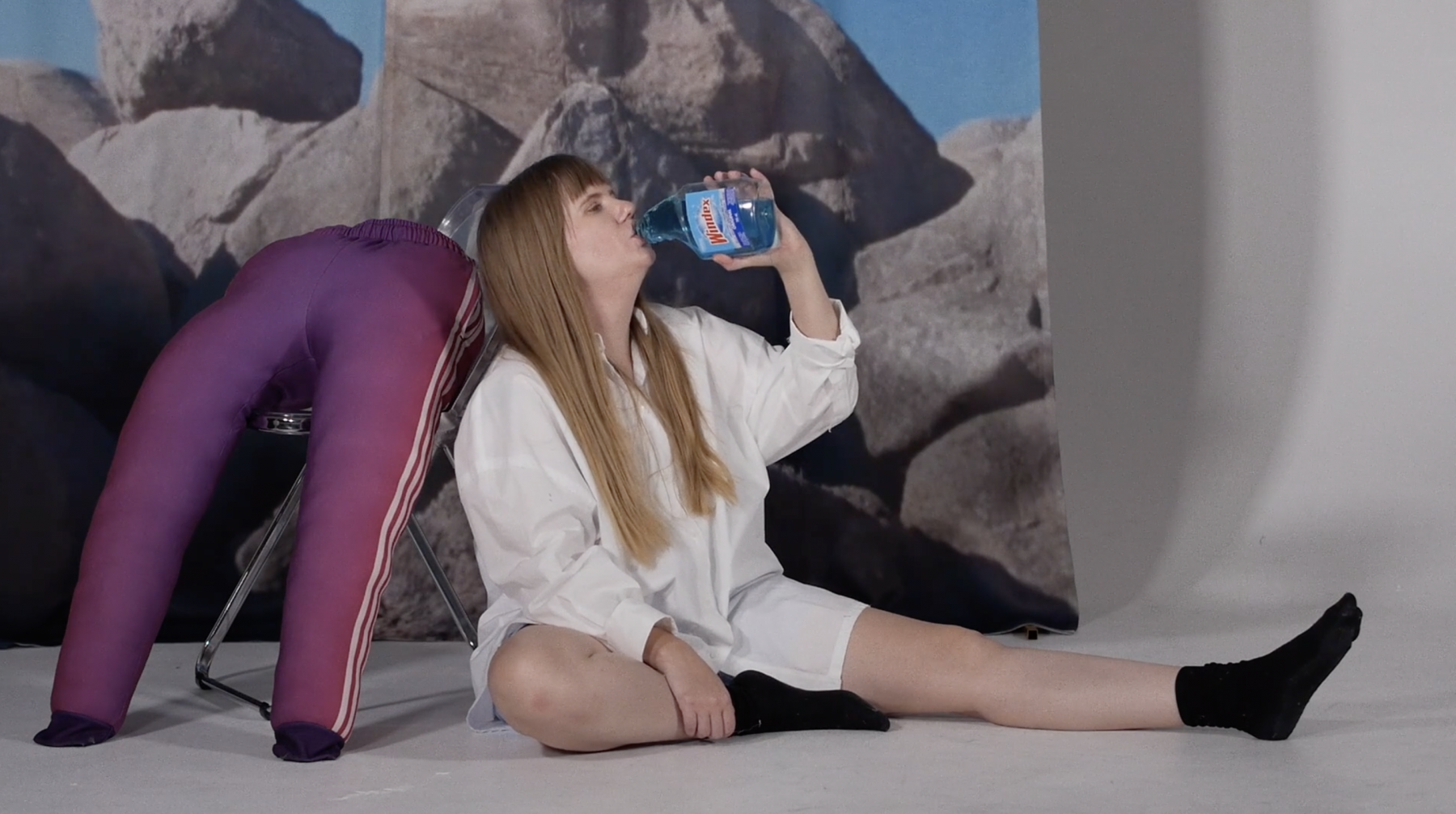
Bridget Moser, A Malevolently Bad Map, 2024. HD video, colour, sound, 13:09. Courtesy the artist and The Southern Alberta Art Gallery Maansiksikaitsitapiitsinikssin
Moser had seen Portnoy’s infamous appearance as a backup dancer for Bob Dylan’s 1998 Grammy award performance, when he removed his shirt and outflanked Dylan, dancing with “Soy Bomb” written across his chest and stomach. This, alongside an aggressive performance by a male artist in her residency cohort, inspired her to aim for making people uncomfortable. The residency upended definitions of comedy as a means to a laugh, rooting the practice instead in the absurd and the sublime, exploring the limits of language and communication with an audience, and acknowledging the potential for a hostile interpersonal experience. The structure of a stand-up routine resonated with Lam and McCurley, who organized the Doored performance series (2012-2017) upon returning to Toronto. The key elements—a seated audience and short performance with a microphone—were a fruitful foundation, allowing for a clear distinction between audience and performer. Doored was an opportunity to build a community that workshopped performance practice together in real time and in front of reacting viewers. Over 120 artists participated in the series during its five-year run, with Moser being a frequent performer.
Moser’s newest performance, Hell Is Empty; All the Devils Are Here, first performed at York University, then Art Windsor-Essex, and the School for the Contemporary Arts at Simon Fraser University, is a Saturnalian romp through the grotesque and carnivalesque spirit of a triumphal capitalism on its last legs and in denial. In Moser’s words, “I’m trying to bring forth the fact that we live in hell.” Honing her skills and the subjects of her works from the last few years, Moser takes our new cultural archetypes and points us towards what I would call neoliberal brain rot about self-optimization and the capitalist posthuman subject, extracting and presenting us with the absurdity of these mindsets. She captures the pathology that undergirds ideas about the hyper-networked neo-human, primed to be an uber-productive entrepreneurial subject living three six-hour days per 24-hour period, and exposes how hilarious it is to take these views seriously. She recalls: “After the performance someone asked me if the woman with the raw milk attorneys is based on Lisa Barlow [from Real Housewives of Salt Lake City], but I wrote that before the new season of the show started. Though I realized it is indeed Lisa Barlow, and every woman of her ilk.”
What makes it fruitful is Moser’s canny ability to draw out subtle humour in a way that is not on-the-nose like an SNL skit, rather giving form to the spiritual cores of these figures with a wink and a nudge.
Moser wanted the performance to feel like scrolling through TikTok, experiencing its unique brand of psychosis from the many personas trying to sell or convince you of something. It is the free market made flesh, where you could or should always be doing something you saw in a short clip, whether or not it is a scam or would have any real benefit. This threat worsens with AI, and with it, Moser suggests, a decreased understanding of aesthetics. Ultimately, Hell Is Empty is about scammers, and Moser understands that much of the mainstream cultural class is made up of losers. She showcases the ways that aspirational objects, like a Birkin bag, sit at the frontier of an affluent, influence-laden society, positioned as a seductive, symbolic reward for submitting to it. Maybe less consciously, Moser’s critique is leveraged at the crumbling foundations of Western civilization, showcasing the psyche of the average consumer as simultaneously pacified and plunging into ennui from a seemingly endless stream of new and improved products, in the spirit of Mark Fisher’s theory of depressive hedonism.
In this vein, Dreams of Dusk, a soap opera produced for CBC’s Creator Network, is acted out in miniature through props with AI-generated voices, each of the main characters carrying some heavy cultural baggage. Sarah is played by a 50 mL bottle of Glossier You perfume, a millennial favourite that “wears close to skin—so it smells a little different on everyone!” She is a real estate heiress and patron of the arts, consumed mostly by guestlists, gossip, who was wearing what, and nightmares of seeing herself flayed and pulled taut like Lady Cassandra in Doctor Who. David, played by a mini replica bust of Michelangelo’s David, is an out-of-touch C-suite type—indicted for securities fraud, estranged from his son (an even smaller David replica bust), obsessively introspective and self-consciously writing bad poetry in his leisure time. The bust itself was an original inspiration for the series, a collected object in Moser’s repertoire referencing the trend of right-wing posters obsessed with espousing white supremacy vis-à-vis masculinity, Western traditionalism, and the classicism of Ancient Greece, hiding behind their avatars of marble statues.
In three episodes just under six minutes each, with titles like “Dying to Be Relevant in a Dying World,” “We Haven’t Done Anything Wrong, We’re Normal,” and “Can God Just Kill Us?,” Moser solidifies her position on the absurdities of socio-cultural structures being imposed on us from above, where what we internalize is dominated by the self-interested opinions and overdetermined anxieties of the rich and powerful, which we are perpetually forced to behold and take seriously. There are even subtle references to local art politics and the leaked letter demanding Wanda Nanibush be removed from her position at the AGO. What makes it fruitful is Moser’s canny ability to draw out subtle humour in a way that is not on-the-nose like an SNL skit, rather giving form to the spiritual cores of these figures with a wink and a nudge. She says the series is about dreaming and the end of an empire, perhaps in the spirit of one of her underrated influences, the late David Lynch. Lynch did have an affinity for the conventions of the soap opera, the melodrama of tarnished idealism, unraveling conspiracies and uncovering the secrets of the middle-/upper-classes fighting for their comfort in a rusting America. Moser, like Lynch, understands the power of gnawing guilt and the subconscious threat of punishment among this subset.
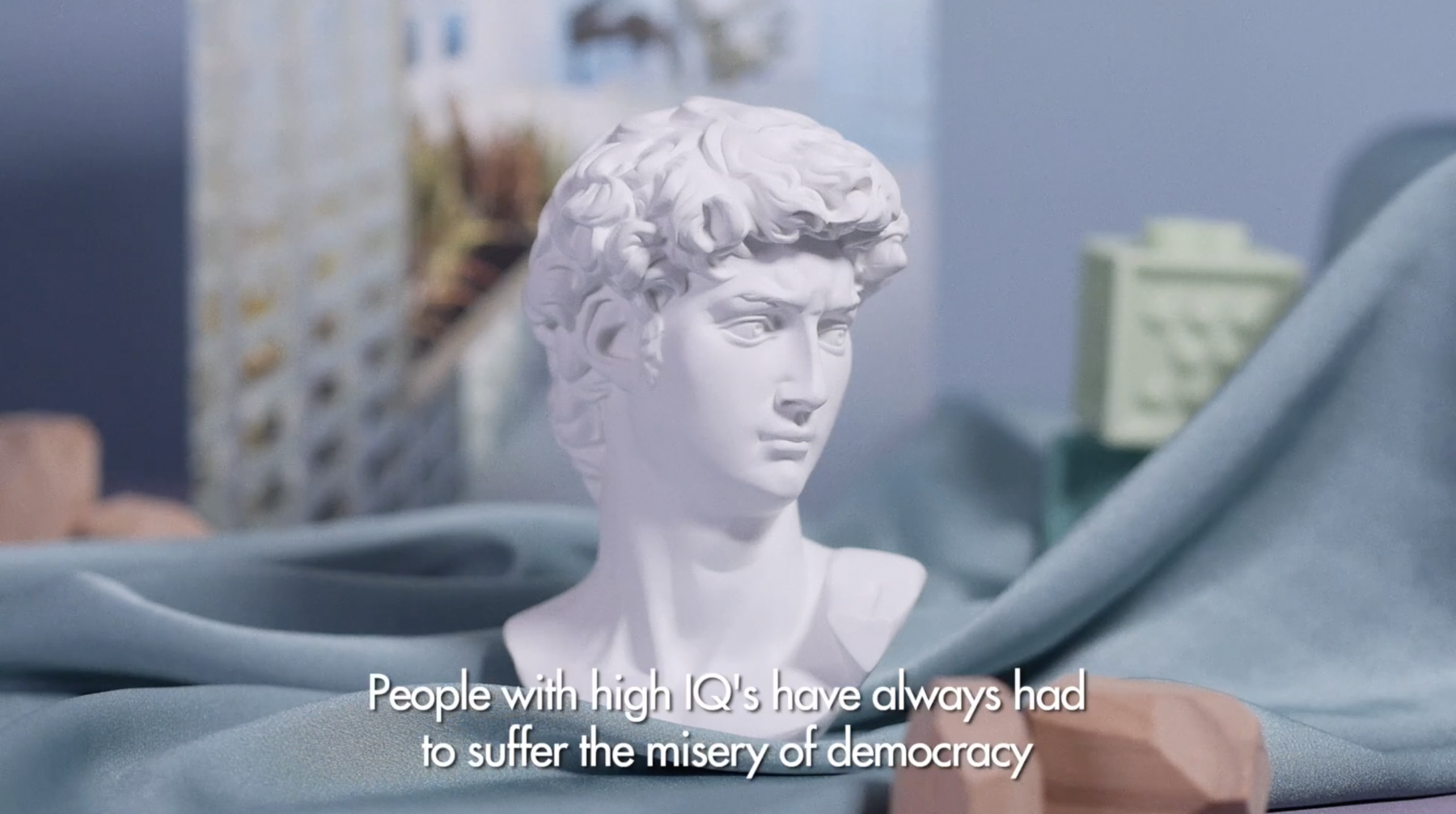
Bridget Moser, Dreams of Dusk, Episode 1: "Dying to Be Relevant in a Dying World," 2025. HD video, colour, sound, 5:31. Courtesy the artist and CBC Creator’s Network.
.jpg)
Bridget Moser, Dreams of Dusk, Episode 2: "We Haven't Done Anything Wrong, We're Normal" 2025. HD video, colour, sound, 5:44. Courtesy the artist and CBC Creator’s Network.
.jpg)
Bridget Moser, Dreams of Dusk, Episode 3: "Can God Just Kill Us?" 2025. HD video, colour, sound, 5:49. Courtesy the artist and CBC Creator’s Network.
Over the past few years, the character of the paranoid, self-absorbed protagonist recurs in Moser’s videos and performances again and again. In A Malevolently Bad Map, a video work in the eponymous exhibition at Southern Alberta Art Gallery Maansiksikaitsitapiitsinikssin, Moser plays this role in conversation with a beaded towel of a Grecian amphora and a talking pair of pants. The protagonist meanders and focuses her talking points squarely on issues of self-expression, emotional intensity, and consumption. Moser refers to this time as “the Amazon age,” where any and all whims, even the ones that can’t be consciously articulated, are catered to through buying things. This exploration of selfhood is complicated by the onslaught of advice and affirmations that come from all the nooks and crannies of TV and online spaces, ultimately trying to sell a solution to a problem that was created in the sole hopes of selling more products.
When I Am Through with You There Won’t Be Anything Left, performed in her installation of the same name as part of “I don’t know you like that: The Bodywork of Hospitality” at Bemis Center for Contemporary Arts, Nebraska, makes bedfellows of charismatic, cultish, self-optimized figures; victims of the supernatural; an anti-identity politics landscape painter; and evangelicals extolling heavenly organ transplants. The vignettes kick off with a TikTok manosphere guru pontificating on “the construction of the perfect male body” and espousing “the healing field of misinformation.” Taking these self-serious, if cynical musings of the right-wing grifter class on their own terms, Moser uses their circular logic, pseudo-science, and total belief in divine intervention to highlight that they ultimately say very little. The fact that new-age concepts like energy, vibration, portals, manifestation and alignment have become more or less naturalized within a lexicon of skeptics to scientific experts whose research can be bought and sold reveals that people are afraid of what they don’t understand—especially with regard to the self and the body.
The exhibition, “I don’t know you like that,” takes up the concept of hospitality alongside what it means to be in a body. Considering the relationship between the self and others through the experience of embodiment, the exhibition asks: what can bodies do, and how do they relate to each other? Moser’s answer: “We’re all sentenced to solitary confinement inside our own skins for life.” Her character monologues of the last few years operate much like comedian Tim Robinson’s characters: those who bring the suspended social contract of the internet—which puts no limits on anti-social outbursts, conspiratorial thinking, paranoia, constant misrecognition, and openly communicating one’s pathological instincts—into the real world without compunction. Moser simulates the discomfort of these encounters and makes clear to us that this barrier has been irreparably broken, because we no longer collectively agree on the rules of the game. When I Am Through with You is a direct ancestor of Hell is Empty, with a similar format that employs a comparable mode of pantomiming advertisements, influencer culture, and basing characters on reality TV personalities and familiar pop culture types. When I Am Through with You expertly satirizes an era of hyper-self-obsession and pop-psychology that has only become more entrenched in the few years since this performance.
Moser is also sure to reference the ways in which the awful things happening in the wider cultural sphere are impacting arts institutions and the way artists have to work now. Through her expert manipulation of archetypes, characters, and props, Moser shows us what it really means to be a performance artist who is also funny.
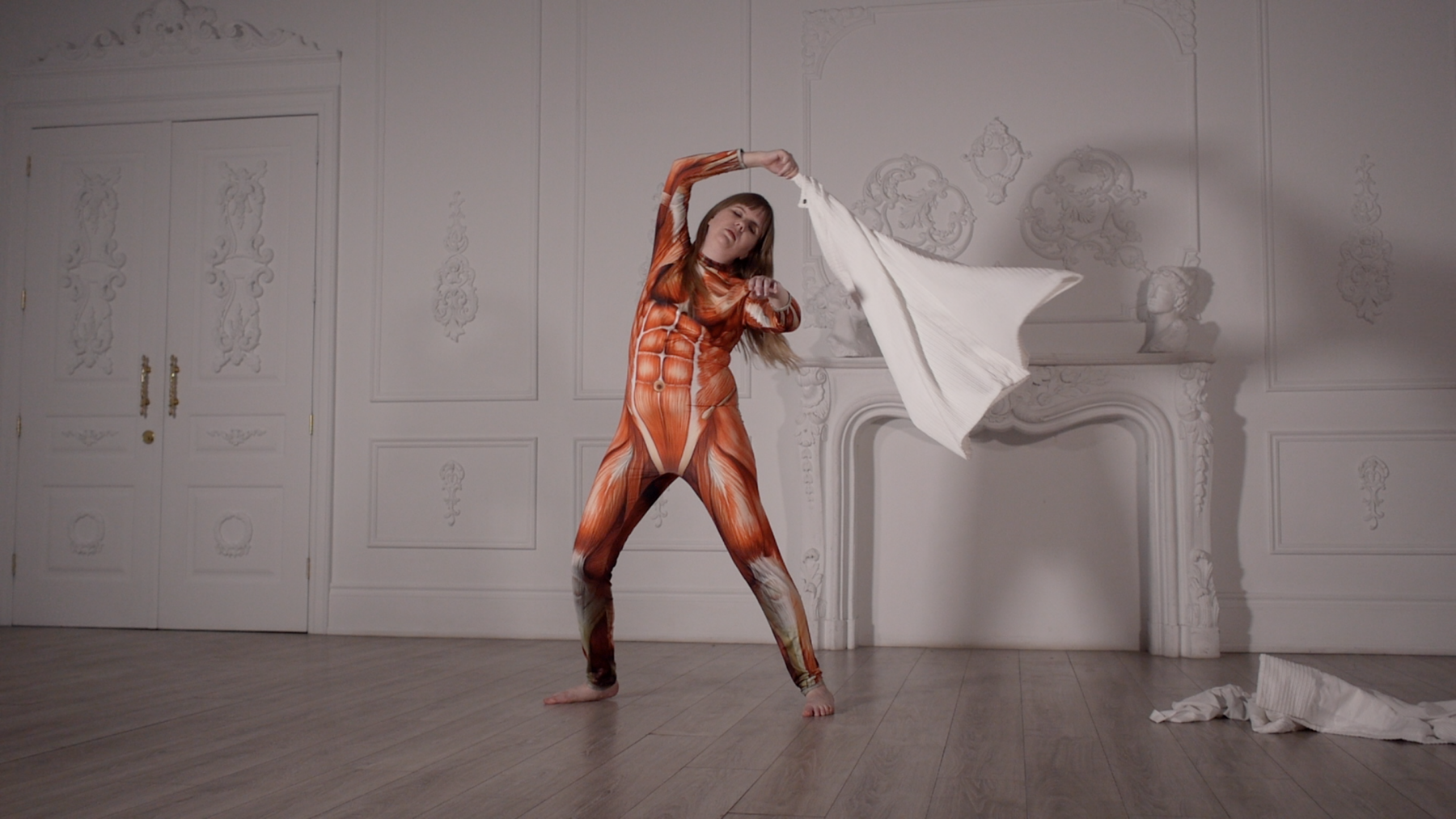
In 2020, Moser opened My Crops Are Dying but My Body Persists at Remai Modern during a COVID lockdown. The central video work of the same title is highly attuned to Moser’s foray into anxious identity formation in a hyper-networked and highly influenced era. One part meditation video, one part alternate-universe-infomercial, one part soap opera, the video features a familiar protagonist: self-conscious, paranoid, needing to be recognized. “Enough about me, let’s talk about you, what do you like about me?” The voiceover occasionally uses the same female-coded text-to-speech voice that many video artists began using in the 2010s for monologues about the posthuman self, as though creating a cyborg character in a frictionless world of rest and relaxation. Moser injects this archetype with her surrealist humour and reveals the very human anxieties behind statements about not pursuing “unique living for my own benefit” and being “more than a purposeless body waiting for eventual death.” The set is abundant in the trappings of luxury, filmed in a room of French-style moulded wall panels with a pink velvet settee, the costumes and tables of haute consumer props conforming to a colour palette of pinks, yellows, whites, and golds. She spreads La Mer face cream on a slice of bread.
Moser’s tableaus show an interest in the iconography of vaporwave as a movement about nostalgia amidst dying consumerist spaces, which didn’t explain itself with a grand theory but still seemed to resonate and proliferate with a subset of artists in the mid-2010s. In its maneuvering of post-2008 capitalism in decline vis-à-vis the aesthetics of 1980s consumerism and cyberspace futurism, vaporwave traffics in the saturation of the digital and a dissolution of authentic human experience. Moser identifies that we live in a post-vaporwave ecology that has diffused its symbols among different subcultures, like the marble statue avatars on right-wing text posts from various platforms. Her frequent use of pinks and blues is taken from 2016 when Pantone named two colours of the year, Rose Quartz and Serenity—right on the heels of vaporwave’s near-mainstream popularity, solidifying the colour palette of Gen X/millenial nostalgia. What shines through is that Moser is a keen observer and takes stock in a vast array of useful artifacts and references that cohere into a worthwhile and darkly funny critique.

Bridget Moser, My Crops Are Dying but My Body Persists, 2020. HD video, colour, sound, 21:57. Courtesy of the artist.
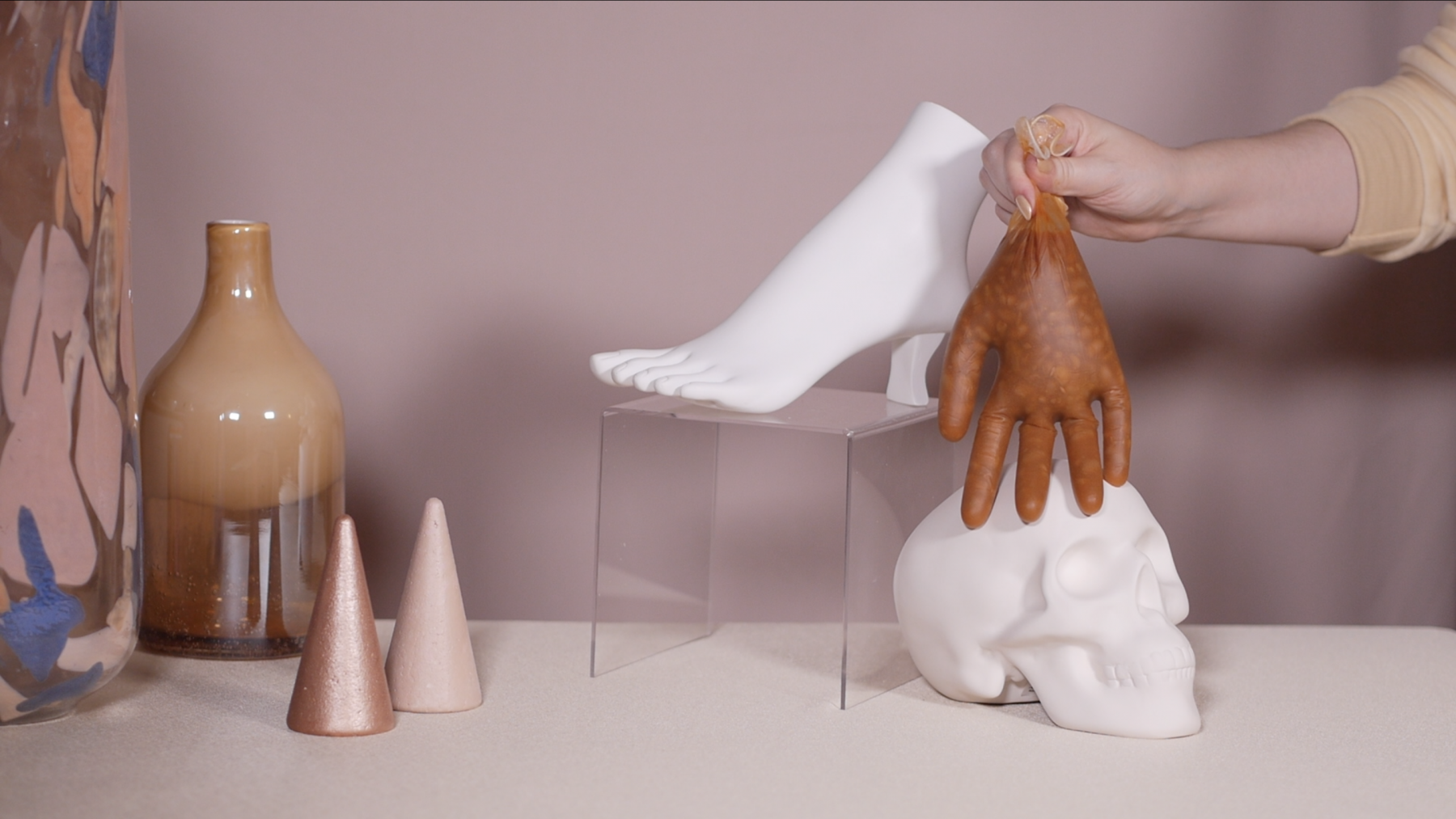
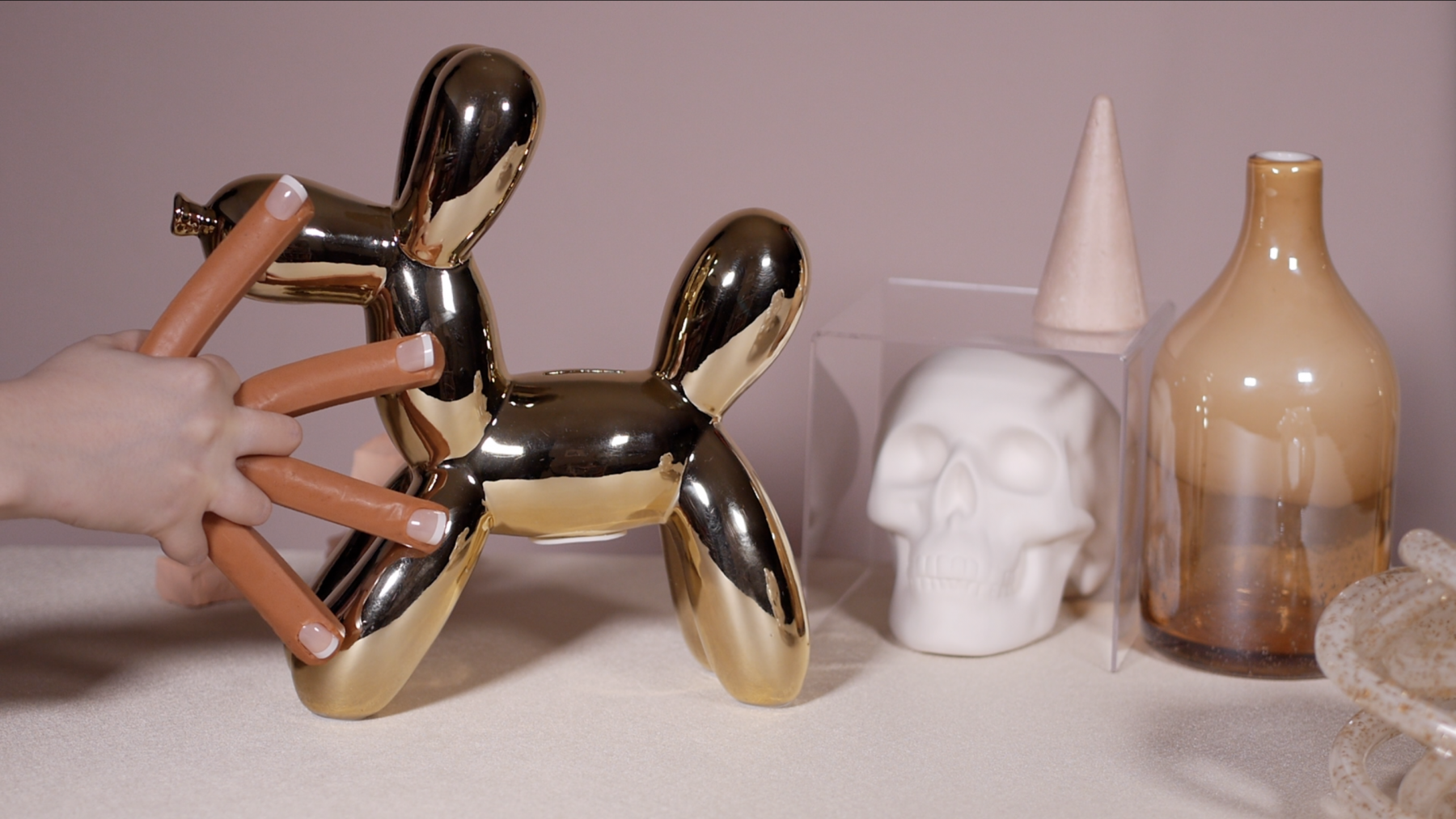
Bridget Moser, My Crops Are Dying but My Body Persists, 2020. HD video, colour, sound, 21:57. Courtesy of the artist.
Bridget Moser, My Crops Are Dying but My Body Persists, 2020. HD video, colour, sound, 21:57. Courtesy of the artist.
Bridget Moser, My Crops Are Dying but My Body Persists, 2020. HD video, colour, sound, 21:57. Courtesy of the artist.
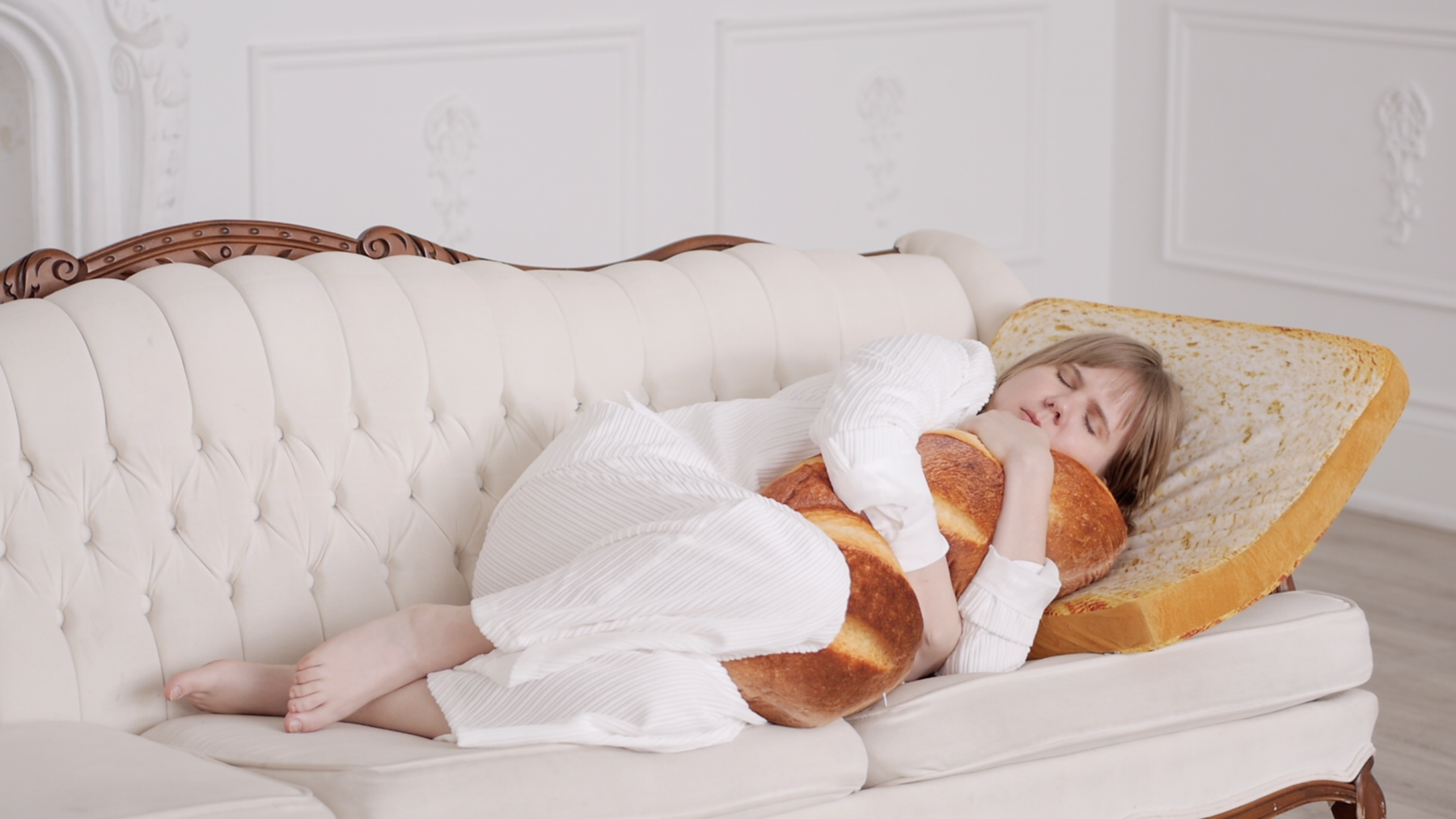
Bridget Moser, My Crops Are Dying but My Body Persists, 2020. HD video, colour, sound, 21:57. Courtesy of the artist.
Moser’s influences are varied, owing as much to pop culture as to other artists. She cites the late American performance artist Stuart A. Sherman, best known for his Spectacle series in the 1970s and ’80s, in which he created miniature theatrical choreographies with everyday objects on a tabletop. This influence shines through in Dreams of Dusk. My favourite vignette is the opening scene of Episode 3. David laments losing control of his poetry as though it has become sentient. Commanding Alexa to call his ex-wife—to which Alexa asks: “Which ex-wife?”—David resigns to whichever one will answer and we are treated to Linda: a wispy pair of Barbie stockings (a gift from Neil LaPierre), cross-legged with her tiny French rotary phone in the Modway Casper Armchair in Clear, which went viral in 2017 after a woman purchased it for her apartment and received a dollhouse chair (the human-sized and miniature versions have since been clearly differentiated). Dreams of Dusk highlights Moser’s penchant for collecting, as well as her talent for paying attention to trending aesthetics.
She likes Ryan Trecartin, and credits him with predicting TikTok through his frenetic pacing and over-the-top confessional characters. Where they also overlap is a love of television, particularly reality TV. Moser considers the importance of reality TV shows (namely, the Real Housewives franchise and Vanderpump Rules) alongside the larger, mutually reinforcing universes they exist within, but also help to create. That is, reality television begot influencers as we know them today, as a medium that creates celebrities out of regular people and catapults them into perpetual publicity through brand ambassadorships, obligatory social media presence, and more reality spin-off shows. Throughout Hell Is Empty, A Malevolently Bad Map, When I Am Through, and My Crops Are Dying, a similar character reemerges whose monologues reveal deep-seated anxieties about rapidly changing social and cultural norms. They exhibit a pathological self-obsession, as Moser puts it, “inhabiting the dream and the nightmare simultaneously.” This person constantly reflects on whether there are multiple versions of themselves out there, doing evil things that they have no control over. What continually comes through are extremely banal fears about the self and recognition, channelled through advertising slogans and pop-psychology affirmations, much like the way reality TV personas operate. Moser admits that this is an amalgam of some specific personalities from the Real Housewives franchise.
Rolled into this character, and Moser’s strategy for writing monologues, is what she has learned from her day job at a plastic surgery clinic in Toronto. Earlier on, it fed much more into the way she made and wrote her performances. Doing the clinic’s marketing, she was “figuring out how to talk to people about their bodies,” and this language made its way into the work rather heavily. Now, Moser says, “I don’t fall back on that as much anymore. I don’t find it as interesting.” However, I suggested that this kind of vocabulary still naturally finds inroads in the way that the people she emulates talk in a celebrity-influencer environment saturated with plastic surgery.
An aforementioned influence from David Lynch is more apparent the closer attention one pays, showing up in set design, camera takes, characters, backwards-talking objects, and an occasionally unsettling mood. The self-absorbed Housewives-esque character, narcissistically oversuspicious of what other versions of herself might be doing to make her look bad, dovetails with Lynch’s beloved theme of the evil doppelgänger. Moser says her greatest desire would be to make work that is more Lynchian (i.e., unsettling), but she’s certainly had her moments. Letting a handful of fake teeth slowly fall out of her mouth, falling to the floor and slowly crawling on her hands and knees to a low rumbling soundtrack (both My Crops Are Dying), and the entirety of How Does it Feel (2016), a silent video performance inside a hotel room wearing a completely royal blue outfit. Her affinity for creating hands out of other objects—hot dogs with press-on nails, a latex glove filled with beans, black fetish gloves manipulated by sticks—also helps.
Moser admits, “My greatest anxieties are about making something that is too twee or cute.” I think she has nothing to worry about. Returning to Hell Is Empty; All the Devils Are Here, the performance encapsulates much of what Moser has been perfecting over the years, as well as some truly frightening developments that happened at the same time. It is the rich and powerful that can actually afford delusion, but the world made as their mirage has trickle-down effects for the rest of us. Moser is also sure to reference the ways in which the awful things happening in the wider cultural sphere are impacting arts institutions and the way artists have to work now. Through her expert manipulation of archetypes, characters, and props, Moser shows us what it really means to be a performance artist who is also funny. The title of her newest performance is more on the nose than it might seem: the loudest tastemakers and “culture-producers” gaining ground are ghouls and psychopaths, and the only real antagonism is our ability to laugh at them.