
James Cahill. Photo by Denise Quinlan.
Despite the quintessential plucky gallerist represented in many a media about ”life in the big city,” literature depicting the commercial art world, and doing it well, is far and few between.
Enter James Cahill, an academic, art critic, and one-time gallerina (a decidedly gender neutral term). The British writer, who currently lives stateside in Los Angeles, made a name for himself as a novelist in 2022 with his debut Tiepolo Blue, exploring the psychological tailspin of a Cambridge art historian preoccupied by Rococo frescoes, as the Young British Art movement of the 1990s begins to encroach on his aesthetic worldview. His sophomore outing, first published in 2025 and released in North America earlier this spring, plays out against the contemporary art scene thirty years on, going one rung down the rainbow with the T.S. Eliot-inspired title The Violet Hour.
In the book we meet Thomas Haller, a Swiss artist whose vivid paintings are touted by blue-chip gallerists as abstract masterpieces, Lorna Bedford, the British owner of a mid-sized New York gallery, and Leo Goffman, an elderly, American real estate tycoon and bigtime art collector. Our three protagonists (or perhaps antagonists) are deeply intertwined, with Thomas and Lorna best friends from art school but whose relationship, both professional and personal, has now somewhat soured, and Leo as Lorna’s aggressive client and Thomas’ avid admirer. Cahill explores these characters through their memories, sexualities, decisions, and indecisions, especially in the wake of a sudden death amid Thomas’s career comeback at a London gallery opening.
But while the promotion of the novel has put its art-foot forward, complete with quotes from such art world luminaries as Jerry Saltz, Michael Craig-Martin, and Sarah Lucas, Cahill assured me that the contemporary art scene is merely the backdrop of the story. Rather, the novel uses the art world setting to interrogate far larger themes–nostalgia, loss, betrayal–as the narrative oscillates over many months between the lives of its three principal characters.
A fellow art world disciple, I caught Cahill back in London at a bookstore café on Piccadilly, appropriately sandwiched between the city’s gallery epicentres of Mayfair and St James’s. Over coffee, we delved deep into the challenges and pitfalls of writing about art and its industry, reflected on everything from thriller tropes to defenestration motifs, made a brief detour into Heated Rivalry, and discussed why The Violet Hour is about so much more than art.
Let’s start with the violet motif, which we see in the title and then throughout the novel itself.
I wanted it to be this violet thread all the way through, literally at many points. It has a literal presence in terms of that violet scarf that one of the characters sees somebody taking out of a bin. Quite early on there’s a scene where Thomas Haller, the main artist character, has come back to Claridge’s Hotel in London and finds his dog dead on the carpet. He conducts this really peculiar ritual where he bathes the dog’s corpse, and it turns out he’s been dyeing his dog to keep it looking youthful and beautiful. Then the dye leaks into the water, and the effect is this violet water. That’s one of the earliest manifestations of this violet motif that happens all the way through. That episode is also useful in hinting to you what a strange, peculiar character you’re dealing with in him.
Because this is so much a novel about art, I wanted it to have a sort of a particular colour that was a unifying motif. More specifically, the title is a reference to a line in T.S. Eliot’s The Waste Land. In the novel I wanted there to be an equivalent atmospheric shift from time to time between moments of epic beauty and something much more abjectly real such as you get in Eliot’s poem. The phrase came into my head while I was writing the story because I knew that Thomas was going to produce this suite of paintings in lilac or purple or violet.
And that’s another one of the appearances of colour in the story, those paintings that he made at the beginning for this major comeback exhibition in London. He’s been a recluse for a few years. No one understands why this renowned artist has run away from the New York art scene, and his comeback exhibition in London is the occasion of this group of studies in violet.
Another thing that is important to say about the colour is that it has this whole sense about it of twilight, and endings and evenings, that transitional moment between day and night. A number of scenes take place at that twilight hour, such as the one much later in the story in Venice where the old man Leo Goffmann, the billionaire real estate tycoon, is reflecting on his life with Lorna, the art dealer, who by that time, against her better judgement, has semi-befriended him, or at least comes to see some of the human aspects of this otherwise monstrous man. They’re standing together in Venice at the violet hour, and he’s reflecting ultimately on his mortality and his life and regrets. I wanted the whole novel, actually, with each of those three main characters—Leo, Thomas, and Lorna—to be about looking back at one’s life either with regret, melancholy, or just resignation. They have different attitudes towards their past selves, but it’s very much a novel about reconciling yourself to your past, and so that, again, made the title, that image of twilight appropriate.
Your first novel, Tiepolo Blue, takes place in the 90s at the advent of the contemporary art craze, whereas this book is very explicitly in the present, post-COVID era. Those people who came of age in their lives or careers in the 90s era are now all grown up. What made you transition between writing the two novels in this way?
They actually overlapped in the writing quite a lot. I began The Violet Hour sometime before I finished Tiepolo Blue. Obviously, there are all sorts of correspondences between them in terms of the art theme. Contemporary art, whether that’s in the 90s or now, figures quite prominently, and that’s probably a reflection of the fact that I’ve worked in the art scene for a long time, and the gallery that I worked at in London, Sadie Coles, represented a number of the artists that had been at the forefront of that 1990s scene.
Even though it was at least a decade on, at that time, from that 1990s moment, it was still very much alive in everyone’s memory. I was twelve when Sensation happened at the Royal Academy, so I was very aware of it even though I didn’t get to see it. It was a big thing in the British media. That was partly why I set Tiepolo Blue in the mid 90s. You’re right that The Violet Hour is in some ways a continuation, in the sense that it then deals with the art world of today. In the narratives of Thomas, the painter, and Lorna, his oldest friend and one-time dealer, the flashbacks take them back to that 1990s moment that is the main subject of Tiepolo Blue. Thomas is thinking about being at art school here in London in the late 90s, which is where he meets Lorna, and they strike up this intense, life-defining friendship that for each of them is absolutely formative.
I wanted to evoke, or portray, a platonic relationship between a man and a woman that is as intimate and intense as a platonic relationship can be, and, in fact, it does tip into something more than that at least once. But that 1990s London is very vivid in each of their memories, perhaps Thomas’s especially. He’s desperate to get back to it in a way that is impossible.
Despite the fact that The Violet Hour is primarily set in the present, it still, through its main characters, expresses nostalgia for the 90s, which is the setting of Tiepolo Blue.
Between the two novels, I’ve been thinking a lot about how the art world in London has changed over the past thirty years. You see in The Violet Hour how much more international the contemporary art world is, even in terms of the roving setting which takes you from London to New York to Switzerland to Hong Kong, versus the more static settings of Tiepolo Blue.
On that roving nature, I noticed that in The Violet Hour, you can recognize essentially all of the moments of the art world calendar. Besides the events, you also have all of these characters, in addition to the main three—emerging artists, the super curator, the art critic, etc. When planning the book, did you have kind of a checklist, to have all of these art world signifiers in it?
Not as such, although you’re right, there are certain stock characters that probably had to be there—not that I want the characters in the end to come across entirely as archetypes. It’s a funny thing to some extent with a “super curator,” whatever we mean by that, you’re dealing with somebody who is a bit of a cliché, and that’s the case with that character Fritz Schein who pops up quite often throughout the story. He’s closer to parody than most of the characters in the story in that he’s sort of the epitome of this globetrotting, theory-spouting, impresario of contemporary art. But even in his case, in the end you do get to see a little bit more inside his mind and his motivations and memory, rendering him more complex and more human than just this cardboard cutout ridiculous figure that he might initially appear to be.
That’s what I’m interested in doing with the art world, not simply showing this kind of technicolour, high-gloss, glamorous veneer, much as it consists of that. You want to be able to show what the people that make up that veneer actually consist of. As a novelist, I’m always interested in that process of going beneath the surface of people. Much as I’m interested in and fascinated by surfaces, I like to also think about what lies beneath in terms of people’s characters, but also in something like the art scene or “the art world” as we always describe it.
Thinking about the kind of fixtures on the art calendar, it’s true the Venice Biennale does feature really prominently towards the end as this scene where all of the characters come together for this big denouement. There’s an inevitability to that because, of course, the art world does operate on a schedule. That naturally offers us a structure and a certain sequence for the storyline.
But one thing I’ve always been aware of is that I wanted this to resonate with people beyond the contemporary art bubble. I hope you don’t need to know much or even care much about art to find something in this novel, because, even though that contemporary art scene which I’ve worked in for a long time is the setting of it, it’s not ultimately the subject. It is the entire world in which these characters move, but fundamentally—going back to the title—it’s about retrospection, loss, longing, betrayal, and the impossibility of escaping one’s past self, particularly in the character of Thomas. He’s somebody who, on the one hand, clings desperately to an earlier version of himself from long ago, from before he became this globally renown abstract painter—which is an identity that he struggles terribly with because it’s really a misrepresentation of what he actually feels himself to be. He’s caught between that longing for the past and in some ways a desire to be shot of the past. That, I think, is the subject of the novel more than the machinations of the art world, although those naturally make for quite a fun context.
I find that there’s not that much media out there that reflects the art world compared to every other creative industry, and when art critics or others in our industry write books, it’s usually non-fiction. There are not a lot of art critics that go into fiction, especially novels actually about art, as opposed to literary critics for example. I don’t know if you agree with that assessment, but why do you think that is, and why do you think you have taken a different path in your writing, as compared to most art critics?
Well, speaking just about my own case, I always wanted to write fiction, and I actually did from a very early age. I wrote quite a large portion of a novel when I was 14, but then, of course, life comes along, and you embark on a career.
When I was very young, I loved writing stories. The desire was always there. But, over time, I took more of an academic interest in literature and art history and ended up working in contemporary art. But it’s probably true to say that the impulse to write fiction came before everything I did career-wise in art. So I was coming full circle when I wrote the novel.
The first one took a long time. Over the ten years I was working at the gallery, that novel was just gradually percolating. In all of that time I was writing art criticism and reviews, non-fiction work as well. I’ve always been conscious of the fact that I’m not employing my sort of art critical faculties when I write fiction. In fact, I’m quite careful not to do so because for me, fiction should not just be another conduit for expressing my ideas about art and what makes good art or what its function might be. These are all questions that a critic might well have to grapple with, but it would be a mistake to try to articulate them too bluntly and too overtly through fiction. The problem, then, is that the fiction becomes an instrument for your own ideas as a critic, and it would look really clunky and odd to try and reduce the novel to a medium of your art critical ideas.
In general, I try to avoid expressing opinions of my own in novels. Your characters can have opinions, and sometimes people make the mistake of thinking that what one of your characters think is what you think. Obviously, that’s not the case, particularly with my characters who are often really compromised, difficult, not terribly pleasant people. I don’t want what I think to be at the forefront of the novel. In some ways I want to disappear inside there.
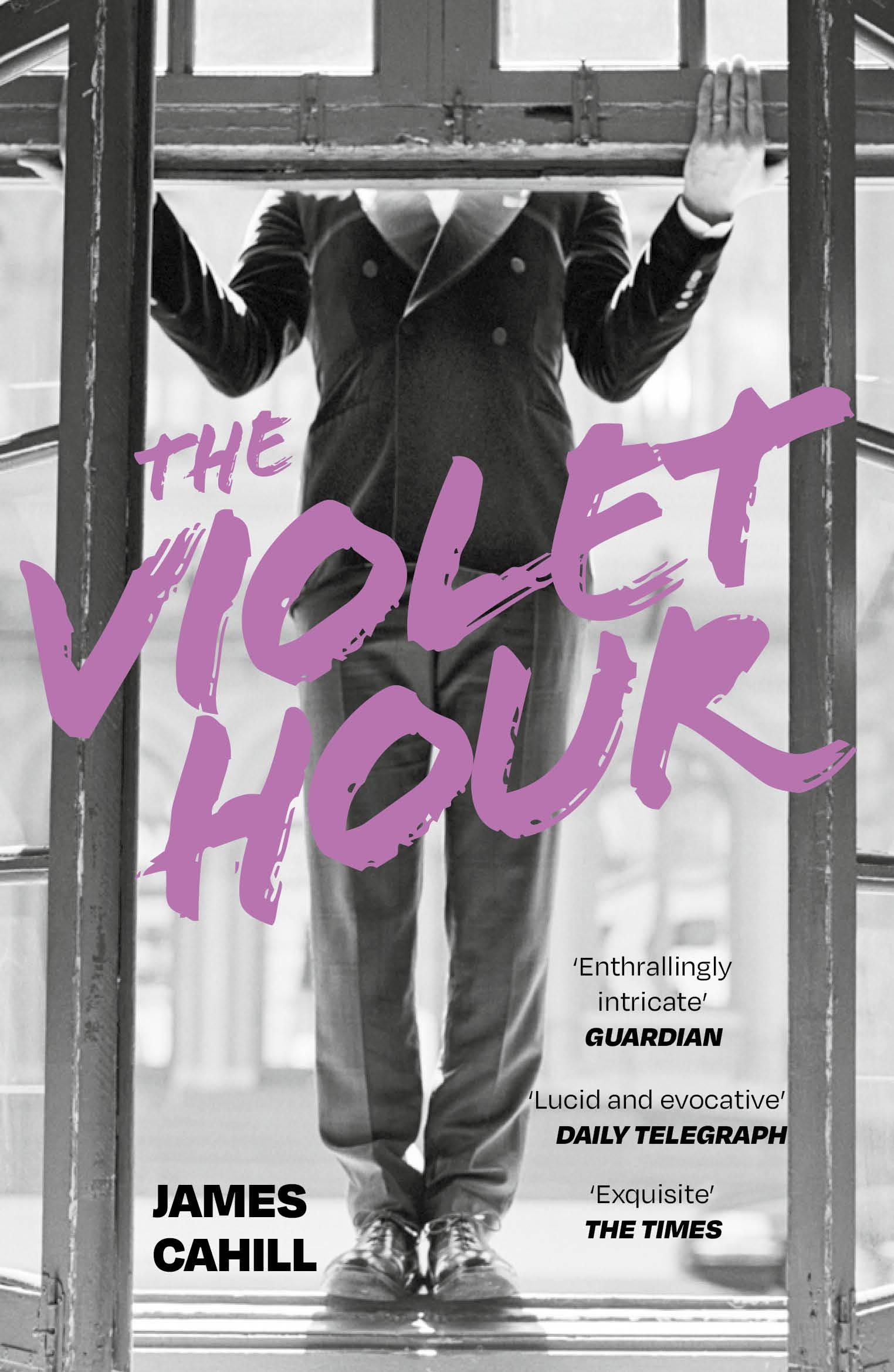
Book cover (UK/Commonwealth) for The Violet Hour, Pegasus Books, 2026.
Talking more about art in media, I read your Artforum essay from the September 2025 issue. In the essay, you talk about Sex and the City and Girls, The Gallerist with Natalie Portman, and the upcoming Apple TV show The Dealer, among others. I find that a lot of the discussion of art in film and television goes back to the same content, such as what you covered there, only because there’s so little of it. I’m thinking about art and media in general, but also art in literature specifically. When I have read books that take place in the art world, or include characters that work in art, it’s always young women working as gallery assistants, and oftentimes it reads, to me anyway, like it’s written by people who don’t seem to have ever worked in the art world. Why do you think this visual industry hasn’t really translated very often or very successfully to the written word or even to the screen?
I think you’re absolutely right that these portrayals on the screen and in fiction tend not to get it right. They tend to lean too much into parody or satire. Particularly in the case of the high end contemporary art world, one could so easily roll one’s eyes at it in terms of the excess and some of the big personalities and egos that you find in this sphere. The problem is that any attempts to parody it quickly turns it into a cartoon version of itself, and you lose a lot of the nuance, complexity, and frankly, a lot of the realism of the thing.
The situations often that we encounter in this industry are weird enough already. They don’t need to be heightened. I think you’re right that often people who portray the contemporary art business on TV or in films haven’t observed it closely enough or just haven’t existed within it and don’t understand it. They’re looking at it too much as outsiders, and they end up just reducing it to a set of clichés as you say, the art gallery girl. Invariably, don’t you find that the art itself is just nothing like what we tend to see on the walls of actual galleries? Sometimes that might be a legal thing, but the worst thing is where you get these dreadful pastiches of what somebody who doesn’t work in this scene thinks contemporary art looks like, and it just doesn’t ring true.
Going off of that, how did you decide how to render Thomas’ artwork? Obviously there are no images, but it’s very evocative how it’s written, and easy to imagine how it looks. You essentially create a whole oeuvre of his practice, talking about different exhibitions with different series of work. How did you come up with that? What were the challenges?
I had to begin with his character and have a properly developed, vivid sense of him in order to think about the kind of work he would have made and what it would look like and the different progressions it would have gone through. That was all dictated by my understanding of the kind of man he was, and particularly by the fact that he is an individual who has memories and experiences that he cannot be open about with people. In some ways he has to protect his identity as this celebrated, lucrative, top-selling abstract artist, but there are aspects of his experience that are very present in his mind that can’t outwardly be expressed.
That concealment, that inability to voice certain things about himself and his past, is then reflected in the work that he makes. It was logical that he would be an abstract painter, because abstract art in many ways is more oblique and subliminal. The work that he makes, which has seen him hailed as the new Mark Rothko, are these turbulent, colouristic abstract works. In some ways it expresses much in terms of his emotions and psychology, but in another way it conceals an enormous amount. It’s a veil that’s screening certain aspects of his psyche and, more specifically, his life experience.
I’m thinking ultimately of this infatuation he develops as a young man for the older and more powerful man, Claude Berlins, his eventual gallerist. In fact, that infatuation grew and became a net that he could never escape, even after their love affair was long finished. Along with the relationship with Lorna, this love affair, infatuation, dynamic with Claude has been the other, much darker, defining relationship in his life. In the end, Thomas’ whole choice in the novel, his whole dilemma, is between which of those old friends he’s going to ultimately align himself with.
The recurring question all the way through the story is what kind of a painter he is. Is he actually an abstract painter, or a figurative one? It may seem a fairly technical question, but it matters because, symbolically, it has to do with which of those people from his life he has decided to align himself with, sell his soul to, so it has fundamental bearing on what kind of person he is going to be, or, actually, already is.
Talking about his relationship with Claude, I noticed that in both books, there are a lot of relationships or more casual encounters with people of very large age differences. Where has that come out of?
I’m quite interested in relationships where there’s a difference in age and in life experience and naturally in power. There’s an interesting power dynamic in those sorts of relationships, and this is also a story of the power dynamics in the art world more generally, and power imbalances—what it means to be successful versus somebody more on the outside or the periphery, fighting to get in. You see that reflected in the characters of Marianna, the video artist who hasn't really made it, or Em, the performance artist who really is on the periphery and doesn’t understand what the art world is.
To get back to intergenerational romantic relationships, you don’t see them represented enough on the screen certainly; perhaps novels do a better job representing them. I was watching Heated Rivalry recently. I don’t know if you saw it?
[laughs] No, I haven’t seen it yet.
Everyone was talking about it so I felt like I had to see it. The one issue I had with it is one of many ways in which it felt very tame and safe. The characters are all good looking men of pretty much the same age, almost interchangeable.
The differences between people fascinate me, and often these differences do attract people into relationships with one another, although those differences can also create all manner of tensions and problems and resentments. I’m talking about differences in age, but also in class, race, level of privilege, etc. When you see that kind of contrast in a relationship and the power imbalance that inevitably results, that I think is more intriguing than just seeing two people who are more or less mirror images of one another in an implausibly happy union.
In my own life, from when I was an undergraduate, I’ve always had friends who were much older than me. That could be to do with being gay, and certainly when I was first encountering the gay scene in university and in my early twenties in London, it was always a very mixed world. I think straight people of my age didn’t encounter something equivalent. If you went out on the gay scene, you were mixing with people of entirely different ages and backgrounds from yourself. That was a very exhilarating experience, and one that left a mark on me. That kind of plurality I hope has come into the novels. It feels more real to me.
Talking about queerness—when I went to take the book out from the library, I was surprised to see it labeled GAY, in the gay section, especially because a lot of the promotion, and maybe I’m biased coming from an art perspective, has been about The Violet Hour as an art world novel. So I’m just wondering about your novels appealing to these different audiences and being categorized amongst two often overlapping communities?
I’m very happy for the novels to appear on a gay table or a general fiction table, for them to have visibility is already a fantastic thing. I don’t really see them as gay novels, but then it’s not my job to assign labels to them. It’s probably better if I don’t. Certainly in The Violet Hour, one of the main characters, Leo, is straight, and it was important to me to have a character whose life is entirely unlike mine.
This is a real estate billionaire in his mid-80s who lives in melancholic isolation at the top of this skyscraper in New York. Nothing about his existence resembles my own. And he’s heterosexual and haunted by the memory of his dead wife.
Yes, I feel like Deborah was basically her own character.
I’m glad that you suggest that she is like a character. She’s a ghost in his mind, in his memory. That marriage and Leo’s life, persona, and sexuality, are all important dimensions in this story. For that reason alone I wouldn’t want to typecast this as a gay or queer novel. On the other hand, you know, you could very reasonably see it as that because it is about gay or queer characters and gay experience.
I suppose this is why any label is a little problematic or limiting, because even when it comes to queer experience, I wanted to reflect the sheer diversity of that. I want the gay characters to be every bit as compromised and real and complicated as any other person in the world. I don’t think, for example, that the gay character needs a redemptive arc, and in the case of The Violet Hour, Thomas, who in many ways is the main character, doesn’t get one.
If you take Lorna on the other hand, I really see her as the conscience of the novel. She is also gay, but a very different kind of person from the others. In writing about a lesbian woman and her experience and relationship, obviously I needed to think very differently and project myself into the life, again, of somebody entirely unlike me.
Something else I noticed that reminded me of the art world, are the instances of defenestration, people falling from windows. That made me think of Ana Mendieta, who I feel like is having a resurgence—people are very interested in her story. What made you decide to do this?
You’re the first person to have asked me that. That was one of many points of reference in this storyline. It’s obviously a tragic but also a fascinating story. On the very first page, the young man falling from the tower in London was inspired by all sorts of things. On one level, it was a thriller trope of the young person dying at the beginning, and it’s going to take you some time as a reader to find out how this tragic event is inter-threaded with the lives of the three main characters. There’s, in a way, a murder mystery element to it, and that was quite deliberate. I was playing with a cliché there that you find in all sorts of things, including Twin Peaks—where Laura Palmer dies that start. I mention Bruegel in the first couple of sentences, and Bruegel’s Fall of Icarus, so that was something I was thinking about, but certainly Ana Mendieta as well, and the persisting uncertainty about exactly what happened. That lack of resolution has been one of the most painful and intriguing things about that case.
It was one of several points of reference for this storyline, although it would be wrong to say I was referring to very directly to that. Also, the rivalry that developed between Carl Andre and Ana Mendieta, their resentment of one another—his fame, her frustration, and then increasingly, her success and his frustration over what she was achieving—I’ve reflected probably in some of what you see in Thomas and Marianna, the young artist who goes to make a film about him.
There are a lot of other mirrored images in the story, such as child loss. Were you interested in doing a lot of these mirror images?
Yes, I love these sorts of things. I have to be careful not to overdo them, or to conceal them within an essentially realist story. I don’t want it to feel too postmodern, but, of course, there’s a certain element of design as a novelist. This again takes you back to that violet motif, the way that forms this repeating conceit all the way through. There are all sorts of patterns, but I hope they don’t come across as too crafted.
This idea of the lost child is actually one of the central themes of the book. It transpires quite early on that Lorna had a child when she was younger. The ways in which she is haunted by that is key to her whole story here.
Parenthood comes into Leo’s story gradually. He’s childless, and this has an important bearing on his life as an art collector. For him, art collecting has been a compensation for everything he doesn’t have. He regards his collection almost as a form of legacy, of immortality. He obsesses, obviously, about what will happen to the collection when he dies. He’s playing these two auction houses off against each other in terms of who is going to be granted the posthumous collection sale. That theme of childlessness or the lost child comes in all sorts of direct or indirect ways into each of the three main characters’ stories.
I won’t go into it for fear of spoilers, but there’s a bit of suspense regarding whether one of the characters is another’s child or not.
It was one way in which I like to use some of these thriller devices actually to engender and then to subvert an expectation. I wanted The Violet Hour to have a certain thriller element, and that also comes in in the form of the film noir references.
Cinema is a really important influence here, particularly mid-twentieth century cinema, not just Douglas Sirk who Thomas is obsessed by and watches in his home cinema—these really high colour and melodramatic films—but also film noir. When I was talking about the title, something that I didn’t mention is that the film Sunset Boulevard is a touchstone for the plot and the mood. I wanted it to have this film noir or neo-noir ambience to it, and Sunset Boulevard is even there in the title, like “sunset,” ”violet hour,” the same sort of idea. In various ways, the characters in this story carry resonances of the characters in Sunset Boulevard. Take Norma Desmond, who is the aging film star in that film who lives in this mansion, bewitched by memories of her own former greatness. That’s sort of what Leo is in his penthouse in Manhattan.
Looking ahead, do you think you will continue to explore art world themes in your future literature?
It’s hard to know what is going to happen in things that you write, because experience and memory well to the surface, and before you know it, you're once again writing about the things you know best, but I’m not planning on it. Whatever I write next, at least in terms of fiction, probably won’t have such a strong focus on art. I’m interested in thinking about something a little bit different next time.
I do have a non-fiction book coming out in the autumn, The Beverly Hills Housewife, which is in some ways an art book. It’s the story of a single David Hockney painting from 1966-67 called Beverly Hills Housewife and Hockney’s arrival in LA, his love affair with LA, and more importantly, perhaps, his enduring friendship with the woman he painted in that portrait, a collector and music patron called Betty Freeman. The book in the main is the story of Betty’s life and what she went on to become, so this, again, is very much an arts title which I have coming out this year, but it’s a non-fiction book as well. Once that’s out, I might be on a bit of a vacation from art for a while in terms of what I work on. But who knows, because it’s been so much a part of my life. I’m not going to leave it behind entirely. I wouldn’t be able to—it’s what I do.