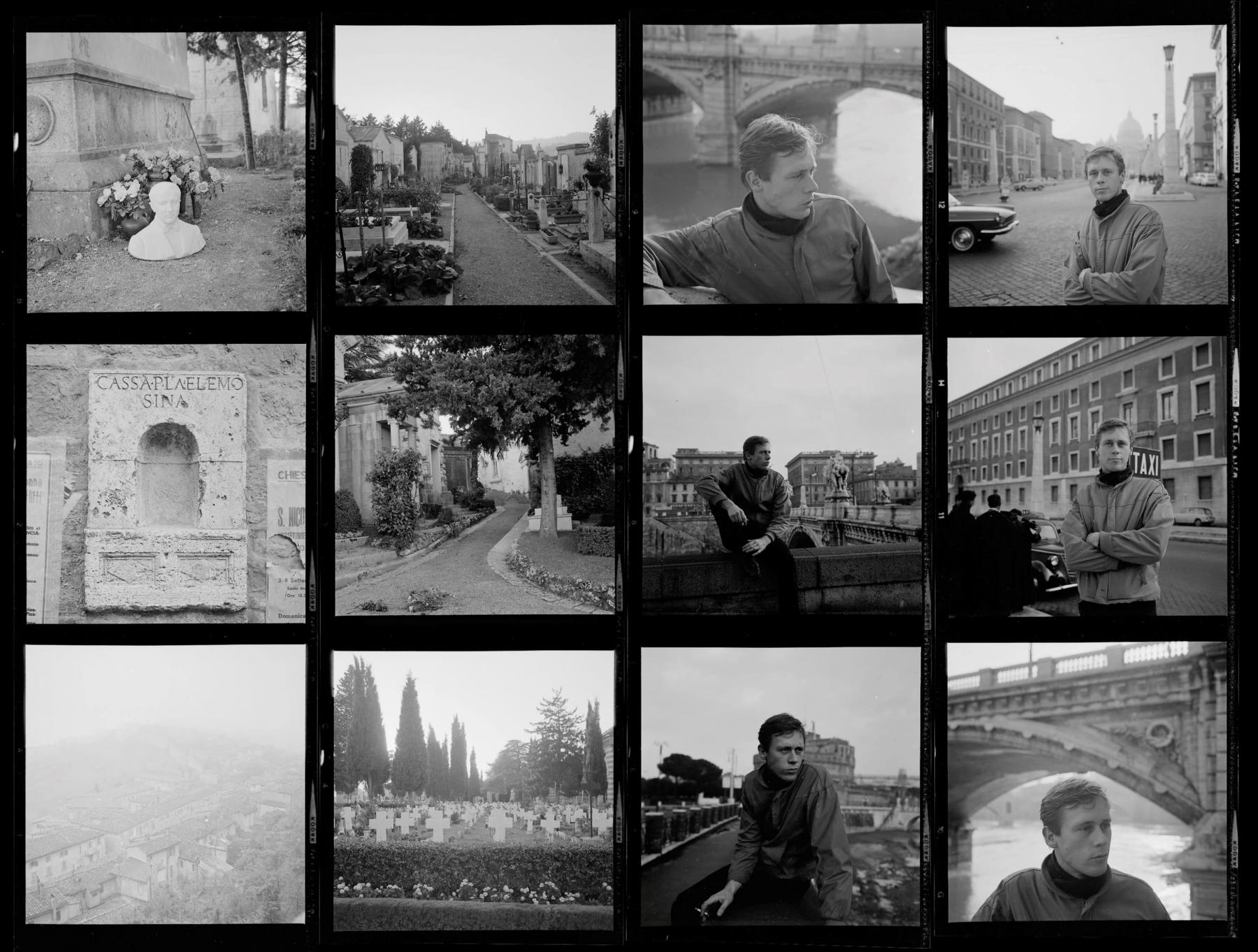
Photographs by Peter Hujar, 1962. Courtesy of Primary Information. © 2025 The Peter Hujar Archive / Artists Rights Society (ARS), New York.
Last year, the independent art book press Primary Information published Stay away from nothing, a look at the relationship between Peter Hujar, the photographer of 1980s New York’s downtown artists, and Paul Thek, the mercurial and somewhat mythic painter and sculptor, from 1956 to 1975. Studiously edited by Francis Schichtel, the book presents facsimiles of Thek’s correspondence with Hujar, taking place on postcards, in letters, on notebook paper, full of notes and scribbles, as well as images of Thek taken by Hujar. The book ends with a short afterword by Andrew Durbin, author of the recently released biography The Wonderful World That Almost Was: A Life of Peter Hujar and Paul Thek. Reading Stay away from nothing, one can get close to Thek’s words, tracking the progressions of his relationship with Hujar. Meanwhile, Hujar’s photos, already showing the power of his artistic integrity, show an intimate side of Thek that few have ever seen.
In November, I attended a reading celebrating the release of the book organized by Ann Stephenson, who runs a fantastic series of readings at the Manhattan bar The Parkside Lounge. The readers were Cynthia Carr, author of Fire in the Belly: The Life and Times of David Wojnarowicz and Candy Darling: Dreamer, Icon, Superstar, Stephen Koch, novelist, essayist, and head of the Peter Hujar estate, and the famed photographer Nan Goldin. Cynthia Carr read some of Thek’s letters with an air of warm, sarcastic wit. After that, Koch stepped up onto the stage, wobbling just a bit without the aid of his cane. He read more letters from a trip Thek took on a large ship–charming, flirty travelogues. At times, he paused to collect his emotions, coming through in his wavering voice as he brought up memories of his friends. He remembered something Thek had said to him on the street after his AIDS diagnosis: “This virus is all about white blood cells,” he remembered Thek saying, then, after a breath, “And I’ve got none,” Koch emphasized, his voice breaking. We sat in silence. Nan Goldin took to the stage. “In typical fashion, I’ll be reading the sad ones,” she cracked. She gave new life to Thek’s words written to Hujar toward the end of his life, as paranoia and money trouble overwhelmed him, and he became more fascinated by Catholic faith. It was a tremendously moving evening in honor of a tremendous book, another first-rate job by Primary Information in their impressive line of art literature.
I recently met with the book’s editor, Francis Schichtel, to ask him about how Stay away from nothing came to be.
I’m interested in what people actually have to say, not a researcher or a historian coming in and putting whatever bullshit they want onto the work. I like when it’s what the actual artists said to each other, the actual factual information.
What was your introduction to the work of Peter Hujar and Paul Thek?
There was this gallery exhibition in 2015, I was a freshman in college–Lost Downtown. It was a nice little show. I was a photography major. It just blew me away. I didn’t know anything about them, I’m from a small town outside of Buffalo.
What made you want to put this book together? There’s been a remarkable resurgence in attention toward Peter Hujar in recent years.
My boyfriend and I published Peter Hujar’s Day. That was an exciting archival find, and that painted a beautiful picture of Peter. I’m interested in what people actually have to say, not a researcher or a historian coming in and putting whatever bullshit they want onto the work. I like when it’s what the actual artists said to each other, the actual factual information.
I read the letters out of order–I was looking for my next project at the Hujar archive and the letters were in a digital folder. I knew immediately that this was a very powerful story. They were written amazingly–
By Paul Thek.
By Paul. They’re about everything. Romance, travel, making art, life. I feel it transcends their relationship.
Did you find that, because all of the letters contained within the book are from Paul to Peter…there’s another Primary Information book, Dear Jean-Pierre, letters from David Wojnarowicz to Jean-Pierre Delage, which lacks any response from Delage…did this lopsided access prove difficult in any way for you?
No, it was kind of a thing that people kept bringing up, but I read them over and over and over again and the feeling I was left with was that it kind of made you feel more like Peter receiving the letters. You kind of fill in the blanks with how Paul’s responding. It doesn’t feel lopsided to me. It feels very clear to me.
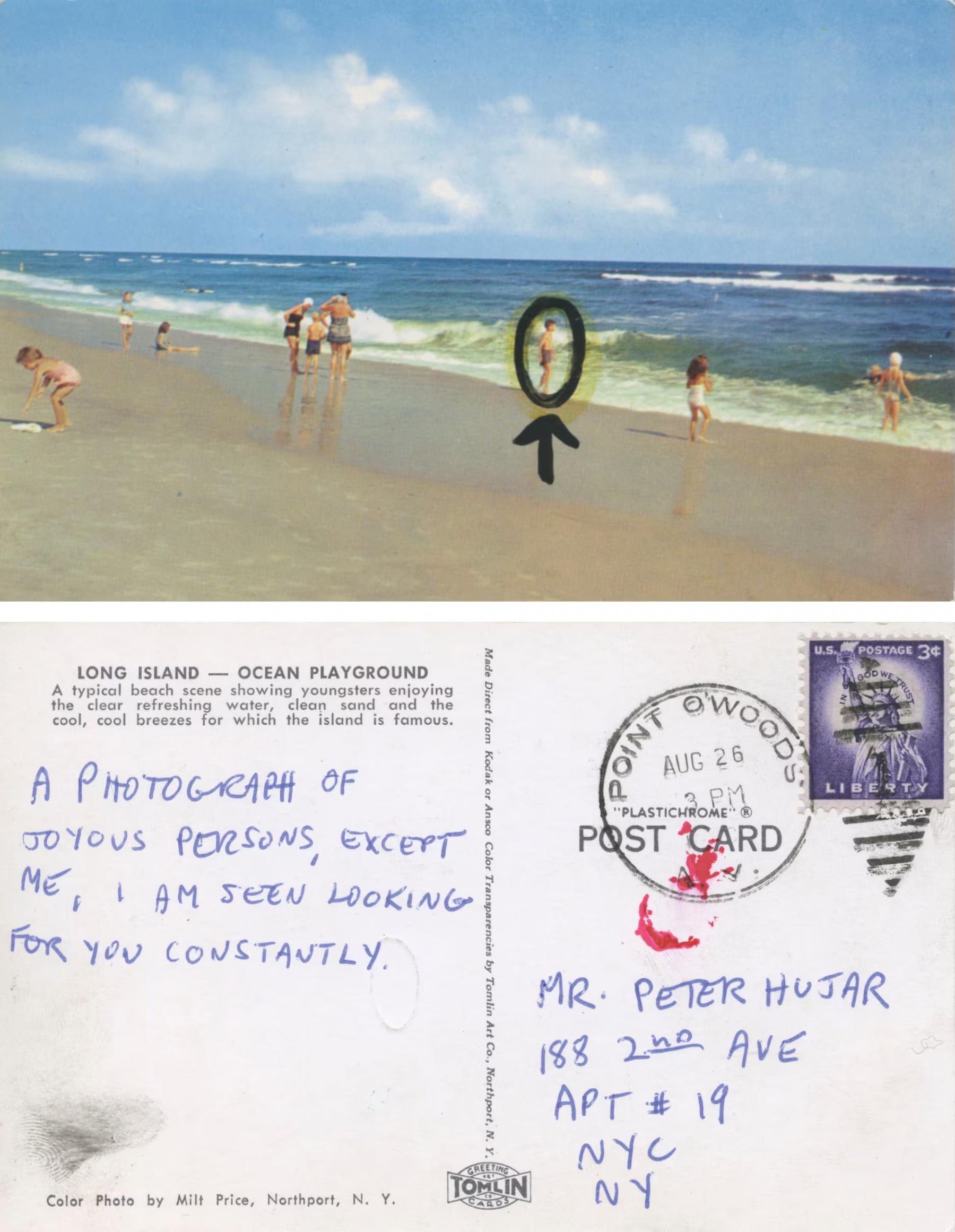
Postcard from Paul Thek to Peter Hujar, August 1960. Courtesy of Primary Information. © 2025 Estate of Paul Thek.
.jpg)
Postcard from Paul Thek to Peter Hujar, August 1960. Courtesy of Primary Information. © 2025 Estate of Paul Thek.
Most of the book is made up of these letters, but one page includes a contact sheet of photos from the catacombs in Palermo, Italy. Can you explain why these photos in particular are so significant?
It was a big turning point in both of their artistic careers. Paul spoke about this more eloquently than I would be able to–he’s quoted in an interview right before he died, talking about the power the catacombs had on his work. When you look at Thek’s artworks, the meat pieces and The Tomb, it’s all very clear. In Peter’s work, too…I mean, what year is this? [Schichtel looks at the page in the book.] 1963. So, over ten years later, he starts working on Portraits In Life and Death which is all based on this work.
We see a lot of different looks from Paul Thek over the years in these photos that Peter takes. Do you have a favorite era of Paul’s?
Like when he’s prettiest? [laughs] He’s very handsome throughout. I like the long hair before he gets into full-on hippie. Long hair, classically beautiful. The hippie stuff is a little much. And then the end is so sad–with him on the beach. He doesn’t look well. Andrew Durbin describes Paul here in his book as like a martyr.
Andrew’s book is coming out–were you guys in conversation at all?
He helped a lot on this book, especially with the dates. It’s crazy, when you’re doing research especially on people like Peter. The 50s and 60s are kind of just a blur. A lot of the people are gone and pinning down dates is very difficult. I relied on Durbin because I’m not trying to pretend to be a scholar. He’s a beautiful writer. This book was about letting people experience the power of what Paul wrote to Peter and the power of Peter’s images. I love the sort-of chapter timeline, from letters to pictures, letters to pictures, and Peter is so present in the book through the photos and through the letters, because they’re all directed to him. They start romantic, and then Paul’s traveling and missing him, and then he becomes super needy and starts getting kind of annoying throughout the book. [laughs]
What was the process of working with Primary Information like?
It was great. I found these letters and during that time I had read the Dear Jean-Pierre book, which I loved. So I sent James Hoff an email, like, this is just a little taste of what I want this book to be. He immediately was like, let’s do it. We were in complete harmony of design and not wanting it to be an academic sort of thing. Just letting the information be what it is.
Tell me more about that. Why was that important?
I just hate that…there’s a lot of people researching this time period and putting themselves into it. I just don’t feel so bold as to do that. Peter and Paul, everyone always talked about them, it was kind of a mythical relationship. And then I found these letters and it was like, okay, this is so clear what their dynamic was. People are hungry for more biographical information on these artists. For whatever reason. I’m not sure why, but people are crazy for it right now. I mean, that’s not the reason I did this book. I just thought, this is such a beautiful thing about life.
Why was it important for you to have a hand in preserving these histories?
I’m hearing all these firsthand stories. I worked for Stephen Koch, who just passed away, very intimately for seven years. With his support, he allowed me to reach out to as many people as I wanted, people who knew both of these people intimately. I didn’t necessarily want to do a book of interviews, but I thought people would find it interesting because they care about these artists. I think people look to Peter and Paul as people from a more pure time, and I think it reflects in the letters.
.jpg)
Photograph by Peter Hujar, 1956. Courtesy of Primary Information. © 2025 The Peter Hujar Archive / Artists Rights Society (ARS), New York.
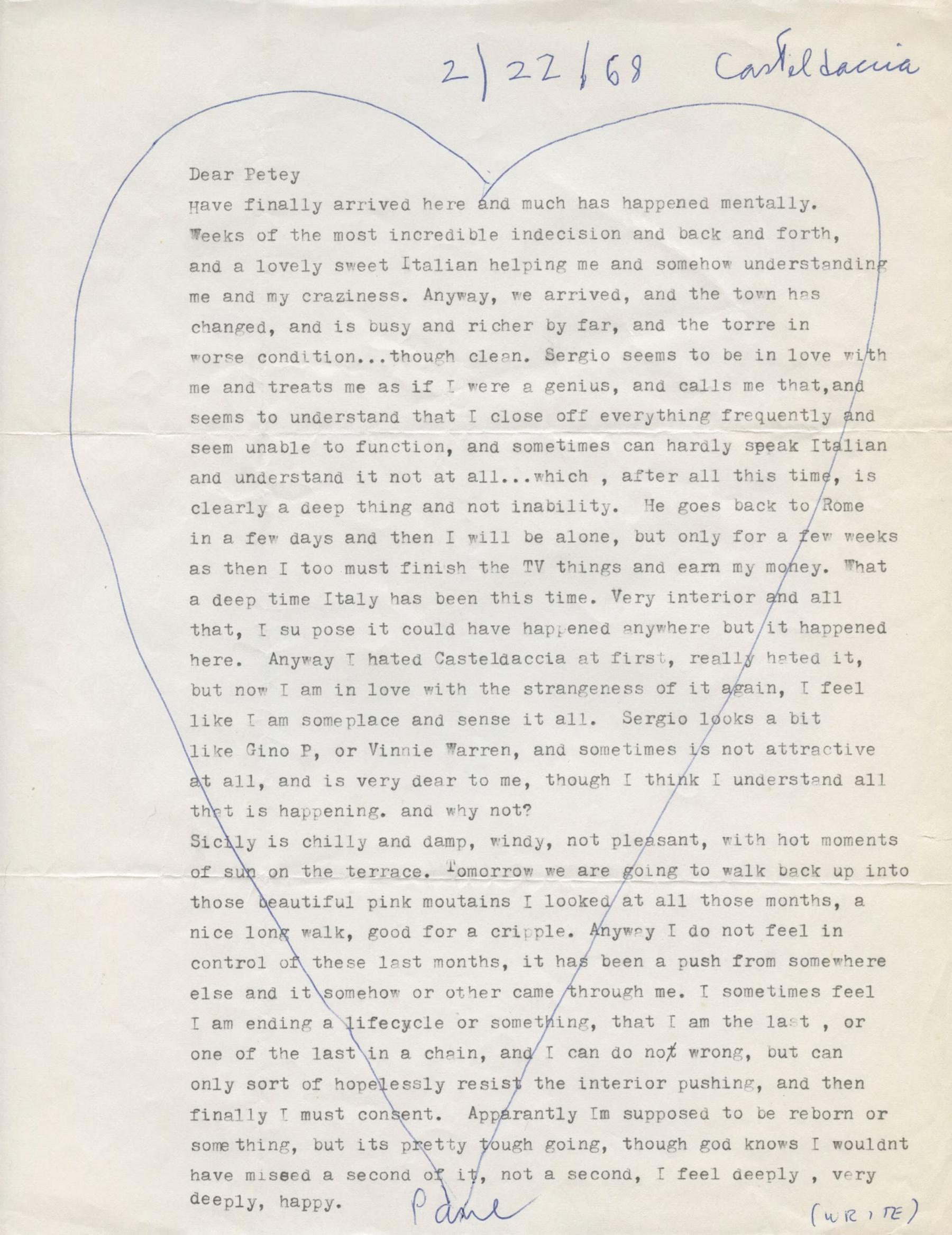
Letter from Paul Thek to Peter Hujar, February 1968.
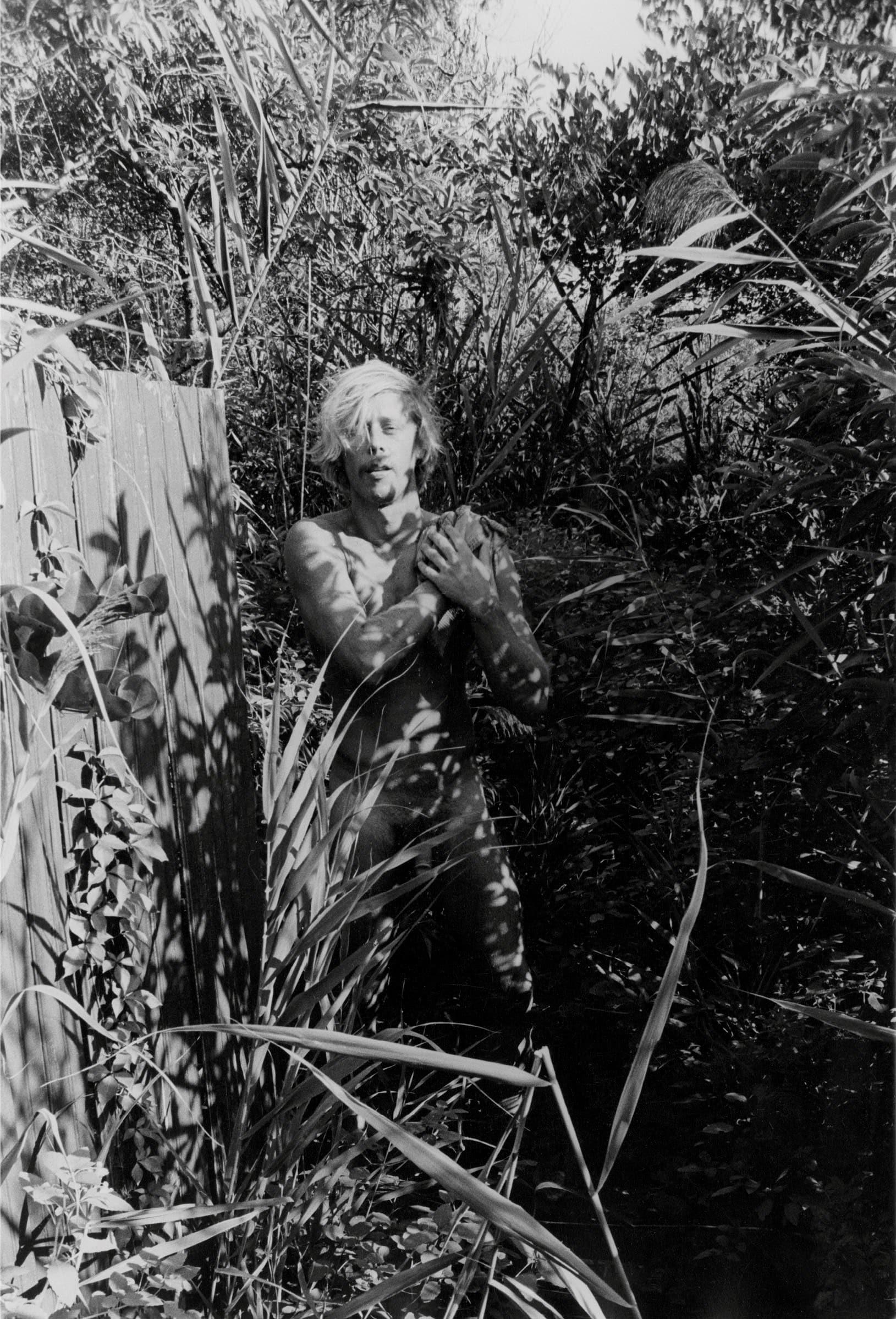
Photograph by Peter Hujar, 1966. Courtesy of Primary Information. © 2025 The Peter Hujar Archive / Artists Rights Society (ARS), New York.
What were some of the stories Stephen told you?
Oh, God. There were a few. He was Susan Sontag’s protege, and I don’t remember if he met Peter or Paul first, but they were around Susan a lot. Paul had inspired Susan’s book Against Interpretation and Peter had inspired Notes on Camp. Stephen describes going out with them, and very specific scenes of Paul dancing, and Peter not dancing, and Susan awkwardly dancing. [laughs] It’s better if he were to tell it. He always thought that they were the perfect, coolest gay couple. [laughs]
What did you think about the book?
Well, I really appreciate that instinct to let the documents speak for themselves.
Did you read it cover to cover and one by one?
I didn’t read it one by one, but I would jump around a little. Certain things stick out to me, I think I remember Stephen reading them at the Parkside Lounge reading.
You were there?
Yes. I thought it was so gorgeous. I’m glad I went and got to hear Stephen read those letters.
It was his last public appearance.
I love that there is still a space for that kind of “happening.”
I didn’t realize how many people were going to show up to that particular reading. I didn’t do a guest list or anything, and people were pissed at me, because they were very important people and they couldn’t get in. But I didn’t do a guest list, it was in the back room of a bar!
How did it feel for you to hear the letters being read after you’d been looking at them for so long?
Incredible. It was really, really powerful. Stephen was like a father to me. We had spent so much time together. It was a sad reminder of his age, too. I’ve been saying this for years, but his generation is not going to be around much longer. And it’s so sad, because they’re so much better than what remains. And Cynthia too, her reading was incredible. I don’t know her that well, but her tone was so fun. And Nan, I had worked for her for about four years.
Oh, I wanted to ask you. I went to a screening of Nan’s new film, You Never Did Anything Wrong, about animals, and I saw that you had filmed it. How did that come about?
The eclipse was coming up, it was April. I was like, “the eclipse is coming up, I really want to go see it.” It was going to go through Buffalo, and my family has land outside of Buffalo. And she said, “I really want to film it because I want to make a film about animals and about the end of the world.” So we went, and we were filming, me and my friends and my boyfriend all drove up to Buffalo. It was magical. Every week we’d go to different farms and find people with animals…it was like summer camp. Every Sunday we’d go get bagels and get in the car and go upstate and film. I was getting paid to do it, and it was a lot of work, but it was a lot of fun.