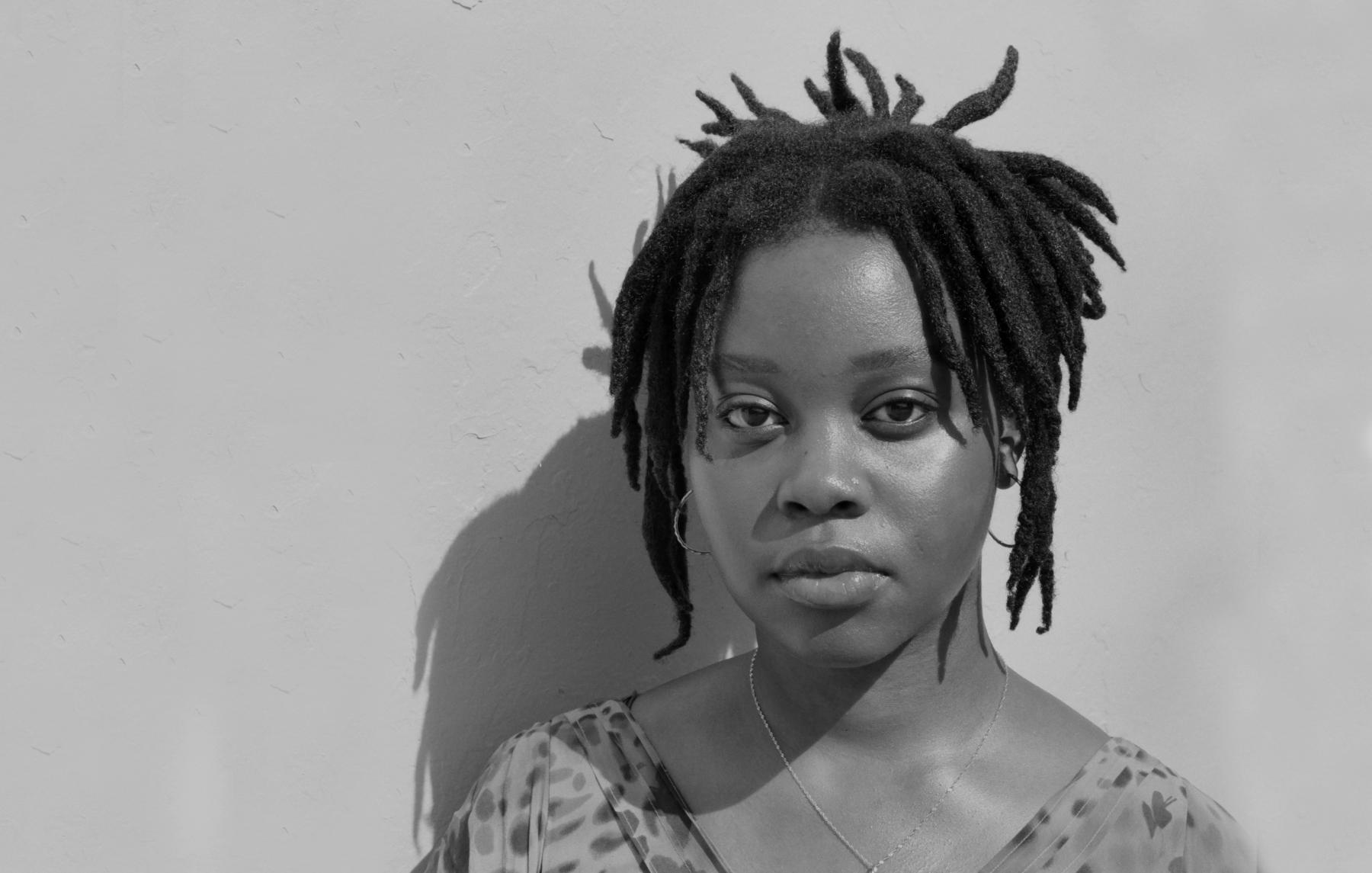
Stephanie Wambagu.
Colloquially dubbed the “multicultural biennial” and maligned by mainstream critics for “preachy” politics, the 1993 Whitney Biennial was a historic juncture in contemporary art history. Films on view explored queerness and civil rights activism, and visitors became immediate, unwitting performers by way of Daniel J. Martinez’s artwork comprised of multicolored admissions buttons: metal pins worn as proof of entry, each containing a fragment of the phrase “I Can’t Imagine Ever Wanting To Be White.” It was a landmark display; the curators prioritized media-based works, and the selected artists engaged equally with formalist techniques and political theory. Today, it is lauded as a great success of institutional evolution and the avant-garde: reflections by its head curator, Elisabeth Sussman, were published in 2005 and 2016, and its resonance was celebrated with a symposium and multi-city exhibition by Hauser & Wirth in 2023.
The universe in which the exhibition was raised is the same one inhabited by the characters of Stephanie Wambugu’s 2025 novel, Lonely Crowds. Set in the 1990s art scene, the ambitious debut grapples with themes of existentialism, cultural alienation, and suicidality with subtle wit and modernist prose. Upon its release, critics were enchanted by Wambugu’s wry tone and approach to obsessive, homoerotic friendship, and she has since been awarded the National Book Foundation’s “5 Under 35.” She has also gone on to publish essays in The Nation and Frieze, and short stories in House House Magazine, Buffalo Zine, and Granta.
While studying at Bard College, the writer came to recognize the 1990s art world and its relationship to representational politics as sharing a curious similitude with our contemporary one, and situated her characters’ artistic rearing between their liberal arts education in the Hudson Valley and a bygone New York City. “There were parallels between the ’90s that I wrote about [in Lonely Crowds] and what was happening in art while I was a student in the late 2010s, early 2020s,” explains Wambugu.
The duo at the core of the book, Ruth and Maria, embody the novel’s exploration of convention and contemporaneity, in both their chosen mediums and personalities. Against the backdrop of an artistic setting, Wambugu says, “you can transmute some of these themes and ideas in subtle ways.”
Her protagonist, Ruth, is a girl who struggles to verbalize, or even recognize, her own desires; drawing becomes the only conduit through which she can conceive of her circumstances. From the moment she lays eyes on Maria, the only other Black girl in their town, an adolescent Ruth is enraptured. Maria becomes the epicenter around which Ruth orbits for the rest of her days. What’s a life without fixation, anyway? Wambugu captures a sense of naivete and self-disconnection through scenes of Ruth’s life. We meet her and Maria at various crossroads—as Catholic schoolgirls in New England, exploring fledgling relationships in college, and navigating 1990s New York City, finding disparate degrees of success and bearing its consequences.
The author and I spoke over the phone this winter to discuss the literary and artistic influences that informed the novel.
I didn't know that I wanted this, but I realize now that I did and do want to write books that many people read. I want to be a writer's writer on some level, but I want to write something that has broad appeal because I think that's what literature is at its best.
You've spoken about Toni Morrison’s Sula as an inspiration to Lonely Crowds. That feels really apt, and it was nice to see the reference within the text—these parallels between Nel and Sula, and then Ruth and Maria, in regard to sexual politics and the agony of coming together and apart over a lifetime.
A lot of the press around the book has to do with friendship and fixation, and I'm curious to hear from your perspective why you think that's resonated so deeply with readers, and what led you to the topic?
There's a distinct genre that's made up entirely of love stories, the romantic or sexual variety, but there's a growing interest in friendship as an equally important dyad in fiction. My Brilliant Friend [by Elena Ferrante], which was such a sensation, is one example. I think that in life, people deal less seriously with friendship than they do with romantic relationships, but a book can give you the space to say, “I had a friendship that was as impactful, potentially wounding, as a marriage might be, or any other kind of romantic relationship might be.” And I think that Sula is an important model because that's said pretty explicitly in the book.
The major betrayal in the book is that Sula, having slept with many men in town, has left town and come back with a reputation. She then commits what is seen as the ultimate transgression: she sleeps with her best friend Nel’s husband, Jude. And what we come to understand at the end of the book is that though they stopped speaking, and though Nel feels profoundly betrayed, the real source of the pain is that she's lost this friend, and that her friendship is actually, in some ways, more important to her than her marriage. What she really mourns at the end of the book is the lost time that she missed out on with Sula because of this surface-level betrayal, this infidelity. Because of a man basically. I think what's really interesting about Sula is that it takes as seriously a platonic relationship as it might an erotic or romantic relationship.
These two characters, Ruth and Maria, are artists. I'm curious how you arrived at artwork as the conduit through which they express these fixations and desires, and how you decided to set this book in that world.
It was partly because that was the kind of work I was doing right when I graduated from college. I worked first for a private art collection in the Hudson Valley, and then at the Noguchi Museum. I knew I wanted to be a writer. I was in grad school for writing, but a lot of the writing I was doing at the time was freelancing—writing about art, about painters. For whatever reason, it seemed to dominate my life before I started seriously working on my novel. And so, it seemed like a natural subject.
I also think that there were parallels between the ’90s that I wrote about [in Lonely Crowds] and what was happening in art while I was a student in the late 2010s, early 2020s. There was a racial reckoning in America, one mainly concerned with police violence, and one of the ways it manifested in the art world was that people were incentivized to collect, exhibit and celebrate certain art made by certain demographics. A similar thing happened in the ’90s, where these discourses around representation were becoming mainstream, and I identified the 1993 Biennial as one example, a biennial I watched a friend give an art history thesis presentation on when I was a senior at Bard.
So, there are periods when a group is culturally ascendant because of what is going on politically, then other things happen and people move on, they stop caring. Recently, there was an essay in Vulture about how the Black portraiture boom completely exploded, then went bust. What happens to those artists then? Many of whom presumably just wanted to make their work and not be spokespeople or representatives of an institution’s ideology.
Some of the Black artists who I was thinking about while I writing this book were people like Kara Walker, Lyle Ashton Harris, Carrie Mae Weems, Lorna Simpson: people whose careers were taking off in this period, who now—for people who have an interest in art or write about art—are something close to household names, but a lot of the material in their work must have seemed very new at the time that they were making it.
I wanted to write Ruth and Maria as characters who embody tensions between novelty and tradition, in more ways than one. Maria is a video artist, who represents the new, or a more digital medium. Ruth represents an older world and an older sensibility, and she's regressive in a way that extends beyond her figurative painting practice. I think that art was a fitting and effective backdrop for many reasons, because you can transmute some of these themes and ideas in subtle ways in terms of their professional lives or what objects they're actually making. It offers a helpful narrative container, the künstlerroman.
That's all resonating really deeply. Actually, when I was an undergraduate in ethnic studies, I wrote my thesis about the parallels between the ‘60s and ‘70s, the ’90s, and the 2010s art world.
Oh, that's really interesting.
I was talking about Harlem on My Mind, then the ’93 Biennial, and the Black Emergency Cultural Coalition. So, this is all really resonating, and I think it all worked its way into the novel in this really beautiful and astute way.
When I was looking more into your work, I saw your review of Janiva Ellis's exhibition at 47 Canal. You wrote: the paintings “attend[ed] to the burden of representing racialized subjects in a way that evades and confronts viewers, metabolising the traps and tropes of representation within the work itself.” That observation felt really relevant to Lonely Crowds and specifically how you wrote about Ruth's attempt to grapple with racialization in her work. How were you contending with that concept while writing, and what were you hoping to convey?
Well, I guess my feeling, and the character's feeling, is ambivalence.
Recently, while researching for an essay about a few photographers, I was reading about James Barnor, who is a Ghanaian photographer in his nineties. He was born, of course, before Ghana became independent. He photographed Kwame Nkrumah many times, and he's a sort of living testament to a nation's struggle for independence. And I thought, How ridiculous and flippant of me would it be to say that that kind of representation isn't important? And I think that sometimes, out of a desire to overcorrect, people will say that representation isn't important, or it's trite, and we don't need to make art that's about our racial or ethnic group. But I think you can't help but feel pride or admiration for people who really devote their lives to an idea, or even people who just happen to have been born at a time of revolutionary struggle and see it come to fruition. I think the trouble is when something becomes framed as being emblematic of its group, or people suggest that's where the power of a work of art comes from rather than formal or stylistic choices. I think that instead, people should aim to make things that are very specific and local and personal, and from those very specific particulars, maybe you can make a more universal work of art.
I think that Ruth really doesn't have a very clear sense of self. That's where the voice and the style of the book come from. She's sort of a naive narrator, questioning everything at every turn. I think writers like Kafka were a huge influence on this because there's this mock simplicity in the voice or the characterization of the narrator that's actually a tool to make clear that you have to question the very foundation of the things you're observing. In a sense, we're all unreliable narrators in that we are completely, forever stuck in our own subjectivity, and we can't see things in a clear way.
Ruth dramatizes that, because she's very confused about her sexuality and the clash between her culture of origin (her parents' culture) and the culture she grows up in (this religious, small-town milieu). Then she enters a drastically different culture, going to liberal arts college, becoming an artist, and so on. She feels very deracinated or dislocated from her origins, and she tries to express that and can’t.
But really, what prompted her to first make that work is a very complicated, unclear, vague relationship she has with her friend. She starts painting in order to paint Maria, because she doesn't understand her. The very origins of her painting stem from an unsettling dynamic, and so, once it scales up and she has a professional career and is being celebrated for making this kind of figurative work that came from a place of deep uncertainty, she feels very confused about it. On another level, she wonders, “What does it mean to paint Black figures and be paid for it, when I don't know how I feel about the material myself?”
When I was writing this book, I did not have a sense of a readership because I didn't know if it would sell. No writer can be sure of that. I didn't really expect anything to come out of it. And so now I wonder if it was preemptively expressing some of the ambivalence or mixed feelings you have about how you're read once you have an audience, even before you think you'll have one.
Some of the contention in Ruth's life, which feels on a parallel track to her confusion over the ways that her art would be read, is the consideration of upward mobility and the material and spiritual consequences of that. There's a sense of alienation throughout the book—of course, her observation of Maria from childhood into adulthood, but also Ruth’s continuing struggle with the idea of success once she has found it. I think the narrative around upward mobility is not as neat as one expects.
I think that—whether it's true or not—she feels corrupted by her success or feels like it was cheaply won. And when she's at this major show, where all of the works have sold before the show even begins, it's a milestone for her, but she's in such a state of despair that she can't even be there for the celebration.
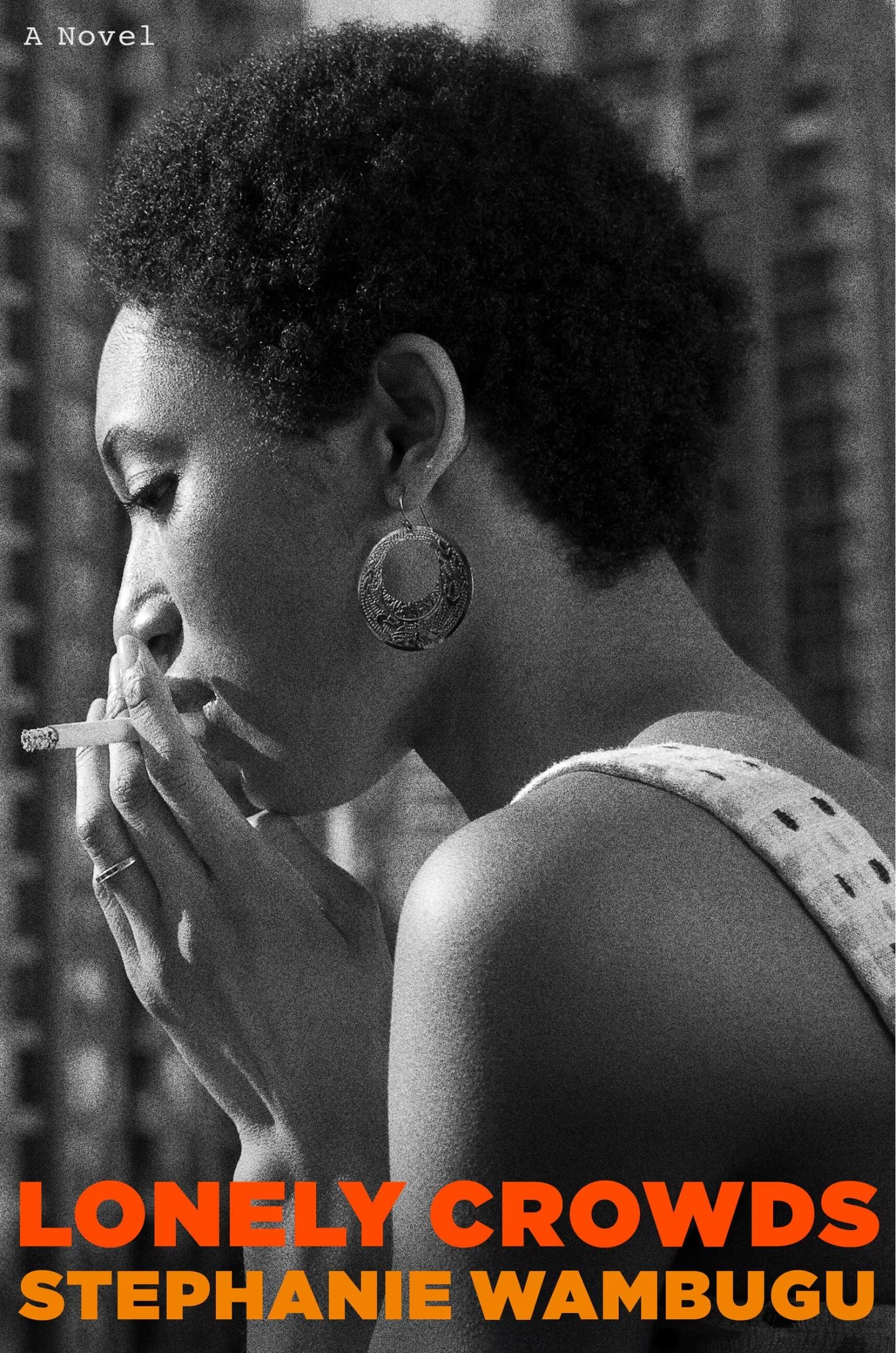
Book cover for Lonely Crowds (2025), Little, Brown and Company.
So many of the characters, not only in Lonely Crowds, but also in some of your short stories, seem to be in search of experiences that they have been told are unacceptable or they're afraid to pursue. They're looking for these sorts of erotic livelihoods, queer livelihoods, or livelihoods that go against the institution of marriage. Thinking about “My First Husband” or “Women Without Children”—while I was reading these, I was thinking about the voice of Jamaica Kincaid’s Lucy or Gayl Jones’ Corregidora…
Oh, I love that book.
Yeah! This idea of a character who's irreverent and pleasure-seeking, and seeing that show up. I'm curious, when it comes to portraying that voice, what that experience is like, because I do think that it's in this lineage of these phenomenal writers.
Thank you. A piece of conventional writing advice that people give is the question “Why is this night unlike other nights?” which comes from something people say at Passover. The advice is to start a story at an exceptional moment; either there’s been a crisis, or the routine has been upended in some way. You meet literary characters, typically, at a point where things are going to change in an irreparable or irreversible way. I want the characters in my story to speak in a fairly calm way and have a fairly calm demeanor, but to be at the point where they're like, “I cannot take this life anymore. I can't take the situation that I'm in anymore.”
Typically, I think that's the feeling you have just before you have an artistic idea or an idea for a story. You are following an impulse that you can't resist, similar to someone on the verge of a nervous breakdown, as many of my characters are, even though they're not expressing it in the typical ways. They're not necessarily spiraling out of control or seeming delusional. But something about their day-to-day lives is becoming intolerable, and they're acting that out. I think irreverence is a good word for it. Their lives are imploding.
We spoke at the beginning about the influence of Morrison, of Sula and Song of Solomon, on your writing. I'm curious to hear about any other authors who inspire your writing.
I've talked about them at length, but Toni Morrison definitely, and Gary Indiana, another American novelist and critic. I'm very inspired by the way he writes about people who are on the fringes of the cultural elite. He was a critic at the Village Voice for many years and there’s a great book of his collected reviews. He was really brilliant and a real intellectual, and was able to write about powerful artists in such an incisive way, never writing hagiography. At the same time, he was able to capture, in his fiction, the underbelly of society and write about people who were lost to the AIDS epidemic, or people who were strung out on drugs, people who failed miserably.
I think that writers or people who work in art are uniquely positioned, in that they get access to the real heights of wealth and status, and also the very low points. Being able to write seriously about both extremes is something I want to do—to be able to look closely at all sorts of ways of living. I think that Gary Indiana really embodies that.
The other big influence on my work, who is someone who does the same thing, is Jean Rhys. There's this meme, this joke—now it’s a few years old—where someone says, “I miss being a young woman because you could go out with nothing but $20 in your purse and have a great night.”
Yeah. [laughs]
You know what I mean? [laughs] I think it's about what's fun and seductive about someone buying you a drink or being carried along by an evening because you're an attractive young woman, but actually having nothing—no control or power of your own. Though that's just a meme, I do think that Jean Rhys’s characters lead lives that are kind of meandering and directed by other people in a similar way. They depend on other people's charity, the charity of men. In her books, there's the drunken feeling that you're being carried through life not very lucid. I think that is interesting, and was influential to me.
What are you reading right now?
Right now, I'm reading Fear of Flying by Erica Jong, which is an erotic novel, but the part that I'm at now is all about psychoanalysis and someone fantasizing about having an affair. I've just started it, but I'm really enjoying it. It opens when [the protagonist] is on a plane to Austria with all of these analysts, and she's been treated by six of them and married another. It's told in the snappy voice of a fairly uninhibited woman from New York—a sophisticated, interesting voice.
Also, I'm reviewing the novels of the Norwegian writer Vigdis Hjorth, and so I've been rereading her novels and just finished that piece. She's one of my favorite contemporary writers. I didn't really discover her until I was at the very end of writing [Lonely Crowds], so her influence isn't necessarily apparent in that book, but I have come to love her work, and I think she's a very important writer to me. Her new book, Repetition, has been translated into English and will come out next month, and I highly recommend it.
It's so interesting to hear you mention a writer that you admire who you found at the end of your writing process. As a writer, you're constantly going to be barraged with this influx of influence and new discoveries, et cetera. I'm curious if we could end on any reflections you've had now that Lonely Crowds has been in the world for some months, and what that's been like for you as a writer to share a work with an audience at this scale.
I didn't know that I wanted this, but I realize now that I did and do want to write books that many people read. I want to be a writer's writer on some level, but I want to write something that has broad appeal because I think that's what literature is at its best. Someone like Toni Morrison, who I admire so much, is a writer's writer in every sense. She can really be situated in a modernist tradition; you could devote a book to scholarship on a single Toni Morrison novel and people have. But also, a housewife in a bookclub or a young student could read The Bluest Eye. It's working on many, many levels, and as a result, it's not just for one kind of reader. As [Lonely Crowds] was coming out, I discovered that that was something I desired, too. I can have a certain kind of conversation with you about my book, about influences or the art historical material, but I also am happy for people to read the book who are like, “I want to read about a homoerotic friendship, and I don't really care about your influences.” That reader is as important to me as any other reader.
To return to the original question, I was thinking about this earlier while I was walking to the grocery store. Once you publish something, it doesn't really belong to you.
What I'm coming to understand and accept is that the book that really does belong to you is the one you are in the process of writing. So, what I'm writing now is private, it's mine. I can talk about it with people in my life. I don't really have to disclose anything about it. But as soon as that's published, it will take on a life of its own and be contextualized however readers want to contextualize it. I think that you can't be too neurotic or fixated on how people understand your book.
Of course, in the early weeks or the early days, you want some contact with the outside world and the people who are reading your book. But as time passes, it’s possible to say, “Okay, that was something I published, I'm proud of it, I'm interested in its ideas.” When I started writing this book, I was 22, almost 23 years old, and now a few years have passed, and I'm a different person in many ways. Over the summer, before the book came out, I had the finished copies, but it wasn't published yet. If I'd gone to a party or I'd had a few drinks, I would come home and reread the book. And I would think, on one hand, I'm so excited, and I'm very eager for it to come out. But even then, they felt like the words of another person. And, in a sense, they are.