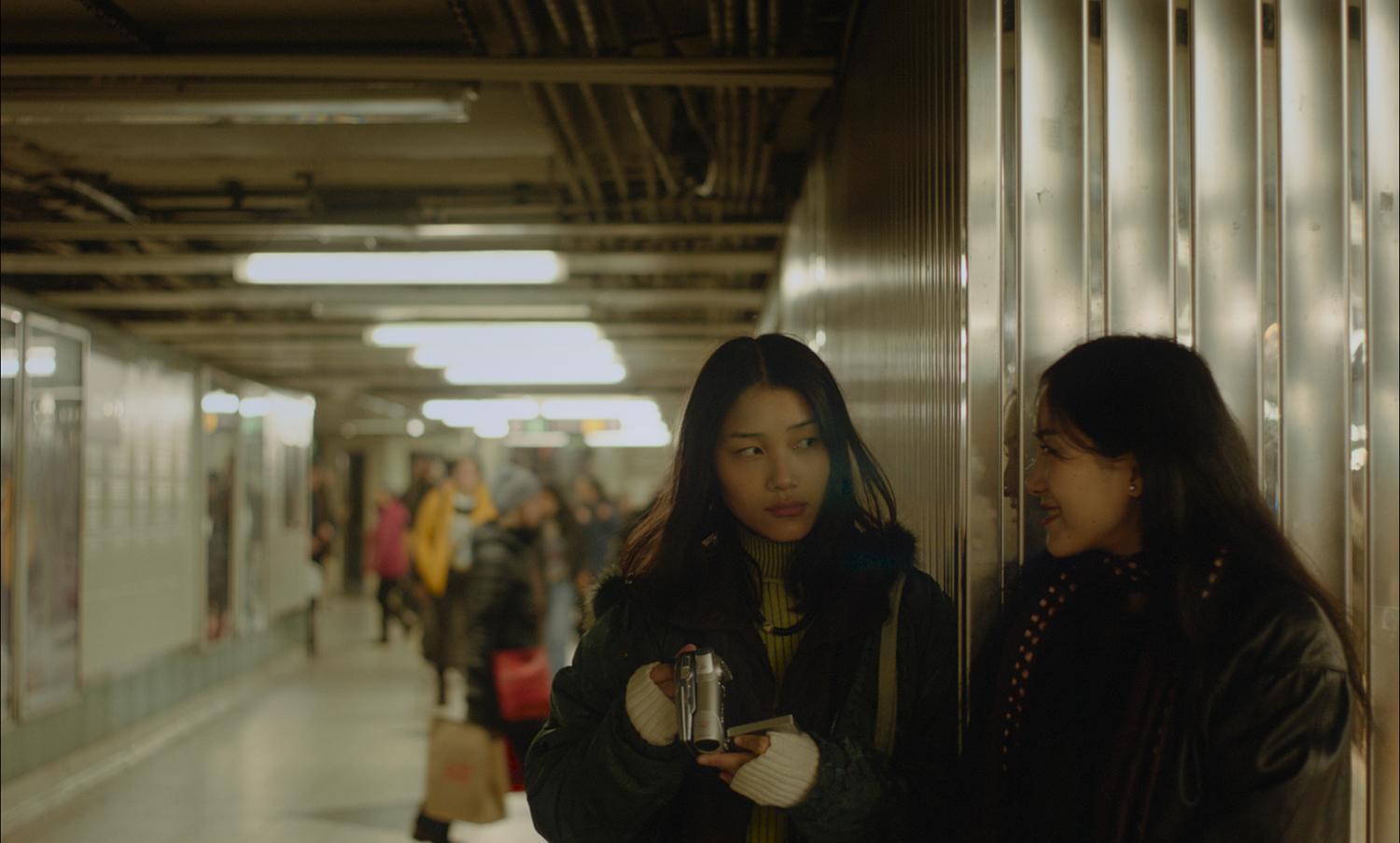
Kunsang Kyirong, 100 Sunset (2025, 99 mins). Courtesy of the artist and Migmar Pictures Inc.
I first met filmmaker Kunsang Kyirong last summer at my friend’s coffee shop in Roncesvalles—the Toronto neighbourhood halfway between my apartment at Bloor and Dundas, and her place at the time in Parkdale. When we met, she was in post-production for 100 Sunset—her first feature-length film.
Born in Vancouver, Kyirong studied 2D+Experimental Animation at Emily Carr University of Art and Design, and is currently pursuing her MFA in Film Production at York University. Her previous short films Dhulpa (2021) and Yarlung (2020) have been screened at various international film festivals and exhibited at The Rubin Museum of Himalayan Art.
Kyirong told me about her newest film, which she centered around a relationship between two young Tibetan women living in Parkdale. The neighbourhood, which is also known as Little Tibet, has long been one whose landscapes are shaped by the Tibetan-Canadian community. For those of us who have spent time in the diaspora, it evokes a familiarity built on proximity, community, and the rhythms of daily life lived in close quarters.
Set at a fictional address called 100 Sunset, Kyirong’s film was shot in the notorious West Lodge apartment complex in Parkdale. I stayed at West Lodge with some friends in the early 2000’s when I moved to Toronto from Ottawa, and was interested to see how she would portray the building where so many Tibetans reside.
In 100 Sunset, we follow Kunsel, a quiet young woman living in the west Toronto apartment complex. Her uncle oversees the community’s dhikuti—a collective, low-interest speculative lending system—which keeps her family at the center of local life. Yet Kunsel herself remains on the margins: speaking very little, committing petty theft, and secretly observing others through the viewfinder of a camcorder stolen from her neighbour Gyatso. When Kunsel meets Passang, a newcomer with an adventurous nature and a much older husband, their unlikely friendship begins to unravel Kunsel’s carefully guarded world.
After the film debuted at sold-out screenings at the Toronto International Film Festival, Kyirong invited me to her community screening at the Revue Cinema in Roncesvalles. The screening was full of energy, and started with a song by Tsering Bawa, one of the film’s actors; followed by his impromptu rendition of Happy Birthday for one of the crew members. Most of the actors in 100 Sunset were residents of Parkdale who made their on-screen debut in Kyirong’s film, and there were hurrahs and calls of encouragement from community members when they recognized a friend on screen.
This recognition is central to Kyirong’s work. The film reflects a commitment to portraying Tibetan life outside grand narratives of history. Kyirong turns toward the present, and the mundane moments that reveal the complexities of Tibetan identity, embracing subtle gestures that carry emotional weight, while her characters work, gossip, gamble, borrow, watch, and wait.
Kyirong invites the viewer into a world that exists somewhere between imagination and reality. Her story moves between her lived experiences, the stories she has absorbed over the years, and the fictional universe she builds from them. The film explores what is seen, what is felt, and what is quietly carried in the ecosystem of the diaspora—a place woven from friendships, family ties, small rituals and long-standing gossip networks. What follows is a conversation with Kyirong that moves through the creative and emotional currents behind her work.
When you grow up in a system shaped by migration, borders, and limited options, luck becomes a kind of invisible companion.
100 Sunset is set in Parkdale, or Little Tibet, in Toronto. What’s your history with the neighbourhood and can you talk about the choice to set your film in this particular enclave of the Tibetan exile community?
I didn’t grow up in Parkdale; I grew up in the suburbs of Vancouver, which was very different. But within the Tibetan diaspora, Parkdale has always been known as a neighbourhood with a high concentration of Tibetans, and when I was a young girl, that was very exciting to me. I used to chat with many Tibetans in Parkdale online, and many of my early relationships formed through this kind of correspondence. I also had two aunts who lived there in a building called Sunset Tower, which inspired the address and title of my film 100 Sunset.
I visited Parkdale a few times during my teens, and at that time I spent time with many people who had come to Canada at a young age and grown up in the neighbourhood. In many ways, Parkdale in the early 2000s felt like an insular world to me, and even now, returning there carries that same feeling. That sense of insularity was something I hoped to capture and share with audiences.
I remember Parkdale in the early 2000’s and totally understand that insularity that you reference. You really express that through the film. I wonder how much of the story you tell is based on real experiences, and how much is imagined.
I would say the film is a combination of fragments: stories I’ve heard directly from people, stories retold, and observations from my own life, all folded into a fictional narrative. I also incorporated the cast’s own traits into the personalities of the characters. In general, the film is a collection of observations fictionalized into a tale. For example, Kunsel’s aunt, Yeshi, tells the story of a man she knew who married someone abroad in India. On the day he was supposed to pick her up from the airport, she was not there, and the whole thing turned out to be a scam. This kind of story is common, and within the community, these men are often teased for being naive, for marrying women who are seen as out of their league.
Most of the cast in 100 Sunset are first-time actors. Can you talk a little bit about your process casting the film?
Casting was one of my favorite parts of pre-production. We held auditions at the local Tibetan Cultural Center in 2023 with the help of our casting directors, Chemi Lhamo and Khenpo Ngawang Woser. Most of the secondary cast was found through these auditions or were friends of our casting directors. All of the cast, except for Tsering Bawa, were first-time actors. The two leads were cast more serendipitously. Kunsel is the daughter of a friend of Khenpo’s, and I met Passang while she was working as a server at a Tibetan restaurant I often visited. I spent a year with the two leads—one day every weekend, watching movies, exploring the city and getting to know one another.
The interior scenes were shot in the West Lodge apartment complex in Parkdale, where many Tibetan-Canadians live. How did collaboration with the building’s residents shape the production?
The location scouting took place in multiple phases. For the scenes shot at West Lodge, this was organized by community members who worked as our location scouts, Ada Nyima and Sonam Toronto. I met many of the households we filmed in through Ada Nyima, who already had relationships with some of the families. The same was true for Sonam Toronto, who introduced me to a few of his friends’ homes. Together we also went door to door to see if anyone would be open to letting us use their balconies for the voyeuristic shots in the film. Every household and restaurant location was accessed through community collaboration and generosity. We were a very low-budget production, and the support of the Tibetan community on so many fronts made a tremendous difference.
In this particular apartment complex, the buildings curve to look in on one another. The setting has this panopticon-like quality, which sets the tone for the film.
I think observation and voyeurism have always been at the heart of this film. Living in Parkdale, you are constantly aware of the ways people are watching. Whether it is in apartment blocks with windows facing one another or in the small intimacies of daily life in close quarters, that awareness naturally carries a sense of voyeurism, and I wanted to lean into that. The apartment complex is structured this way, almost like the inverse of a panopticon. The suspense in the film comes less from plot twists and more from the tension of looking, of what is revealed and what remains hidden. Rear Window was in the back of my mind, but instead of a single mystery, the mystery here is the fabric of the community itself. At the same time, I wanted the film to function as a portrait: of friends, of neighbours, of a diaspora.
Yes, let’s talk more about that sense of surveillance—the surveillance of others and the suspicion of surveillance and the way that we self-adjust when we think we’re being watched—and how that shows up in the film.
Surveillance is definitely a theme in the film, and Kunsel is central to it. She’s always watching. Because her presence is not threatening, people don’t necessarily self-adjust around her, and that lack of awareness reveals even more. But there’s another layer: Kunsel’s own personal footage. The way she films her friend, and the way they film each other, builds this incredibly intimate archive of their lives. The camera becomes part of their friendship, almost a third presence capturing small moments, private jokes, and the emotional texture of growing up. So the surveillance isn’t only outward-facing; it’s also inward, documenting their bond in this tender, self-made record that only they could create.
It seems to me that gossip is featured heavily in this work. What’s your relationship to gossip?
I like gossip. A lot of important information comes through it, often wrapped in a joke where someone becomes the butt of it. Within the Tibetan community, gossip is a fast moving network, and information can travel quickly in ways that can be helpful or harmful depending on the context. It is a social mechanism, not just entertainment, and I think that duality makes it interesting to me.
How did you become interested in making films? What was your creative trajectory as an artist and filmmaker?
I actually came to filmmaking through a mix of different interests that gradually started to connect. After high school, I spent a few months in India studying Thangka painting, then returned to Canada to pursue a BFA. I tried a few different paths before eventually settling into the experimental animation program at Emily Carr University of Art and Design, where I became drawn to experimental animation and film, including artists like Caroline Leaf, William Kentridge, Robert Breer, and Stan Brakhage.
At the same time, I was exploring Tibetan art and cinema on my own, mostly online, because it was not something I encountered in school. I discovered the films of Tenzin Tsetan, Tenzing Sonam and Ritu Sarin, and later Pema Tseden, as well as the sculptures of Kesang Lamdark, and writers like Dhondup Gyal. Gradually, these influences began to merge with what I was learning in my program.
I realized I was always moving between forms such as painting, animation, writing and cultural history. Film became the place where all of these interests could meet. Storytelling allowed me to express things that felt too limited or fragmented in other mediums.
.jpg)
Kunsang Kyirong. West Lodge apartments, from 100 Sunset (2025, 99 mins).
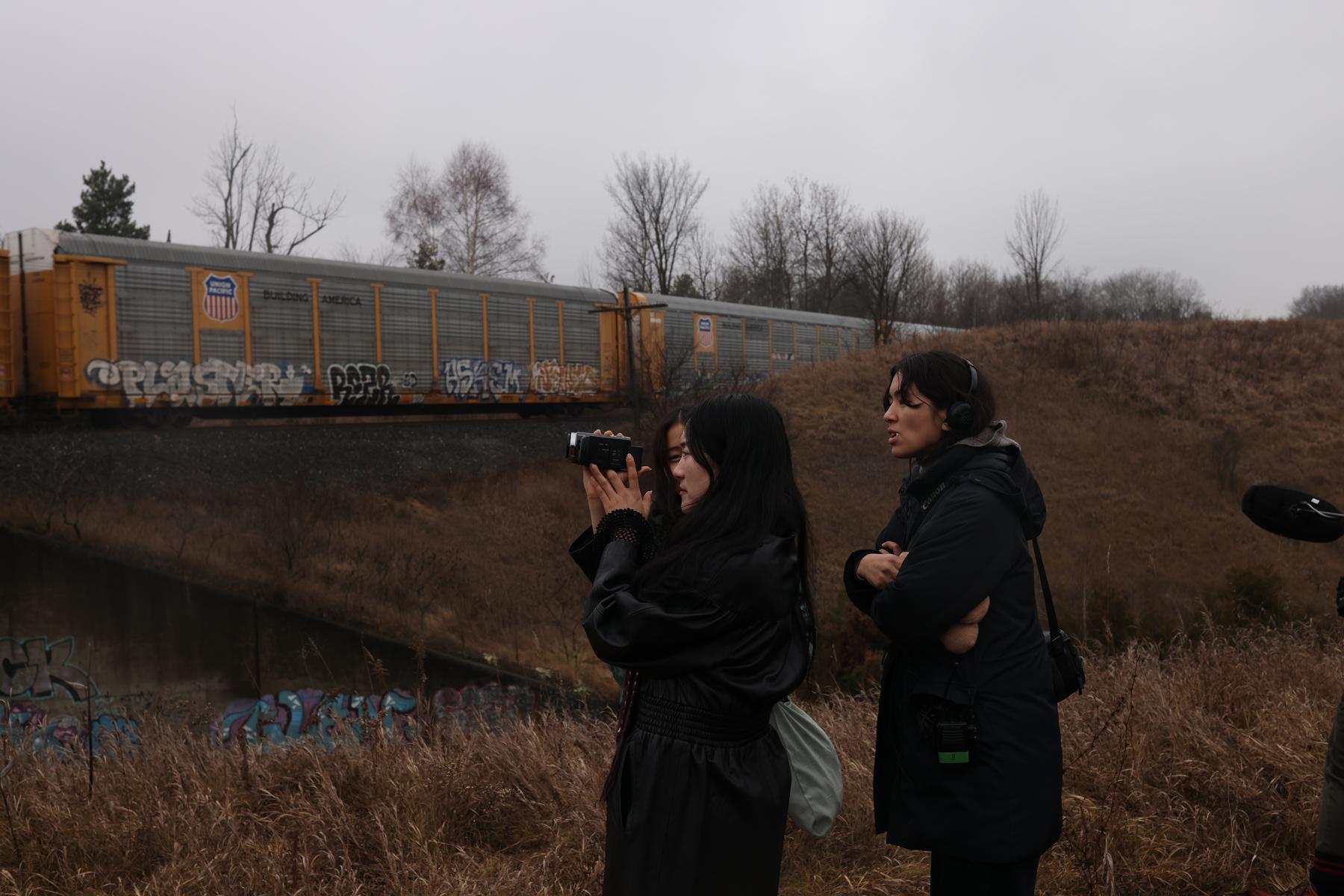
Shooting 100 Sunset (2025, 99 mins). Photo: Jamyang Kunga Tenzin.
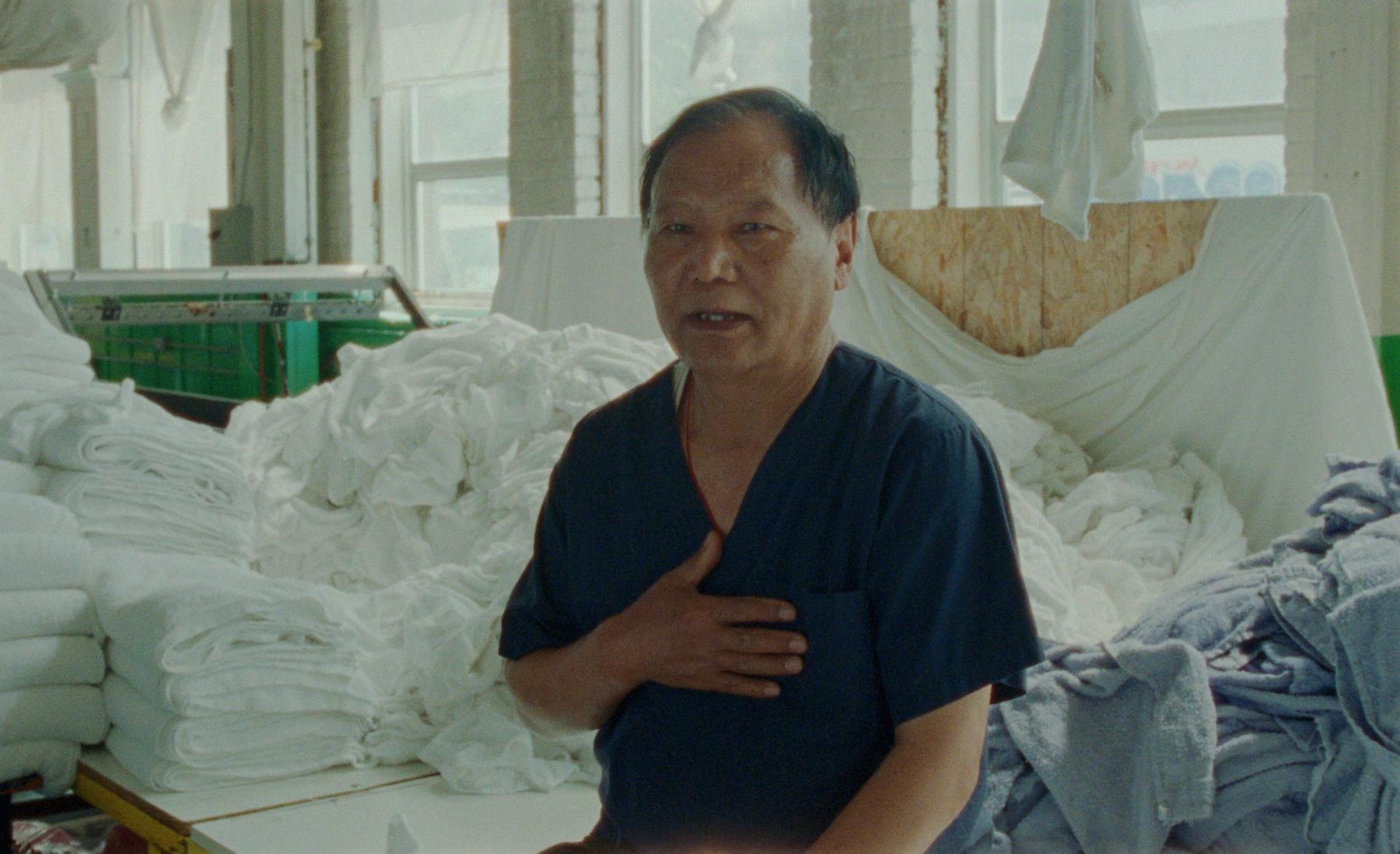
Kunsang Kyirong, Dhulpa (2021, S16mm, 18 min). Courtesy of the artist and Migmar Pictures Inc.
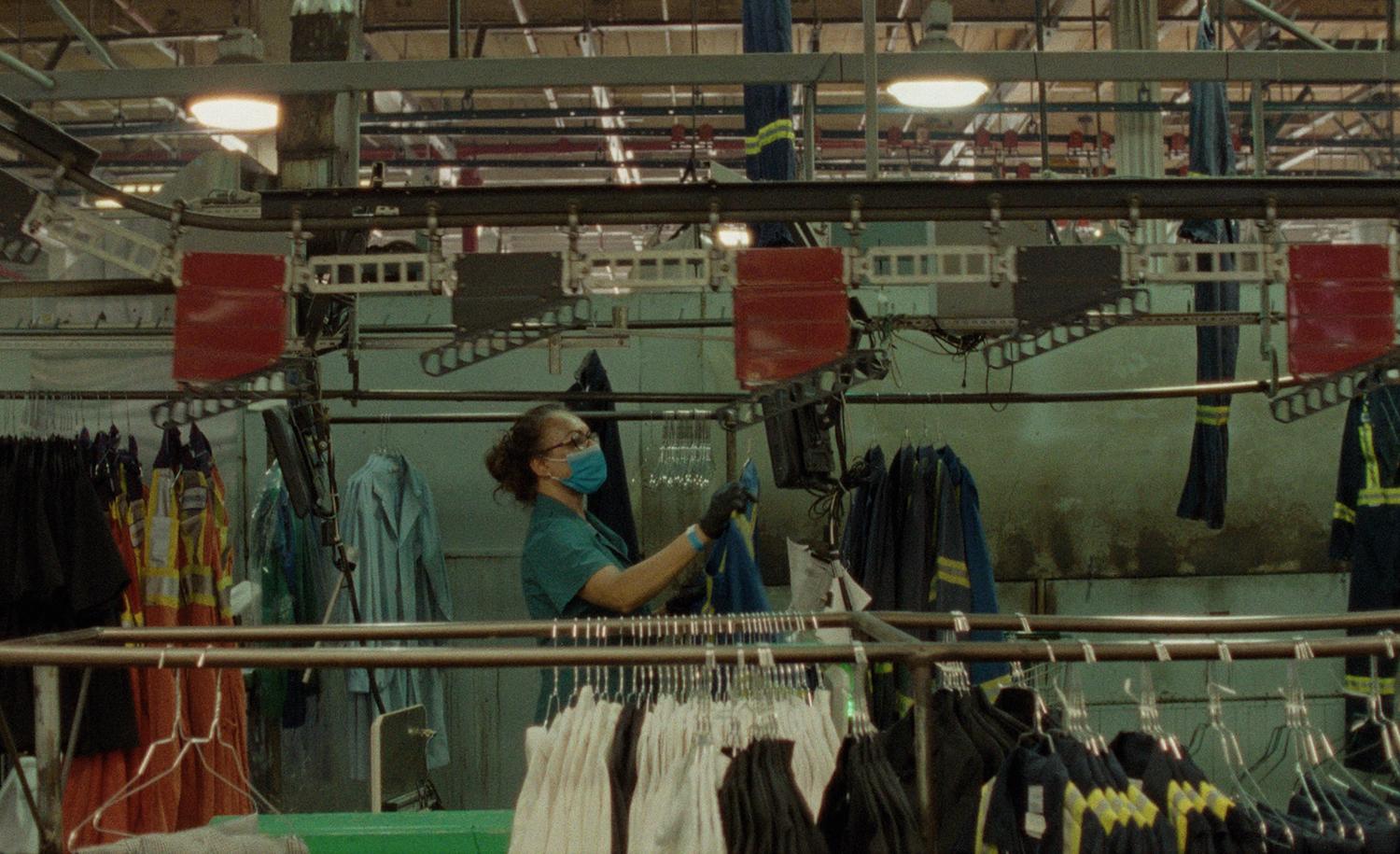
Kunsang Kyirong, Dhulpa (2021, 16mm, 18 min). Courtesy of the artist and Migmar Pictures Inc.
In the past, you’ve worked on short films (Yarlung, 2020, and Dhulpa, 2021). What influenced you to move from short film to this longer narrative-driven work?
It was a surprisingly natural process. After making my first short film, Yarlung, which was created using charcoal animation, I moved into live-action filmmaking, inspired by the work of the late Pema Tseden, along with other filmmakers. After completing that short film and moving to Toronto for my master’s, I began writing 100 Sunset. I applied to the Telefilm Talent Fund with the industry support of the Vancouver International Film Festival. When VIFF selected my project to support in the second phase of the Talent Fund application, it gave me the confidence to take both my script and the filmmaking process seriously.
I’d love to know more about the impact Pema Tseden’s storytelling and filmmaking had on you.
He had a big impact on me. Most Tibetan films—or films about Tibet in the diaspora—focus on Buddhism and history. Pema Tseden’s films challenged this approach with a more observational style of depicting Tibetan life. Although he was working within a different context, his commitment to understanding a Tibetan perspective made me reflect more deeply on our own lived experiences and how to shape a story that can reflect them.
Can you say more about the depictions of Tibet, Tibetans and its diaspora in media that you experienced growing up? Is there anything in particular that stands out?
Growing up, most depictions of Tibet and Tibetans emphasized Buddhism, whether they came from outsiders or from Tibetans themselves. I loved The Cup by Khyentse Norbu, as well as films like Kundun by Martin Scorsese and Seven Years in Tibet by Jean-Jacques Annaud. The films often focused on exile, escape, or Buddhist life.
Later in my teens I was drawn to Beat Poets, bands like the Beastie Boys, and the music of Laurie Anderson because of their connections to Tibet. Over time, I realized that these portrayals tended to repeat the same narratives around Buddhism, which sparked my curiosity about other perspectives and experiences more closely connected to what I was familiar with.
When you create, do you view your filmmaking as engaging with specifically Tibetan narratives or identities, or do you approach your subjects from a broader perspective?
Hopefully both. I think my starting point comes from a very specific point of view, but the themes I want to engage with are a bit more universal—stories of loneliness, change and desire; how to evoke a sense of memory over the course of a narrative—always going back to what a Tibetan perspective might look like given these circumstances.
Did you feel any responsibility or pressure representing a real community through a fictional narrative?
I felt responsible in the sense that I didn’t want to flatten or generalize a community, especially one that is often misunderstood or represented from the outside. At the same time, I don’t think any single film can or should represent everyone. What helped was staying rooted in the specificity of the characters and the particular story I wanted to tell, rather than trying to speak for a whole community.
There’s a joke re-told several times in 100 Sunset about a thief and a monk. Can you share it with us? I’m curious about the origin of this anecdote.
One evening, an old monk was reciting his prayers,
when a thief suddenly entered his house with a sword,
shouting “give me money, or I’ll take your life.”
Without fear the monk said, “Don’t disturb me! Help yourself with the money, it’s in that drawer.”
And so the monk resumed his prayers.
The thief was startled by this unexpected reaction,
but he proceeded with his business anyway.
While he was helping himself with the money, the monk stopped and called out,
“Don’t take all of it. Leave some for me to pay my taxes tomorrow.”
The thief left some money behind and prepared to leave.
Just before he left, the monk suddenly shouted at him,
“You took my money and you didn’t even thank me?! That’s not polite!”
During the casting process, I would ask each person auditioning a question: “If your sister brought a new friend home, and while your sister was preoccupied you noticed the friend stealing something of value, what would you do?” Almost 99 percent of the responses were some version of, “I would accept it,” or “maybe the friend needed the money.” There was always a justification for the friend’s action.
The story of the thief and the monk resonated with me because it reflects that instinctive compassion people described, but it also speaks to several layers of the film. For example, the dynamic between Kunsel and Gyatso, who drives the blue truck at the end, mirrors a version of that story when he confronts her about his stolen camera. Their exchange holds that same tension between wrongdoing, forgiveness, and the complexity of human relationships. A friend originally shared the story with me.
Throughout your film there’s long periods without any dialogue at all. In the critical reception, this has been remarked on quite a bit. What drew you to express so much of the film’s story visually, without dialogue? Is this a way that Pema Tseden’s influence showed up in your work?
Well I wanted our protagonist Kunsel to be mute until she meets Passang; always expressing herself later through the perspective of the images she archives. Through her watchfulness comes a more observational tone to the film. I would say the element of observation was inspired by Pema Tseden’s films, not necessarily the sparse dialogue. I actually felt that 100 Sunset at times maybe had too much dialogue.
Oh, that’s so interesting! Have there been any other surprises for you in some of the reactions to the film?
At one screening, a Tibetan monk suddenly stood up and pointed at me. I could only really make out his silhouette. He questioned why I chose to tell a story about stealing and a thief within a Buddhist community. It was surprising, but also interesting, because it opened up a conversation about the expectations people carry into a film, and what stories are considered acceptable or representative.
Luck seems to be a theme of both 100 Sunset and your short films. Your characters are often engaged in rituals of chance: card games, gambling, speculative betting. Your work also addresses the lottery that some Tibetans enter to be able to come to Canada from India. How do you approach or interpret luck and uncertainty as narrative and emotional elements in your films?
Luck is something I return to because it feels inseparable from the lives of the characters I film in 100 Sunset and in my short films. The card games, gambling, and even the literal lottery that some Tibetans enter to come to Canada are present, but they point to something more emotional underneath: the experience of living in a world where so much is outside your control, yet you keep moving with whatever small opening appears. It can be seen as a response to a life of precarity. When you grow up in a system shaped by migration, borders, and limited options, luck becomes a kind of invisible companion. I also think this outlook is woven into our culture through Buddhism, a quiet acceptance of fate, whether being lucky or unlucky.
Dhulpa and 100 Sunset both subtly articulate issues around labour and wage work. Can you talk about your films’ engagement with economics, specifically the economics of the working class?
Both Dhulpa and 100 Sunset deal with the working class almost by necessity, because that is the world these characters inhabit. I am not approaching economics in a theoretical way, but through the textures of everyday life: the types of jobs available, the wages that barely stretch, the informal systems of borrowing and trust, and the negotiations people make in order to potentially better their lives. These details shape how my characters move through the world.
You’ve been touring the film recently. 100 Sunset premiered at the Toronto International Film Festival, and has since been shown in Vancouver, Tokyo, São Paolo, and in the Tibetan exile community at the Dharamsala International Film Festival and in Ladakh. What’s this been like for you?
It’s been incredible. Each festival and audience has its own personality. The screening in Dharamshala was one of the most special for me. The theatre was packed with more than five hundred people, most of them Tibetan. 100 Sunset was received so warmly, and it felt like the film was returning to one of its emotional origins. I also screened the film in Leh, Ladakh, through the organizing of two wonderful filmmakers from there, Tsering Wangmo and Sherab Wangmo. We did a screening at TCV and another at Picture Time. I fell in love with the place.